
Participating Artist
Léo Fourdrinier
Information
Aug 31 → Sept 3, 2023
Booth 21
Location
Friche Belle de Mai
Marseille, France
Press Release
'Mās/seille: The limits of the Earth, at the end of Paradise'
Léo Fourdrinier is one of those artists who knowingly manipulates time. Well-versed in the re-appropriation of antique sculptures, thrifted copies, re-molded and then enhanced with contemporary elements, it's hardly surprising to find Janus, on the walls of this fantasized reconstitution of an archaeological museum. Janus, the Roman god of doors and choices, is portrayed with two opposing faces: one looking to the past, the other to the future. Having grown up in Nîmes, surrounded by an exceptional ancient heritage, Léo is constantly questioning how to shape forms and materials to connect with past histories and objects that reach beyond us. A passionate and faithful heir to the history of art, he digests ancient figures to create chimerical works that concentrate within them the histories of the past and the anticipation of potential futures.
Western mythology is thus made up of universal narratives that are endlessly repeated, forming a succession of metaphors to explain the origins of human phenomena and relationships. As in Léo's sculptures, microcosm and macrocosm meet in an attempt to reconnect with the harmony of the sky, the stars and the constellations. The attempt to link opposites and opposing forces brings us back to our two-faced Janus, which, according to the defrocked Benedictine, alchemist and illuminate Antoine-Joseph Pernety (1716-1796), "signifies the matter of the philosopher's stone made and composed of two things". Léo Fourdrinier is no stranger to transforming matter: in My body is dust but how to deal with it?, the head and part of the bust of his Venus de Milo have been crushed, then placed in their original position in a Plexiglas vessel. "Nothing is lost, everything is transformed". In his Traité élémentaire de chimie (Elementary Treatise on Chemistry), Antoine Lavoisier (1743-1794) also maintains that "for nothing is created, neither in the operations of art, nor in those of nature”. As a sculptor, Léo would be a transformer of matter: from dust, his Venus becomes dust again. Throughout his work, the artist recovers, cuts up, assembles and combines objects and images to form a new whole, like an anti-co-futurist exquisite corpse.
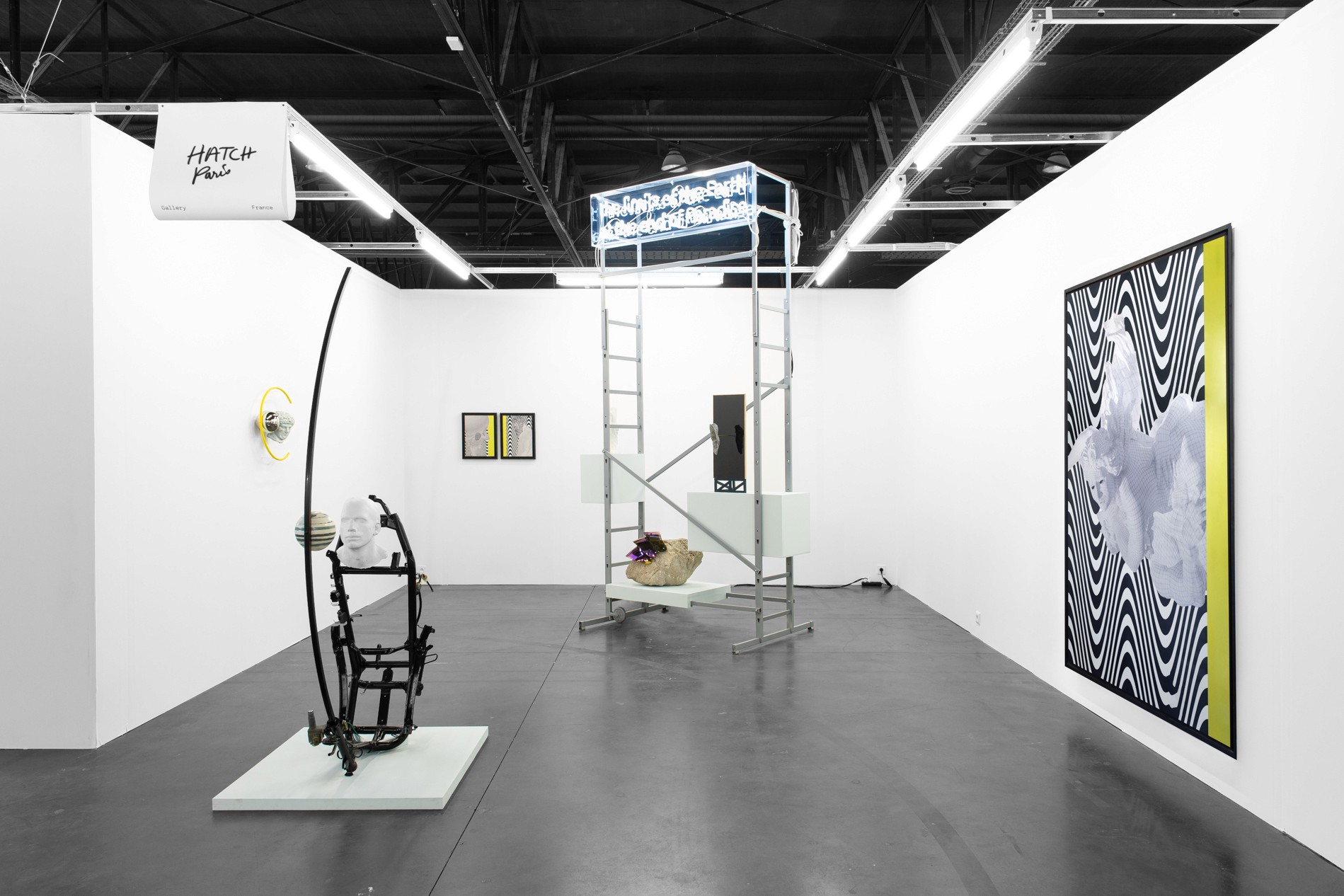
Hercules, Atlas and Proserpine find themselves modeled in 3D on psychedelic backgrounds reminiscent of Byzantine ornamental friezes, as if to signify the altered and fantasized image we may have of Antiquity. Through the appropriation of computer-generated images, Léo underlines the hope that new technologies bring to the reconstitution, conservation and dissemination of archaeological works, and the pleasure brought by a community of enthusiasts who use tools to (re)construct a collective history. The ruin is to be read here as a desire for a future to be built collectively. A future that needs to be envisaged in synergy with nature, but also with industrial, digital and mineral elements.
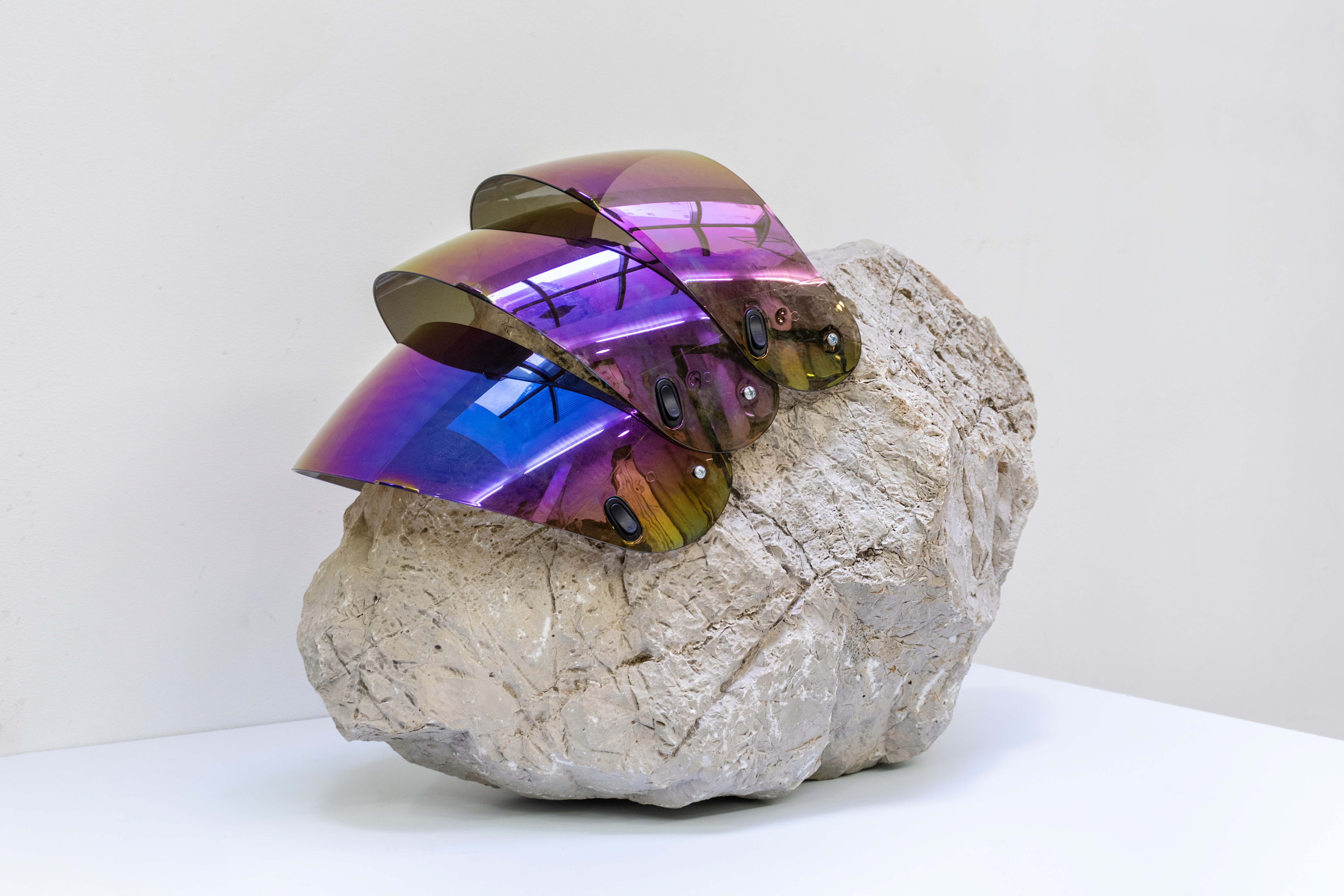
With Discosoma, a face-like stone topped by a motorcycle visor, Cosmic moments of ecstatic communion, where the statuette of a weightless goddess echoes the silhouette of a pebble, or Imagine into existence (I), a nymph whose face has been transfigured into rock, Léo stresses the connection we can have with the mineral world. While stardust makes up not only the cosmos, but also our landscapes, our bodies and our organisms, Léo sees humankind on the same level as the elements of the universe, and places stone as an extension of our being. Stone thus becomes a model of permanence that confronts man, who - faced with it - loses himself in daydreams and the ramblings of the mind.
The writer and poet Roger Caillois (1913-1978), a great collector of stones, maintained that "man envies them their duration, hardness, intransigence and brilliance, to be smooth and impenetrable, and whole even when broken". In the image of these stones, Léo Fourdrinier brings enigmatic marvels to life in his work, under the creative tension of the opposing eyes of Janus in the unruly cycles of time.
Courtesy Joséphine Dupuy Chavanat
Read more
Léo Fourdrinier (b. 1992, France) graduated from the École Supérieure d’Arts et Médias de Caen/Cherbourg in 2017. His work is distinguished by a sculptural practice that explores the relationships between past and present, reality and imagination. He exhibited at the CACN – Centre d’Art Contemporain de Nîmes in 2021 and presented his work during the 16th Lyon Biennale of Contemporary Art, Manifesto of Fragility, in 2022. In 2025, he held a solo exhibition, Les historiens du futur, at the Musée Henri Prades in partnership with MO.CO. Montpellier Contemporain, in Lattes.
Read more
Installation view, Leo Fourdrinier, Art-o-Rama with Hatch Gallery, Marseille, France, 2023. © Margot Montigny. Courtesy of the Artist and Hatch Gallery.
Léo Fourdrinier
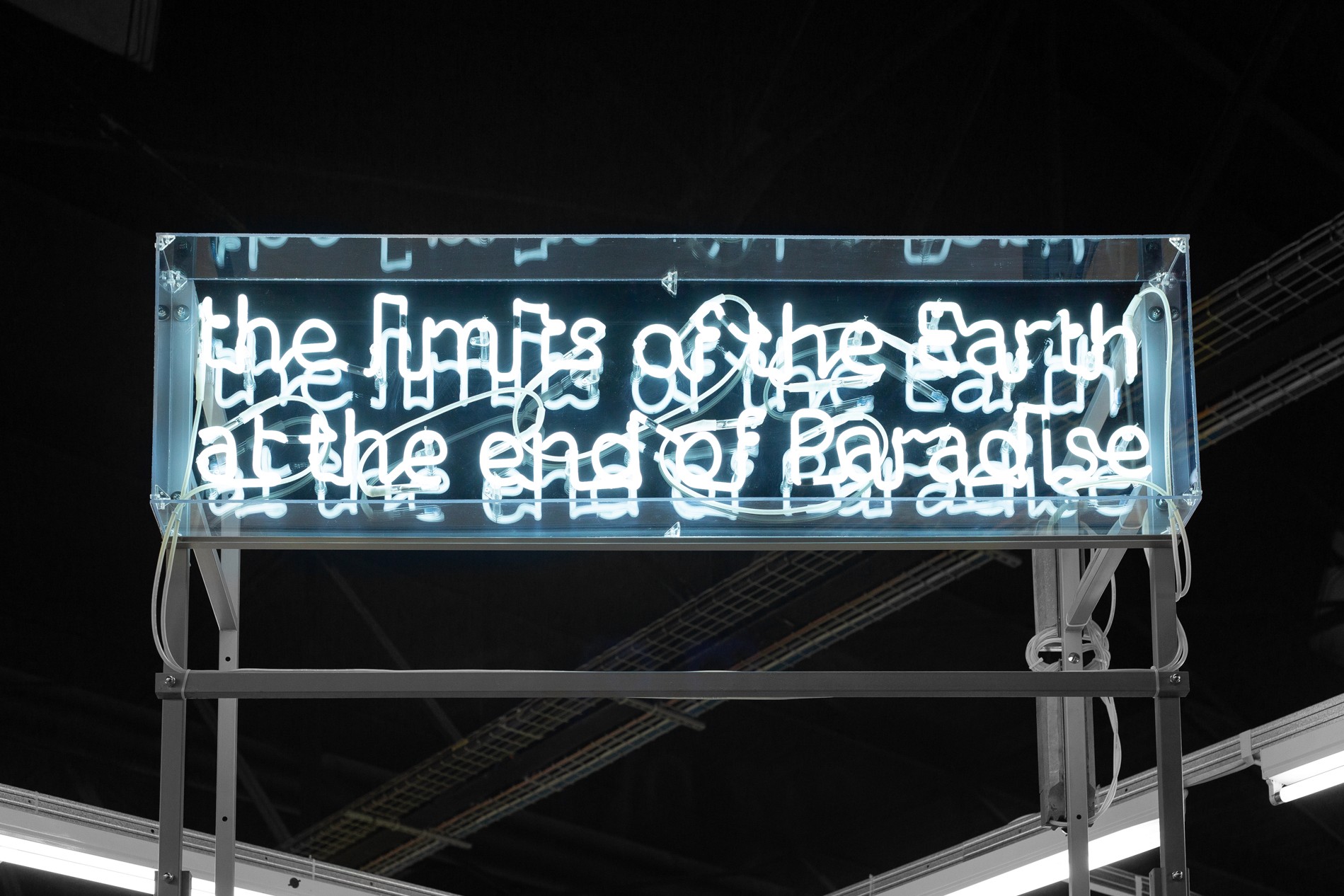
The limits of the Earth, at the end of Paradise
2023
Neon, plexiglas
60 x 144 x 10 cm
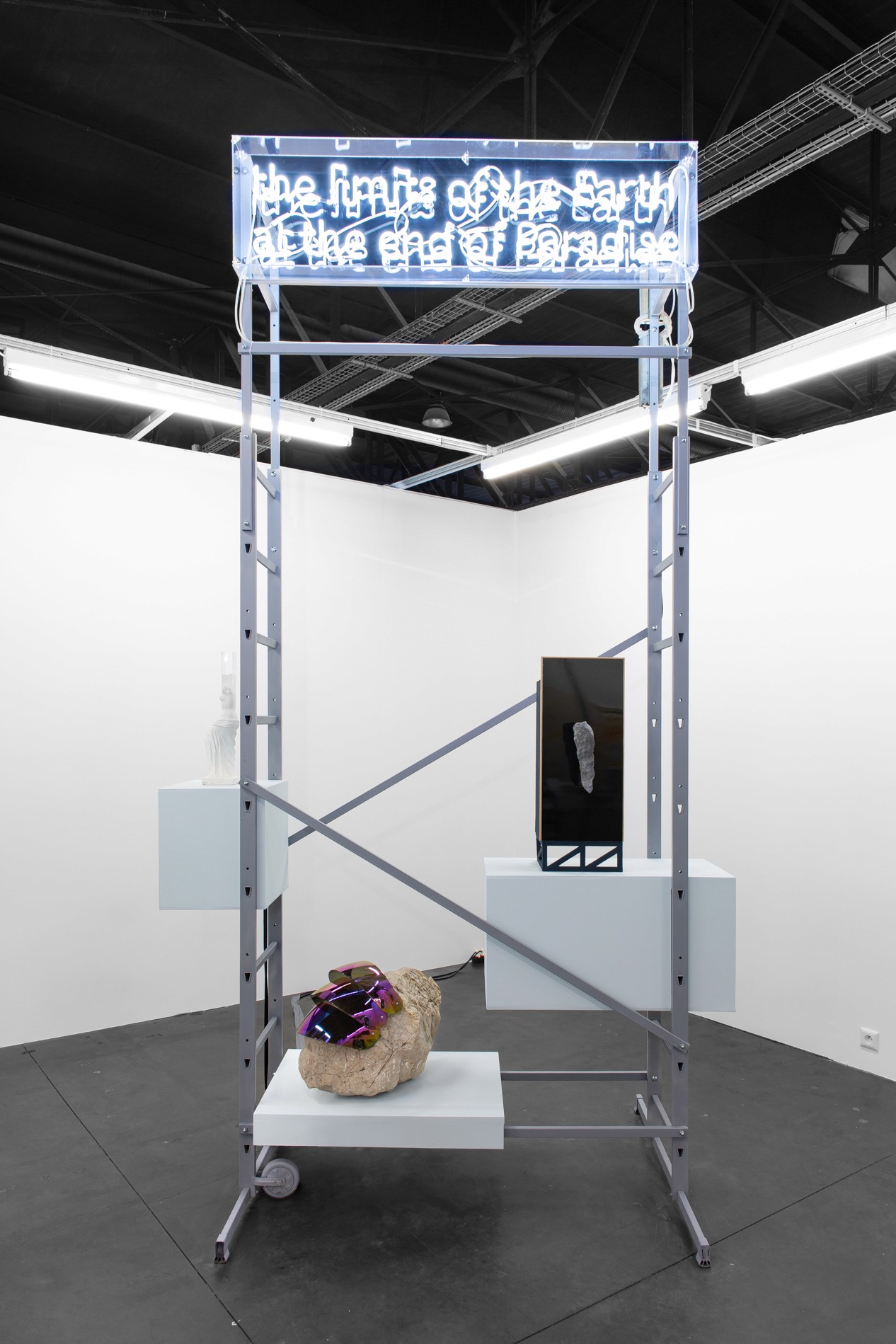
Installation view, Leo Fourdrinier, 2023 (details).
Léo Fourdrinier
Discosoma
2021
Stone, polycarbonate lens
63 x 32 x 34 cm
Production Chateauvert and Hatch Gallery
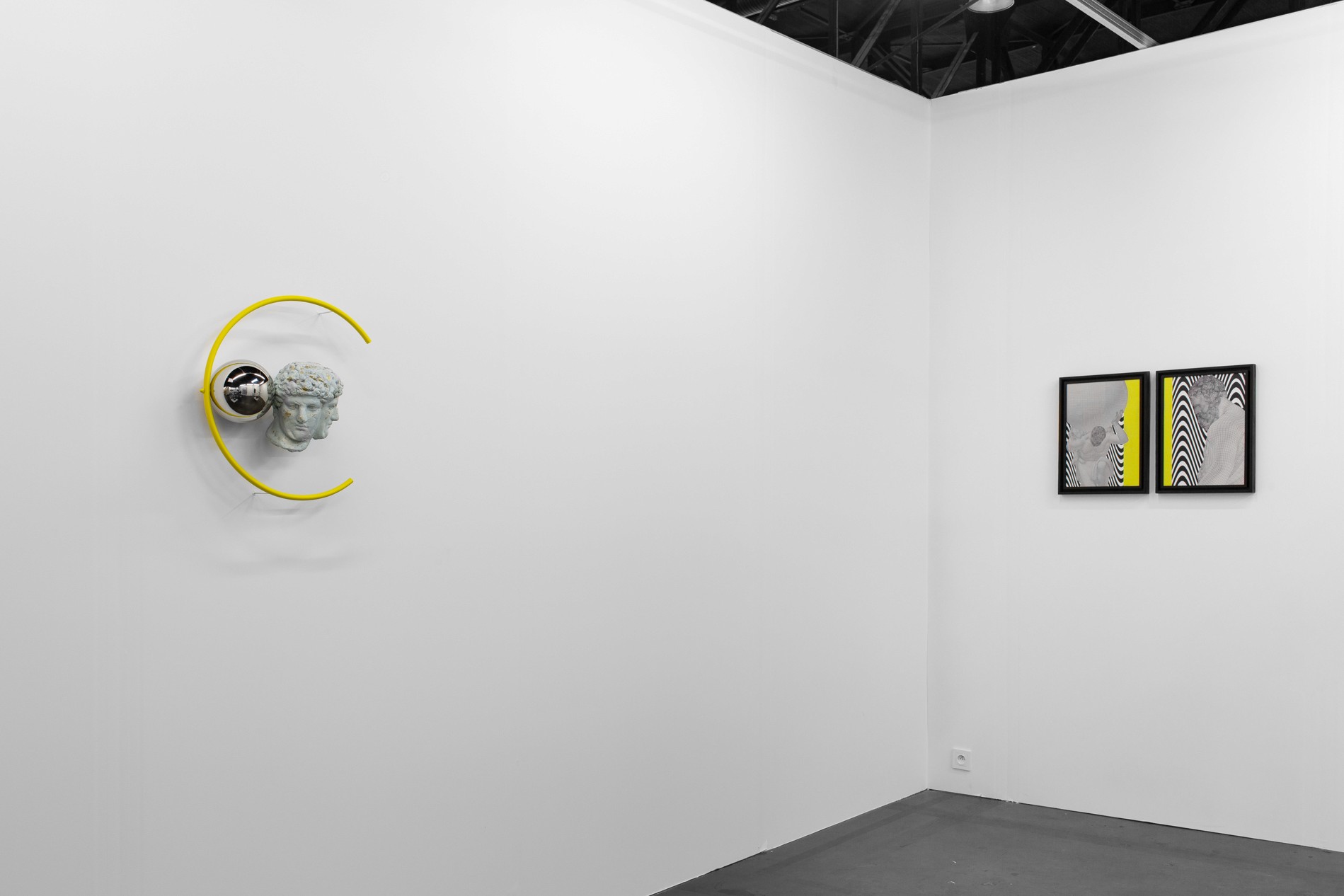
Léo Fourdrinier
Janus
2021
Plaster, steel, plastic, acrylic paint, gold leaf
Variable sizes
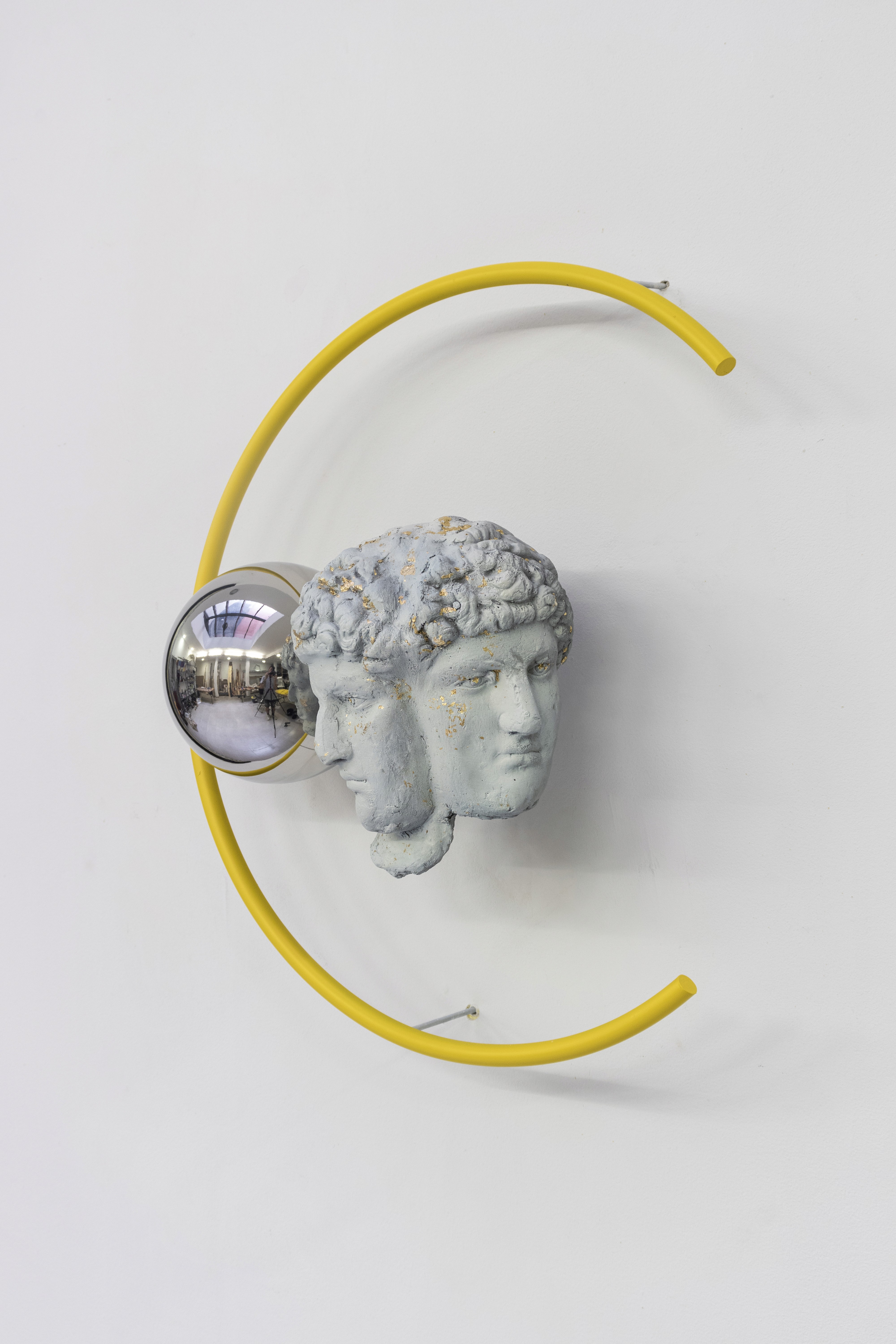
Léo Fourdrinier
Janus
2021
Plaster, steel, plastic, acrylic paint, gold leaf
Variable sizes
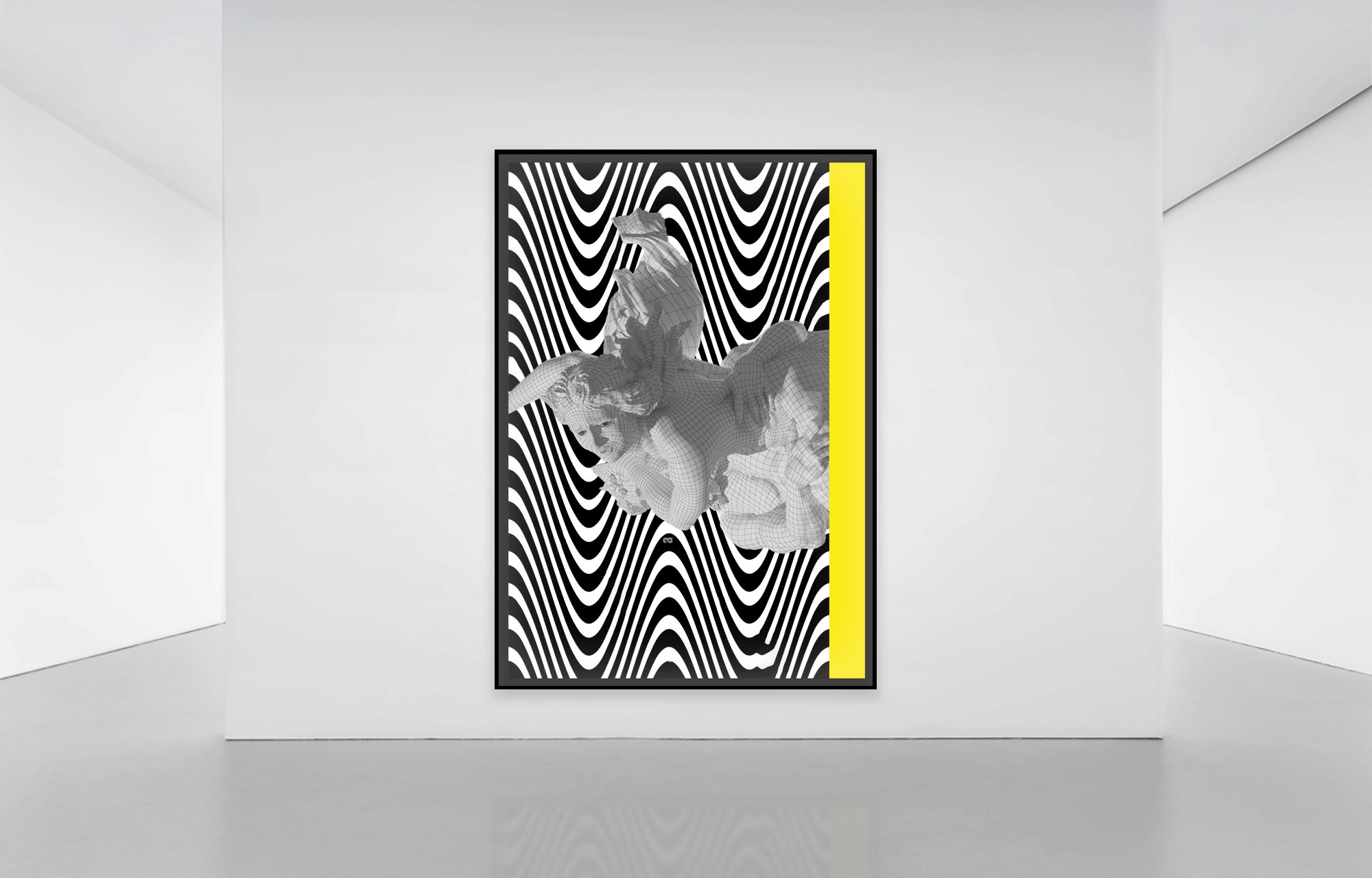
Léo Fourdrinier
The end of Paradise #1: Proserpine
2023
Print on aluminum in artist's frame
205 x 140 cm
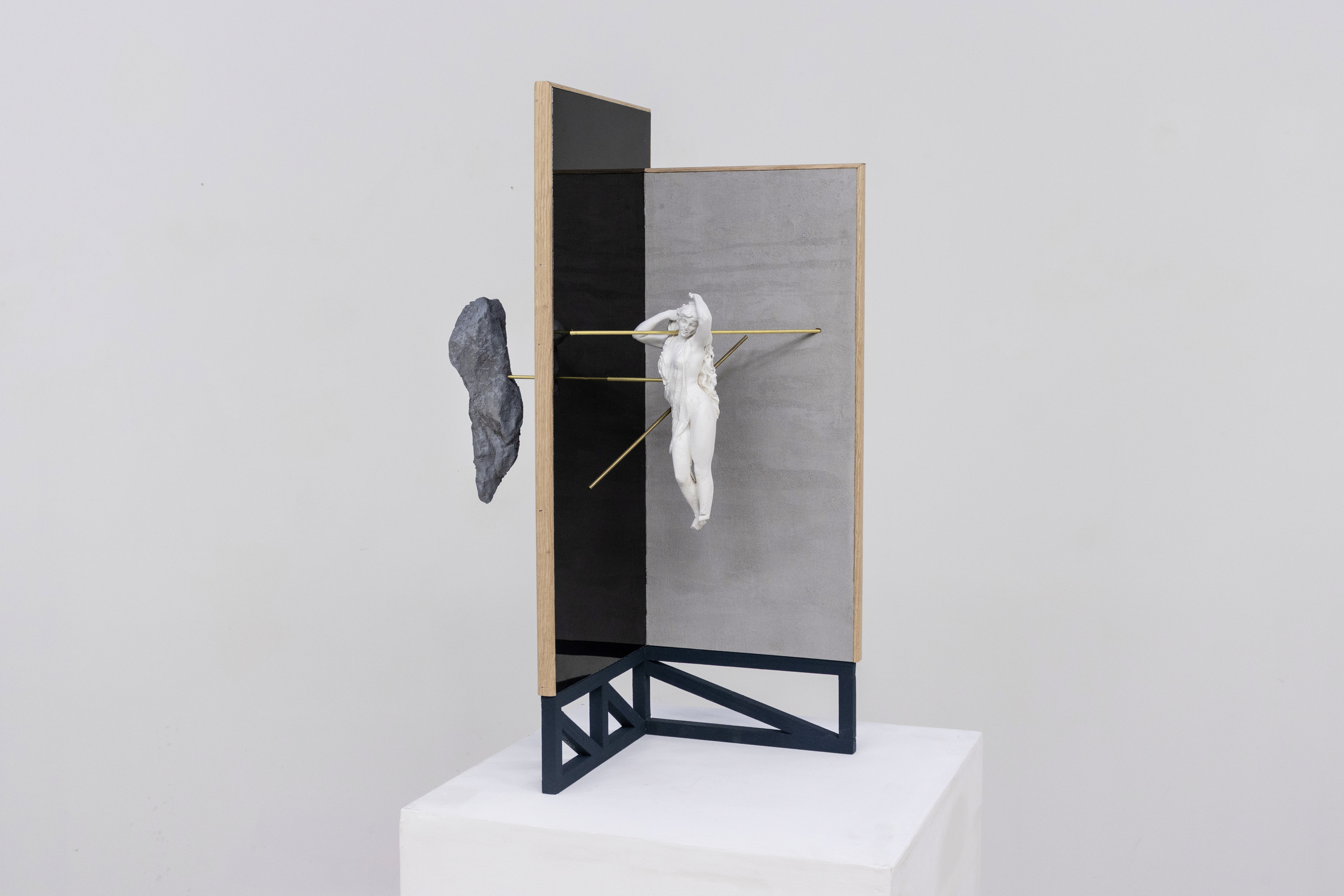
Léo Fourdrinier
Imagine into existence (I)
2023
Resin, limestone, brass, plexiglas, wood,
59 x 36,5 x 24,5 cm
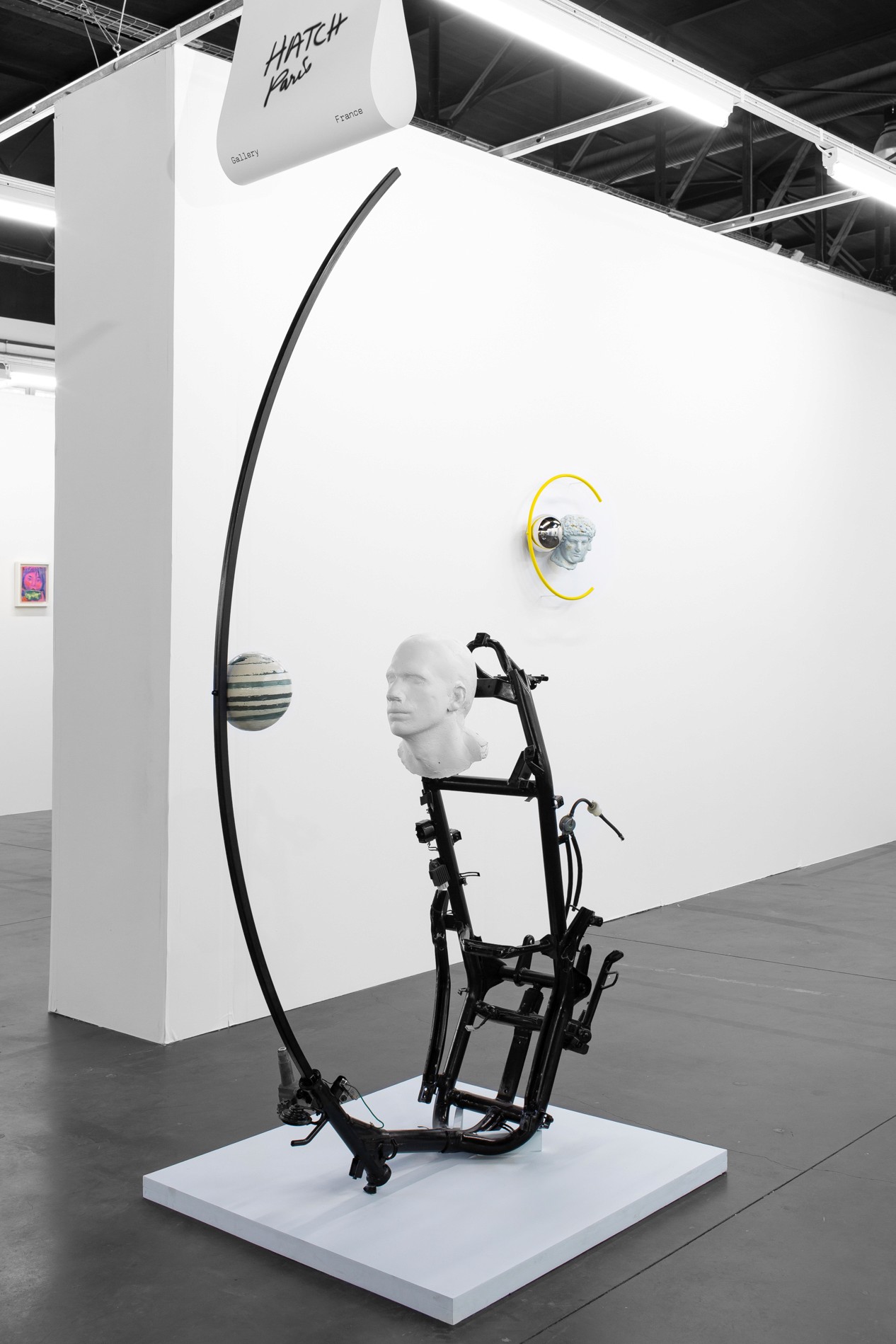
Léo Fourdrinier
The Architect
2023
Plaster, steel, scooter chassis, acrylic paint
230 x 91 x 91 cm
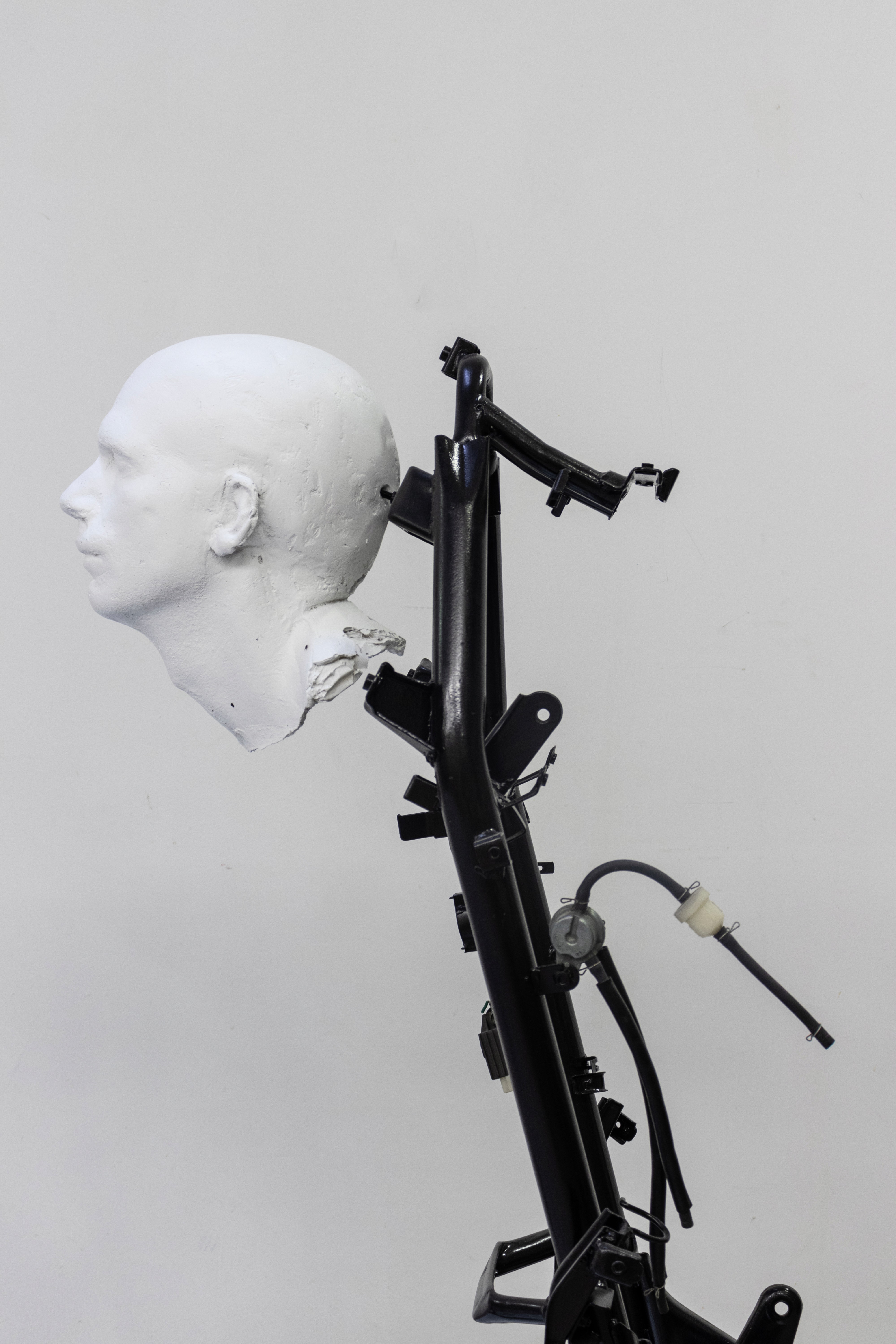
Léo Fourdrinier
The Architect
2023
Plaster, steel, scooter chassis, acrylic paint
230 x 91 x 91 cm