Participating Artist
Maria Appleton, Kara Chin, Nada Elkalaawy, Abul Hisham, Felipe Romero Beltrán, Romain Sarrot, Ayla Tavares, Laila Tara H
Informations
March 20 → April 11, 2026
40 rue Mazarine 75006
Paris, France
Press Release
The opening of Hatch’s permanent space at 40 rue Mazarine, in Saint-Germain-des-Prés, marks the occasion of an inaugural group exhibition titled 1, 2, Glissade et Changement. Bringing together the gallery’s artists alongside new voices joining its programme, the exhibition features works by Maria Appleton, Kara Chin, Ayla Tavares, Felipe Romero Beltrán, Laila Tara H, as well as Abul Hisham, Nada Elkalaawy and Romain Sarrot. Together, their practices outline a transversal landscape where perspectives from Latin America, the Middle East, Europe and Asia intersect, affirming the gallery’s international and plural identity.
Conceived as a choreography, 1, 2, Glissade et Changement approaches the notion of the instruction as a generative principle. Its title borrows from the vocabulary of classical ballet: a count, a sliding step, followed by a jump in which the feet exchange positions. “1, 2” establishes the measure; “glissade” initiates the transition; “changement” performs the reversal. The exhibition does not present itself as a fixed statement, but rather as the opening of a score in the making, a first movement anticipating motion and transformation.
At its centre, Felipe Romero Beltrán’s video Instruction (2022–2024) explores the physical and mental experience of crossing the Spanish border, translated into the language of the body through a collaboration between trained dancers and marginalised migrants. Around this work, the practices of Maria Appleton, Kara Chin, Nada Elkalaawy, Abul Hisham and Romain Sarrot extend and shift this reflection. Through painting, sculpture, textile and ceramics, their works explore different ways of activating memory, transforming inherited frameworks and inscribing narratives into matter.
Throughout the exhibition, the instruction is neither fixed nor neutral. It operates as a point of departure that each artist interprets and transforms. Starting from material, historical or cultural frameworks, the works explore different ways of shifting forms, gestures and narratives.
The instruction circulates.
It is interpreted.
It becomes movement.
The protocol becomes language.
Read more
Maria Appleton (b. 1997) is a Lisbon-based artist whose practice interrogates the subjectivity of urban systems and human perception.
Her work has been presented internationally through exhibitions and residencies, including Kyoto Institute of Technology, Japan (2018); EMMA Institute, Germany (2020); Cité Internationale des Arts, Paris (2022, funded by Calouste Gulbenkian Foundation); Fondation CAB, Brussels (2024); and the Albers Foundation residency program (2026). Solo exhibitions include Gaze to See, Gauze to Perceive at FOCO Gallery, Lisbon (2021), HATCH, Paris (2023), and What Holds the Structure at Galeria Foco, Lisbon (2026).
Kara Chin (b. 1994, Singapore) is a multidisciplinary artist working across ceramics, sculpture, animation, and installation. Chin’s work has been shown internationally at institutions and exhibitions including the Liverpool Biennial (United Kingdom), Goldsmiths Centre for Contemporary Art, London; Humber Street Gallery, Hull; The 8th Triennial of Art and Ecology, Maribor (Slovenia); BALTIC 39, Newcastle; and South London Gallery, London. She lives and works in Berlin, Germany, where she continues to develop projects at the intersection of technology, ecology, and imagination.
Nada Elkalaawy (b. 1995, Egypt) is an artist based in London and Cairo whose practice explores the slippage of images between truth and fiction. She has participated in residencies with Pro Helvetia, Montresso Art Foundation, and L’appartement 22. She has been shortlisted for the Sainsbury Scholarship at the British School at Rome, the ACS Studio Prize, the Contemporary British Painting Prize, the Dentons Art Prize, and the Sarabande Emerging Art Fund. Her work is included in the X Museum collection, Beijing, the Soho House collection, London, and private collections worldwide. She is a co-founder of the artist group K‑oh‑llective.
Abul Hisham (b. 1987, Thrissur, Kerala, India) is a painter and installation artist based in Amsterdam, The Netherlands. Drawing on Safavid, Mughal, Rajput, and Deccani repertoires, Hisham develops an expressionist vocabulary through portraits and tableaux that are uncanny, riddling, and phantasmagorical. Hisham has held solo exhibitions including Recitation (Galerie Mirchandani + Steinruecke, 2019), New Works (Galerie Mirchandani + Steinruecke, 2014), and DOMINATION (Kashi Art Gallery, 2010). Group exhibitions include An Ocean in Every Drop (JAMEEL Art Centre, Dubai, 2022), De Jacht (Galerie Deschans, Amsterdam, 2022), In the Land of Downside Up (Birla Art Academy, Kolkata, 2019), Nine Painters from Kerala (Galerie Mirchandani + Steinruecke, 2018), and DWELLING, 10th Anniversary Show (Galerie Mirchandani + Steinruecke, 2017). He was a resident at the Rijksakademie, Amsterdam (2021–2023) and was awarded the De Schefferprijs in 2024. Hisham is currently exhibiting at the Kochi-Muziris Biennale, India.
Felipe Romero Beltrán (b. 1992, Bogotá, Colombia) is a photographer and visual artist based in Paris. He holds a PhD in Photography from the Complutense University of Madrid. Romero Beltrán’s work has received significant recognition, including the Prix Photo Elysée (2025), Emerige-CPGA Prize at ARCO Madrid (2024), Prix pour la photographie at Quai Branly (2024), Foam Paul Huf Award and Mapfre Award (2023), and the Aperture Portfolio Prize (2022). He has presented solo exhibitions at institutions such as Maison Européenne de la Photographie, Paris; Carré d’Art, Nîmes; Fundación Mapfre, Madrid and Barcelona; FOAM, Amsterdam; Deichtorhallen, Hamburg; and Aperture Foundation, New York. His work is held in public and private collections including Carré d’Art, FOAM, KADIST, Fenix Museum, and Aperture.
Romain Sarrot (b. 1986, Paris, France) is an artist whose practice investigates memory, transformation, and narration through a cyclical, immersive methodology. His work has been presented internationally, including solo exhibitions Quarter of Life I / i miss you once at Lokal-int, Bienne, and Quarter of Departure I / 9:00 AM at VITRINE Gallery, London. Group exhibitions include We All Talk to Our Own Gods, Material Art Fair, Mexico City (2025); Après quoi les limbes, Art and History Museum, Geneva (2024); Las Cicadas, Balearic Islands, Spain (2024); and Infinite Looping in Harmony, Hatch, Paris (2023).
Ayla Tavares (b. 1990, Brazil) investigates archaeological and sacred artifacts, architecture and everyday objects, establishing relations with dikerent layers of time to think about day-to-day life, memory and life in common. Comprehending materiality with all its complexities, the artist creates constellations of objects under other orders, generating from these new bodies relationships of estrangement, speculation and narrative. She held exhibitions "Several Eternities in a Day: Form in the Age of Living Materials" at Hammer Museum (2026, Los Angeles); "Ustão", at Casa Museu Eva Klabin (2023, Rio de Janeiro); "Alfarería del agua", at the Collegium Museum (2022, Arévalo, Spain); and "Sonantes", at Centro Cultural Light (2019, Rio de Janeiro). Tavares participated in group exhibitions at institutions such as the Jingdezhen International Biennial of Ceramic Art (Jingdezhen, China), Lamb Gallery (London, United Kingdom), Weserhalle Gallery (Berlin, Germany) and Paço Imperial (Rio de Janeiro). She was a resident in the Pivô Research Program (2022, São Paulo).
Laila Tara H (b. 1995) is a British-Iranian artist whose multidisciplinary practice spans painting, textile, sculpture, and installation. Solo and duo shows include ‘Hastan/’هــســـــــــتن (with Narges Mohammadi), Copperfield, London (2023); ‘Twisted toes, tangled ears’ (with Anousha Payne), Public Gallery, London (2022); ‘duck duck goose’, Purdy Hicks, London (2022); ‘Vexilloid’, O Gallery, Tehran (2021); ‘Sky-Circles’ (with Anusheh Zia Siddiqui), Indigo+Madder, London (2021); ‘Am I?’, V.O Curations, London (2021). Residencies include VO Curations (2023/2021); Blank100 Residency (2023); Sarabande: Alexander McQueen Foundation (2023/2022); Casa Balandra (2020); Numeroventi (2020). She has collaborated with brands such as Home of Hai (2023); Mural at The Twenty Two (2022); Drake's, London (2022); Papier (2021). Tara H’s works is foremost included in International collections such as the Kiran Nadar Museum / Scorpion Collection (Delhi, IN) and Taimur Hassan Collection (London, UK).
Read more
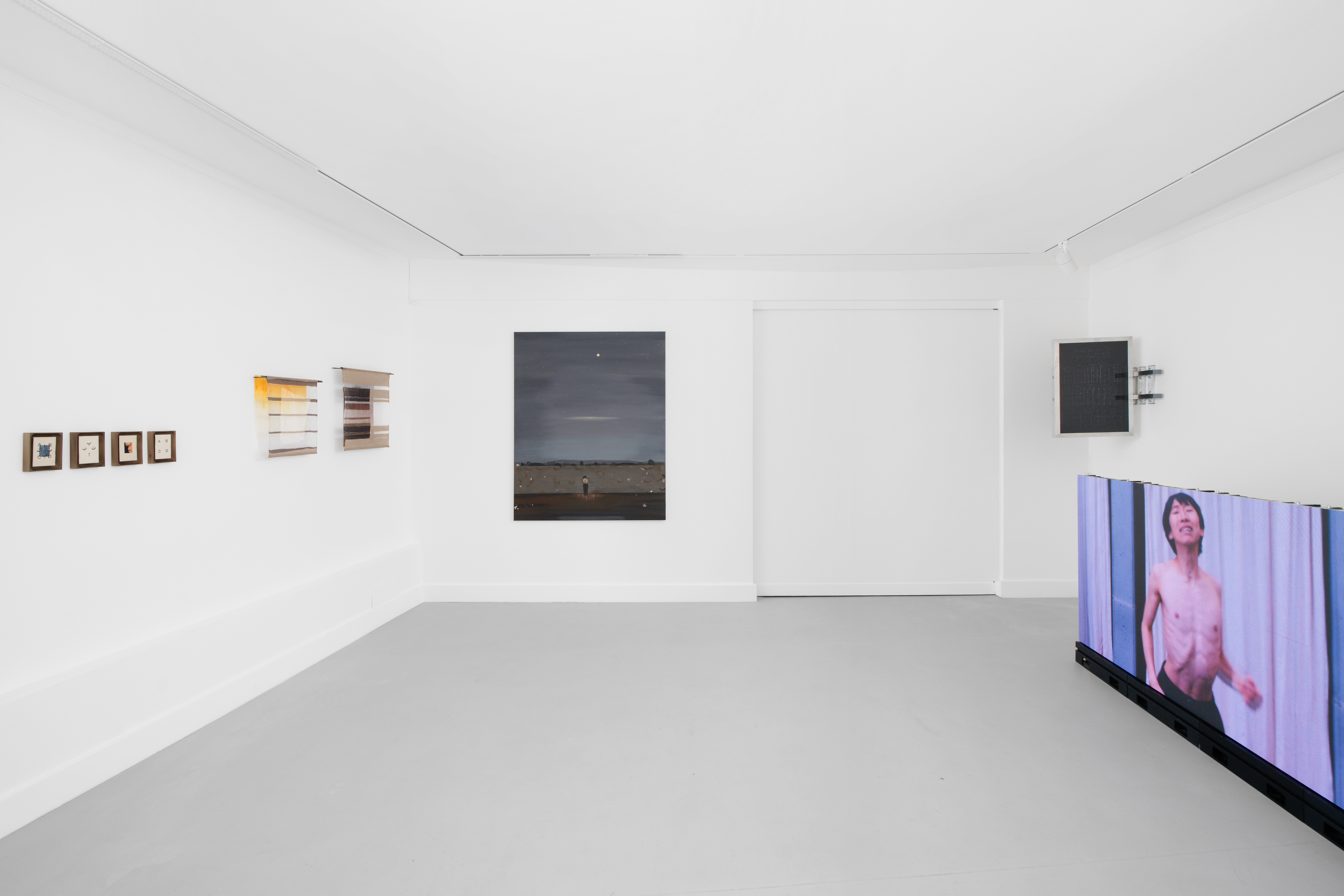
Installation view, '1,2, Glissade et Changement', Hatch Gallery, Paris, France, 2026. © Pauline Assathiany. Courtesy of the Artists and Hatch Gallery.

Installation view, '1,2, Glissade et Changement', Hatch Gallery, Paris, France, 2026. © Pauline Assathiany. Courtesy of the Artists and Hatch Gallery.
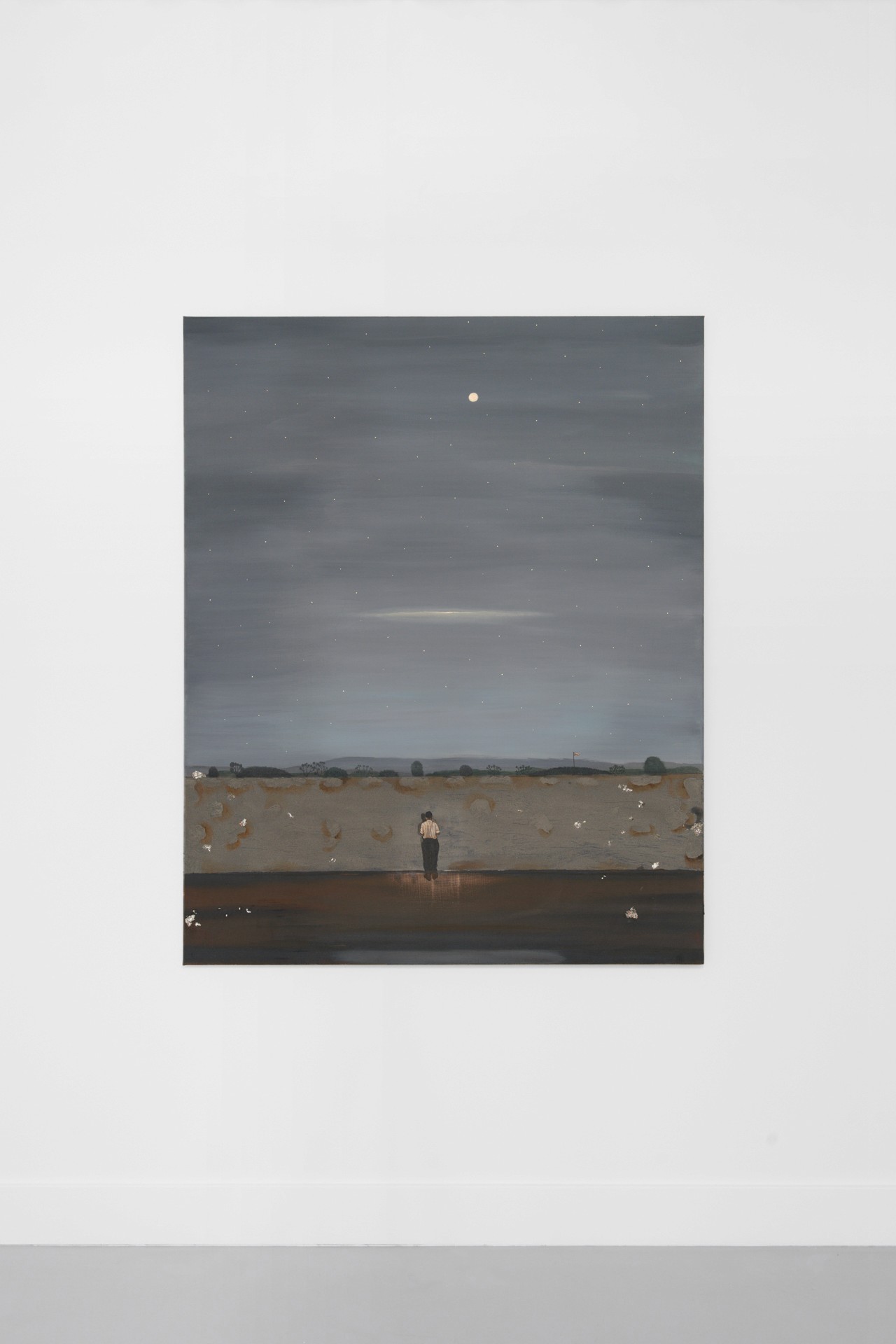
Abul Hisham
The unsolved
2025
Acrylic and casting powder on linen
150 x 120 cm
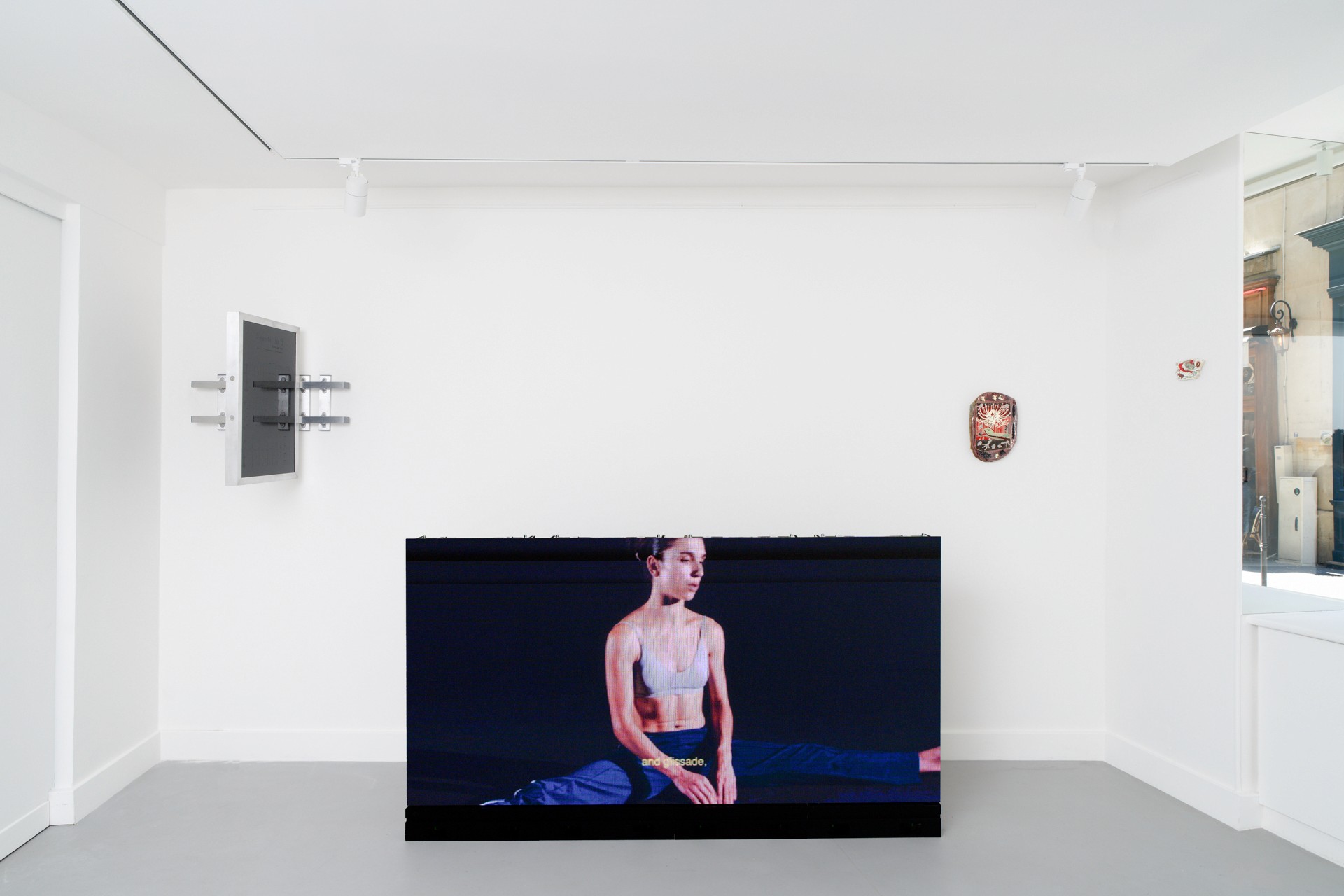
Installation view, '1,2, Glissade et Changement', Hatch Gallery, Paris, France, 2026. © Pauline Assathiany. Courtesy of the Artists and Hatch Gallery.
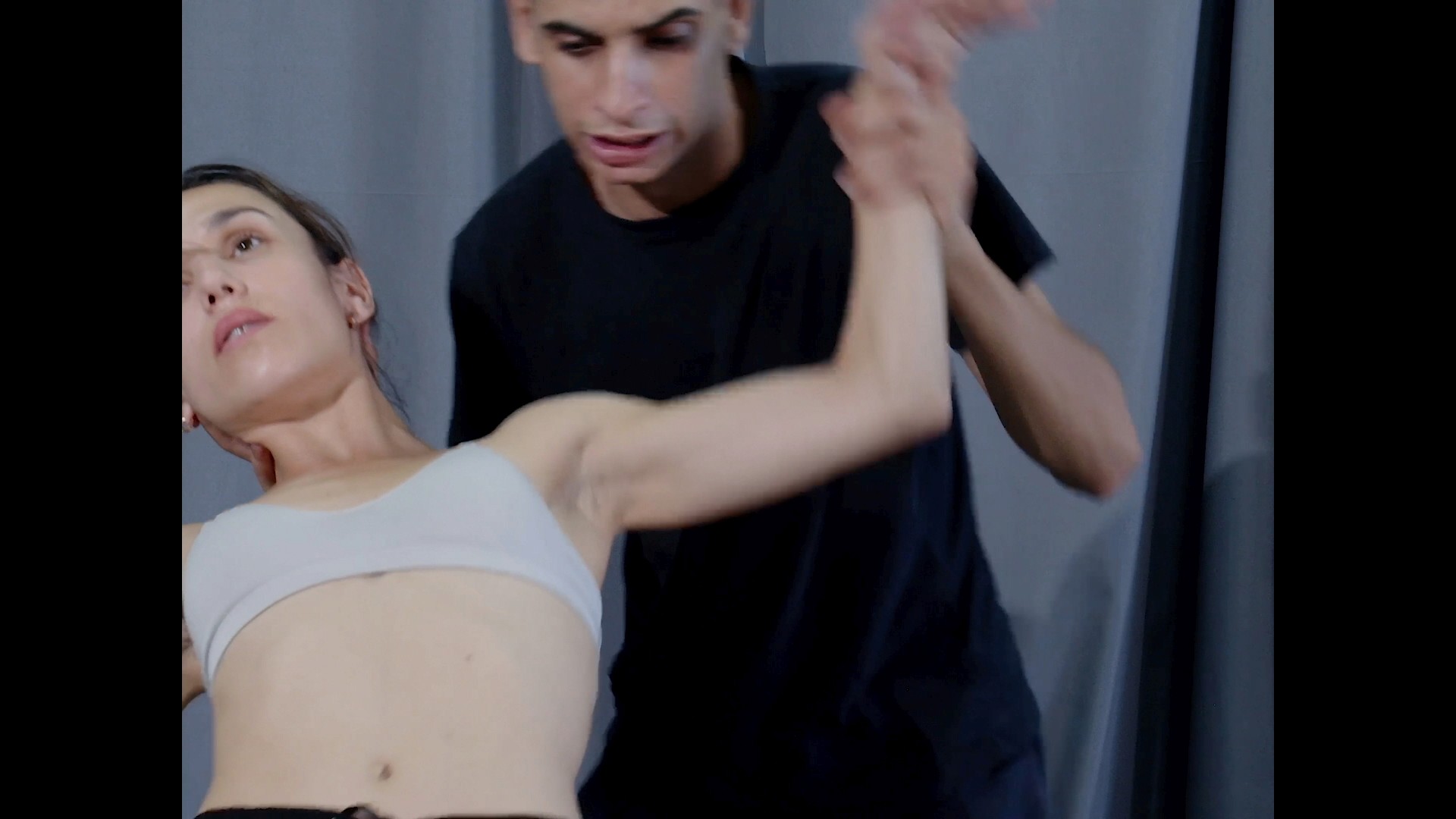
Felipe Romero Beltrán
Instruction
2022-2025
Three-channel video (color and sound)
Details
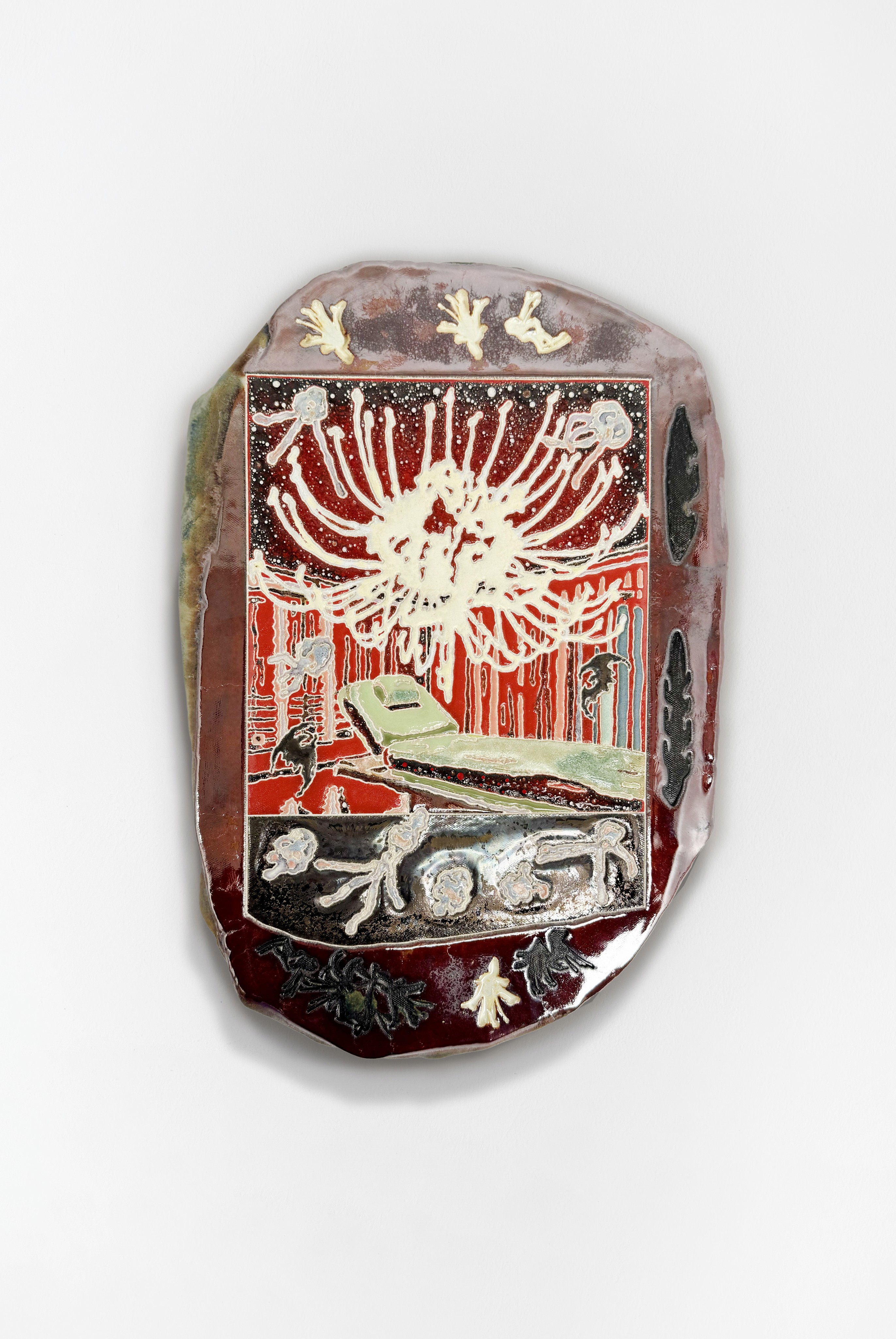
Kara Chin
Spider Lily Suspended in the Therapy Room
2025
Glazed stoneware ceramic, pigmented grout, wall bracket in painted timber and resin
34 x 23 x 4 cm
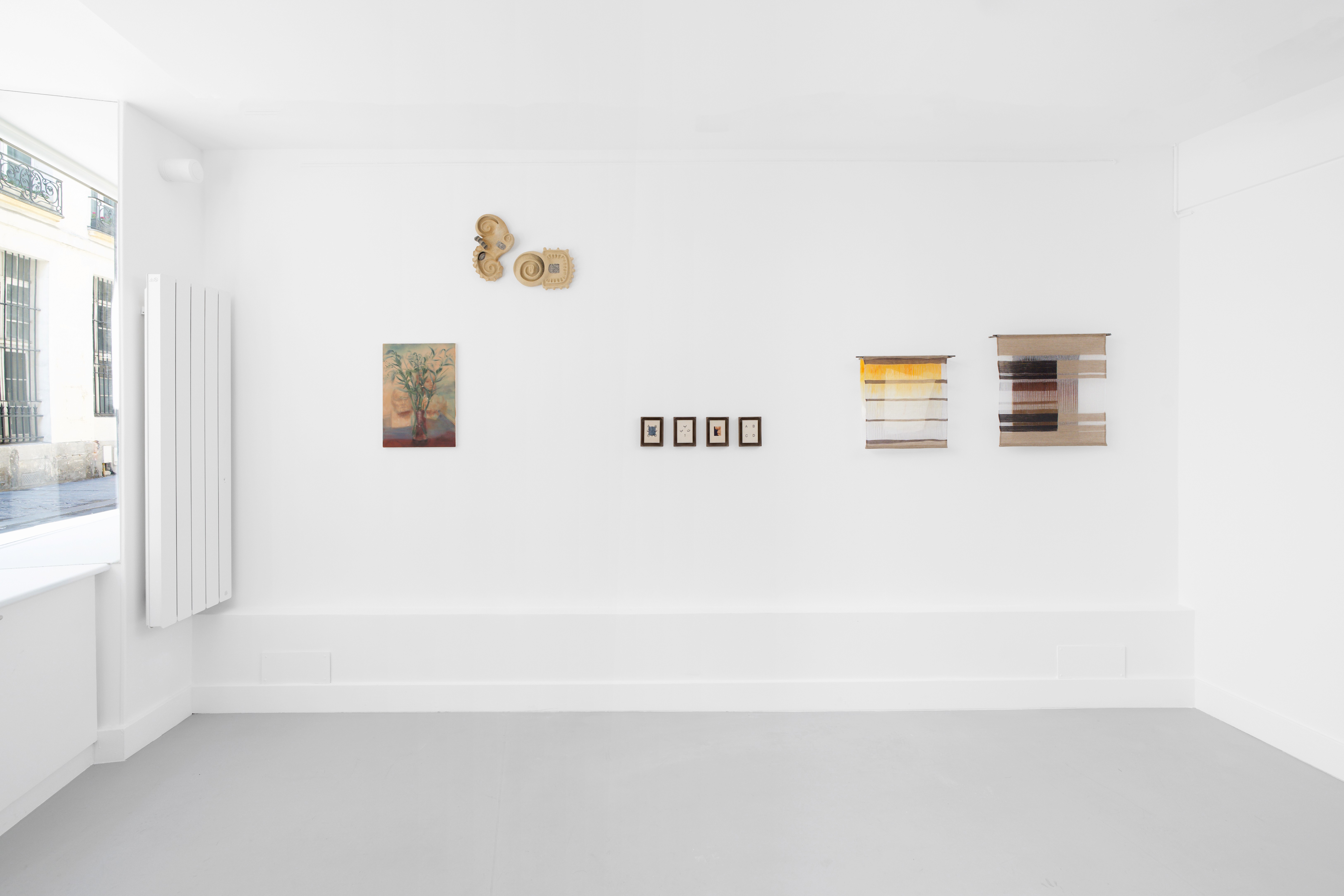
Installation view, '1,2, Glissade et Changement', Hatch Gallery, Paris, France, 2026. © Pauline Assathiany. Courtesy of the Artists and Hatch Gallery.
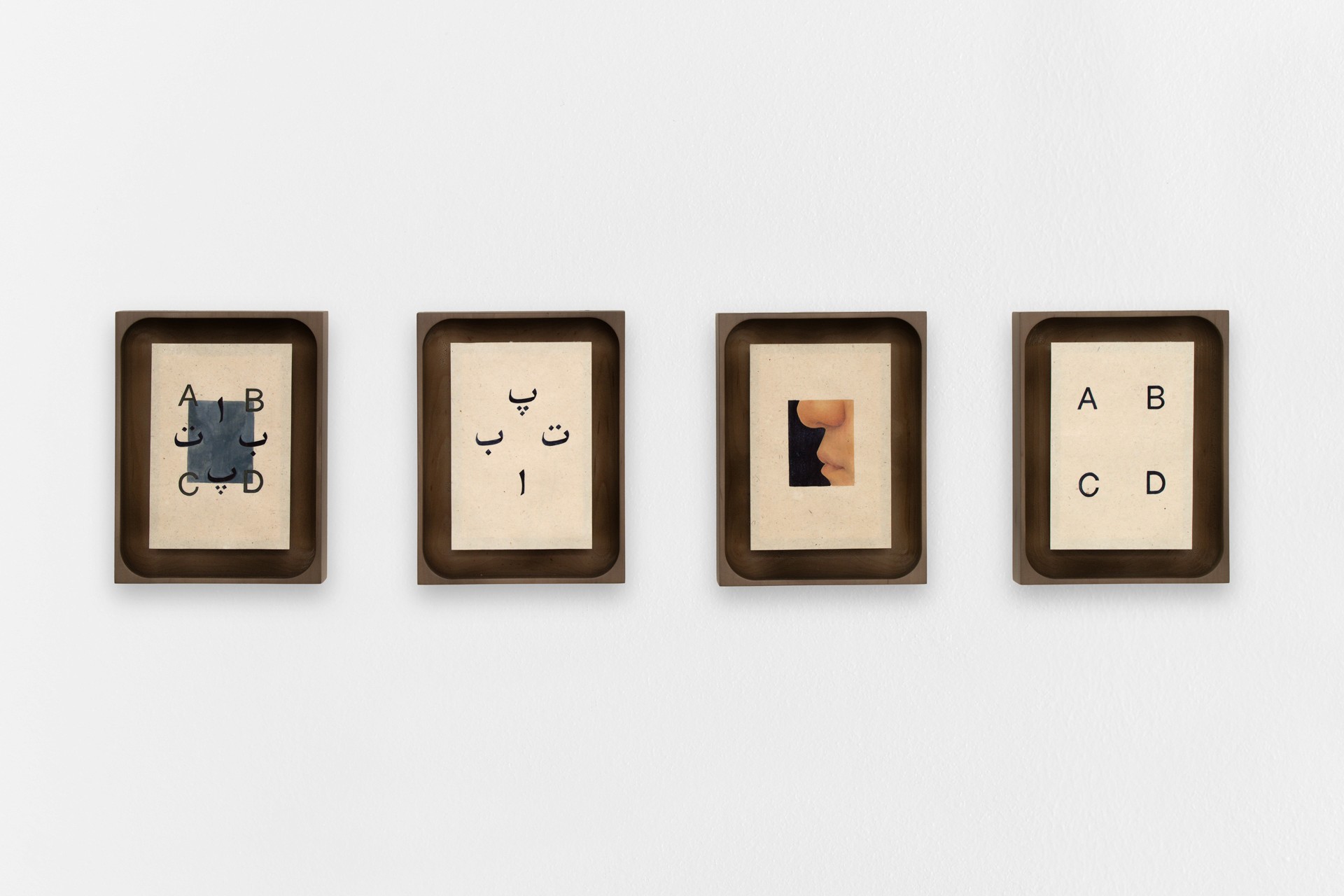
Laila Tara H
Morpheme
2025
Natural pigment, watercolour on hemp paper
Series of 4
14,5 x 11 cm (each)
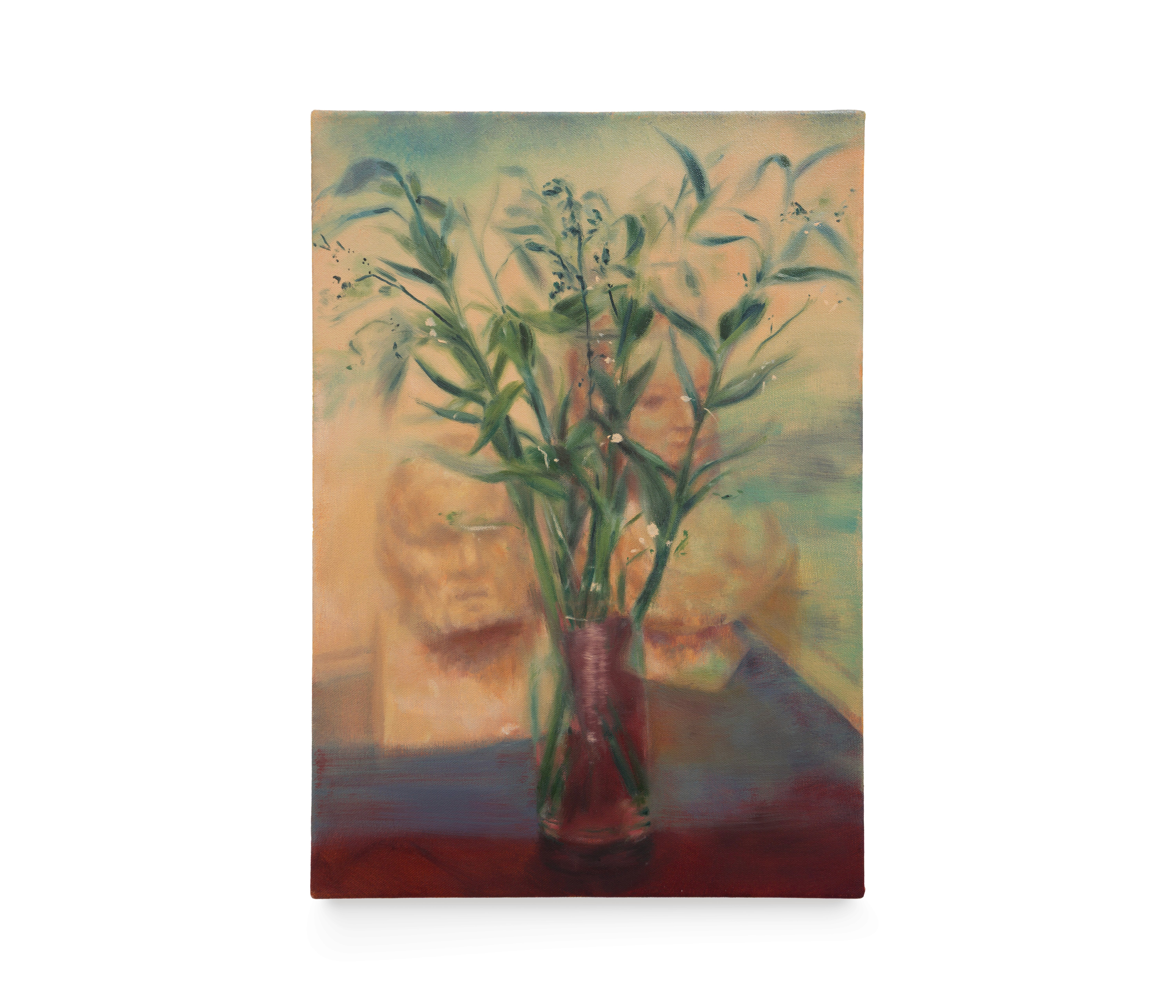
Nada Elkalaawy
An Arrangement
2025
Oil on canvas
50.5 x 35.5 cm

Ayla Tavares, The Sound and the Wind and Assemblage of Fossil Ammonites, 2025 (details).

Maria Appleton, What The Structure Holds IV and Spaces for Light II, 2026 (details).
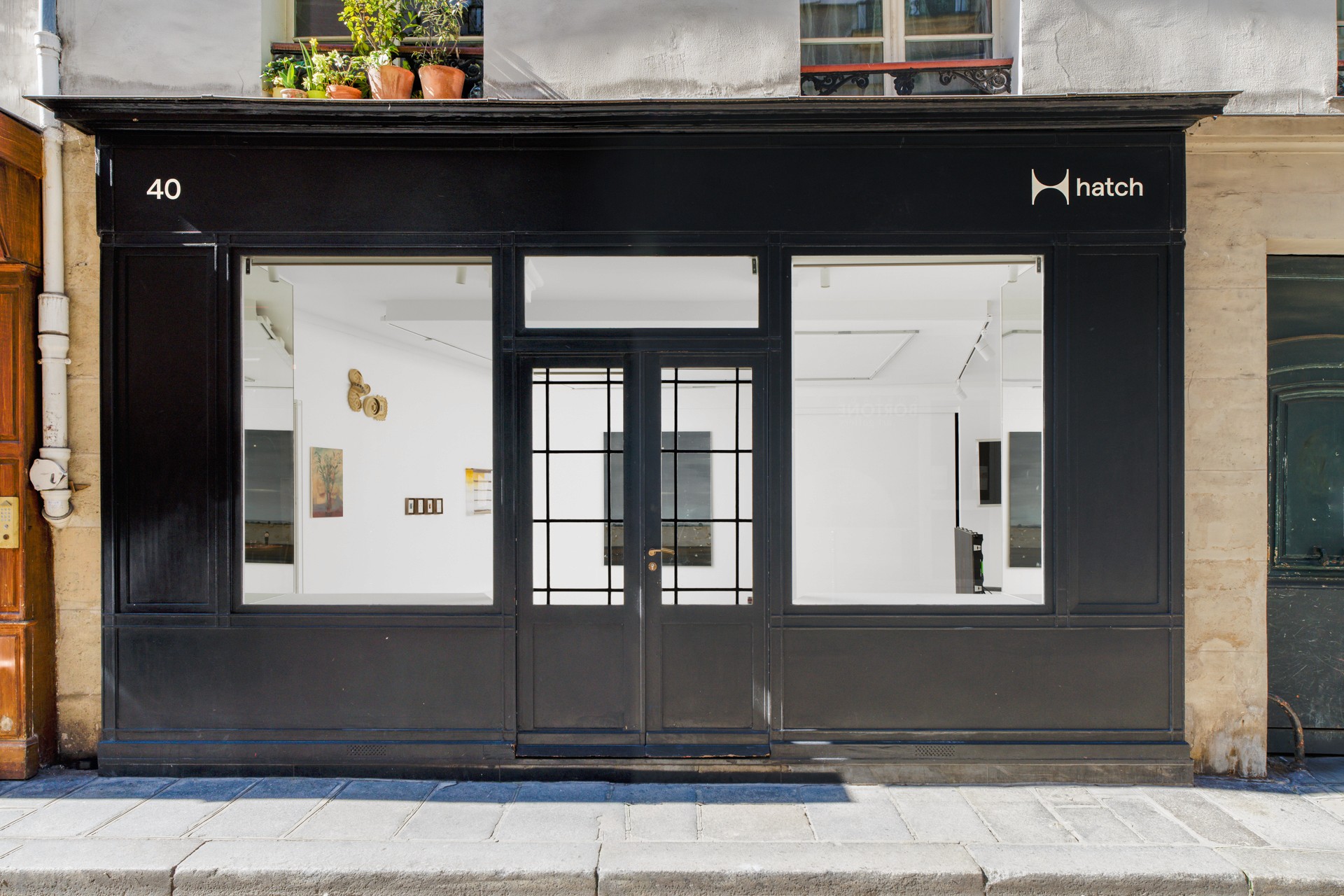
Installation view, '1,2, Glissade et Changement', Hatch Gallery, Paris, France, 2026. © Pauline Assathiany. Courtesy of the Artists and Hatch Gallery.