Participating Artist
Ayla Tavares & Celeida Tostes
Informations
October 20 → December 6, 2025
1 Place du Louvre, 75001
Paris, France
Press Release
Press
Anthologies of a Receptacle brings into dialogue the pioneering work of Celeida Tostes (1929-1995) and the contemporary practice of Ayla Tavares (1990-), two Brazilian artists whose work speaks intimately to memory, transformation, and the profound relationship between body and clay. Though separated by generations, their artistic vocabularies are rooted in material sensitivity, intuitive gesture, and a deep respect for organic processes.
Through the dialogue between hands and clay, ceramic bodies are created, each carrying its own story. The exhibition explores the artists’ shared devotion to form as vessel—not only a container of matter, but of memory, gesture, and the unspoken. It associates with the paradox at the heart of Lao-Tse’s philosophy: “It is the emptiness within the cup that makes it useful.” Clay’s vitality lies not in its mass, but in its openness. What matters is not the vessel’s wall, but the void it protects; not solidity of the object, but the interval it creates and its significance as a receptable.
For Tostes, whose clay works rise from the earth’s own body, the vessel becomes a space of intimacy and encounter. Her objects hold absence as presence, the hollow core as an invitation to imagine what it might contain. Tavares, in turn, navigates through contemporary gestures of sculpture and installation, probing the fragile thresholds between interior and exterior, weight and suspension. In Untitled (n/d), from the Eggs series, Celeida Tostes explores the relationship between gaze and object. She constructs stacks of egg cartons reminiscent of those found in any market, yet her ceramic versions resist utility: unlike cardboard, they cannot carry food, and their clay eggs are inedible. Instead, they invite a sensory exchange with the viewer, each egg concealing a pebble inside. For Tostes, creating, experimenting, teaching, and learning were all part of a playful process of interpreting and sharing the world. At a meeting of art teachers at the National School of Music, she once distributed small ceramic eggs—like those shown in this exhibition—and asked colleagues to shake them. When a music teacher remarked, “I don’t think the noise they make is interesting,” Tostes replied, “You are not supposed to listen. This is just to show that there is an inside.” For her, the hidden interior had to be made tangible, revealed, and acknowledged¹.
In the Wheels series (1983), we note a simplification of the biomorphic sculptural form, toward the unitary, especially through a certain rounding of the figures. The artist used to say that the piece emerged from the womb of her hand into the space between her hands².
Amassadinhos (1991) is part of the work presented at the 21st São Paulo International Biennial. The complete work comprises twenty thousand clay pieces, each formed by the simple act of kneading clay in the palm of the hand—a reflexive movement described by Tostes as archaic gesture. Created collectively, the work carries no social or class distinction: hundreds of hands, each with its own story, left their imprint. A single squeeze—without intention of form—became both object and trace. Displayed at the Biennial on three six-by-three-meter panels, with a red wheel on the floor at the center, the installation juxtaposed the immediacy of touch with the construction of meaning through the gaze. Among the thousands of impressions, the hand of a one-year-old child meets that of a prisoner. Each fragment embodies the hollow of the hand, a filling of the hand—an inversion, an outside turned in. Void and silence persist, but here they arise in an entirely new way, emerging directly from the gesture itself.
At the heart of the exhibition lies the photographic narrative of Passagem (1979), Tostes’ most emblematic work. With the assistance of two collaborators, the artist covered her nude body in liquid clay before entering a large clay vessel and sealing its opening. Enclosed within, she evoked both the interior of an egg and the confinement of a funerary urn. She then ruptured the structure by thrusting her body outward, emerging as a being of her own making—an image that weaves together the codes of life and death.
At the time, she composed a poem about the experience:
I have divested myself
I covered my body with clay and parted
I got into the hollow of the dark, womb of the earth
I entered the dark womb of the earth
Time lost the time sense
I arrived at the formless
I may have become mineral, animal, vegetal I do not know what I have been
I do not know where I was. Space
History was no longer
Sounds reverberated.
Out of time
Pain
I do not know where I have wandered
The darkness, the sounds, the pain – they all mingled together
The space shrinked
I went out. I came back³.
Passagem conveys the foundations of Tostes’ practice: the fusion of sculpture with other artistic expressions, such as performance, and the relationship between installation and its surrondings; the emphasis on process over outcome, and of experience as a way to bring art closer to life. A practice grounded in collectivity and collaboration. The work also positions sculpture as a platform for exploring non-Cartesian notions of time and space.
Tavares has long admired Tostes’ practice, and Passagem left a profound impression on her. In her 2020 dissertation for the Master’s Program in Visual Arts at the Federal University of Rio de Janeiro (UFRJ), she reflected: “The rebirth of her body does not occur through fertilization, but from within herself—her flesh, her bones, her ribs—and from the clay—amorphous, prior to all form. From the emptiness of the clay emerges Celeida: woman, her body a drive, a desire, a flow of life, a power of transformation, a liberating act. Celeida generates her own body in an act of great power: she herself is its creator, who chooses and feels the time to burst into rebirth with her weight tearing the vessel apart. She blends, becomes one, is birthed by and with her work material. Between the action of the clay and its body, it also undertakes a rite of passage—in fact, two at once: death, with the vessel being an urn, and rebirth, with the vessel being a hollow womb. From the vessel’s emptiness—and its double meaning of death and life, which is also cyclical and circular—emerges the cycle of life: death, mourning, the concave return to dwelling, shell, womb, motherhood, protection, and ultimately, rebirth.⁴”
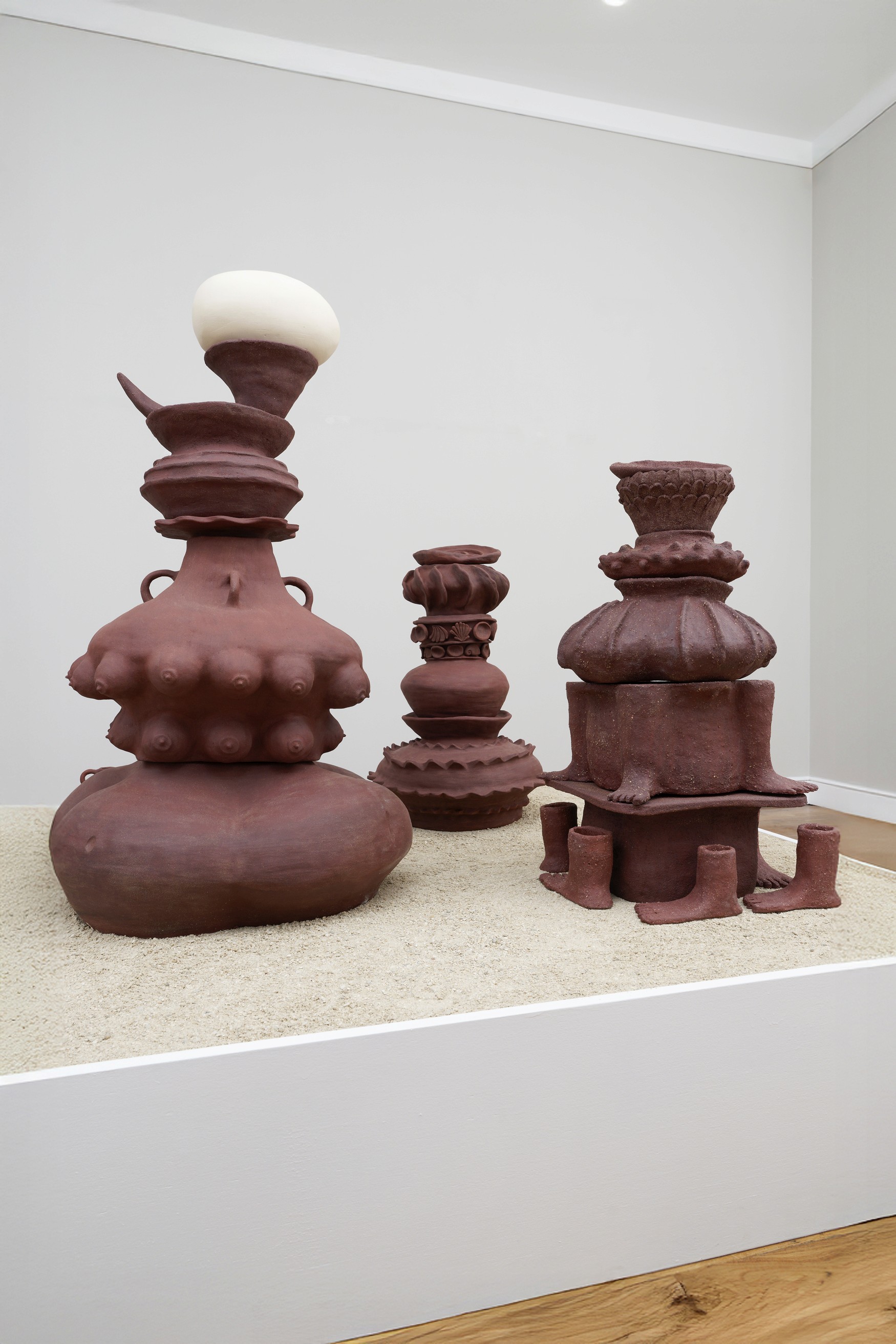
In the Anthologies of a Receptacle series—which lends its name to the exhibition— Tavares draws from the resonant force of Tostes’ Passagem and from Ursula K. Le Guin’s Carrier Bag Theory of Fiction, which reimagines humanity’s first tool not as a weapon but as a container: a bag, a vessel, a space of gathering and sustenance. Across the series, ceramic body parts, vessels, and natural forms are assembled into constellations shaped by their histories of containing. These assemblages function as passages and shelters for substances, rituals, and even for bodies. Rather than following the linear, evolutionary displays typical of ethnographic collections—where artifacts are divided by historical periods or hegemonic causalities—Tavares gathers these elements within the receptacle as a shared environment of protection and exchange. Like fossils of a civilization, the works in the series articulate new proximities between hollow spaces, gestures, objects, and bodily forms made to hold. Assemblage I, II, and III—key pieces within the Anthologies of a Receptacle body of work—also resonate with Tavares’ own passage through pregnancy and puerperium, which unfolded during the making of the exhibition. Breasts, bellies, fragmented body parts, shells, vases, and a cornucopia converge throughout the series to support a single egg. Within one of these assemblages, recordings of origin myths intermingle with the rhythmic heartbeat of the artist’s son, captured while still in the womb.
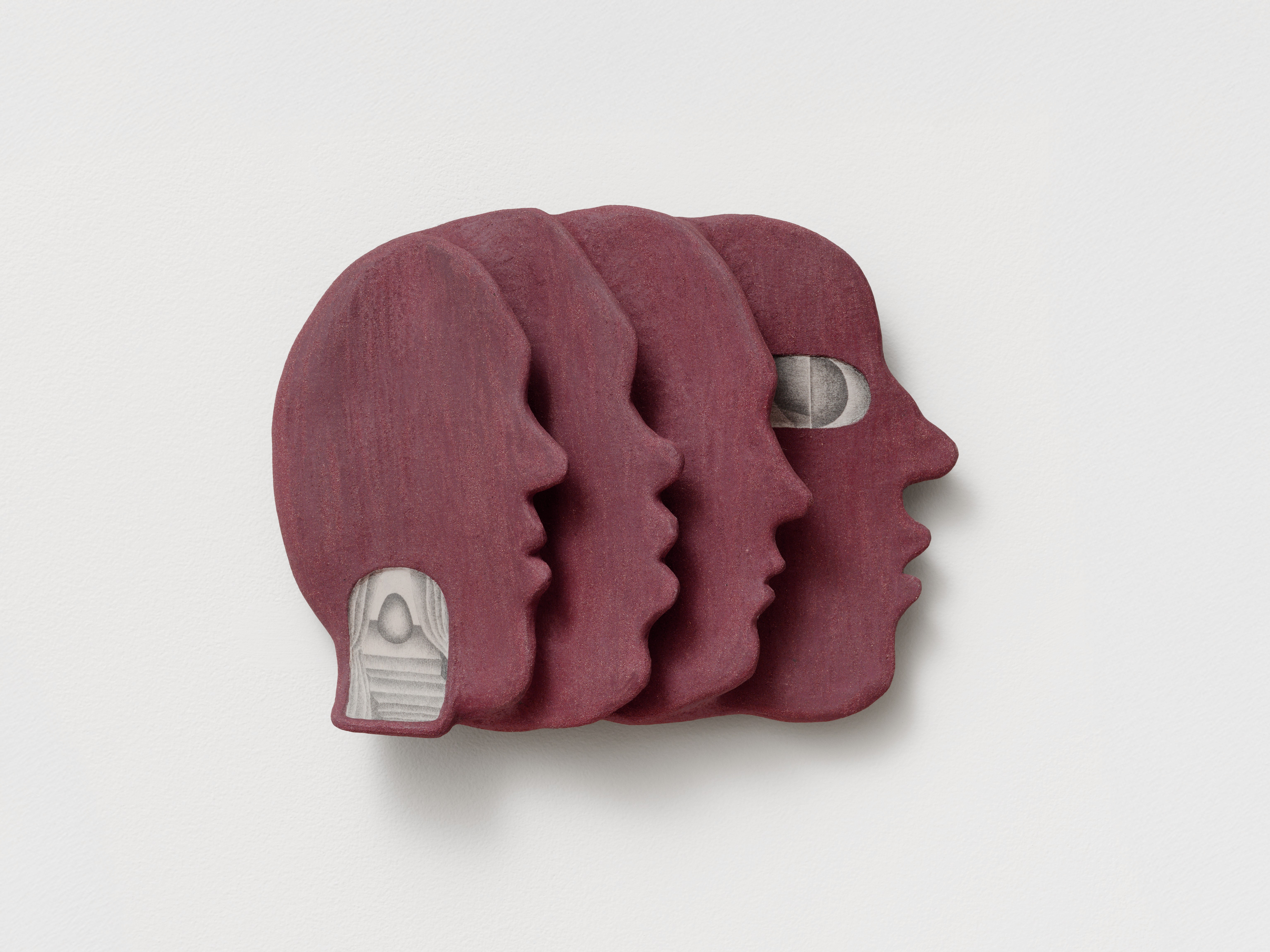
The Interlude series explores the imagery of house, building, and city—spaces inhabited by characters that signal containment and belonging. Conceived as a kind of diary from Tavares’ early days as an immigrant, the works are rooted in daily records made during the beginning of her transition. They reflect both an ekort to reorganize and appropriate new landscapes and an attempt to develop a grammar with unfamiliar territories.
The resulting images and reliefs often take on labyrinthine forms, with the red clay recalling the tones of Madrid’s architecture. Everyday figures and urban structures merge with visual impressions of her lived experience in this in-between state: empty rooms, landscapes doubled within the same frame, staircases and passages that lead beyond the sculpture’s limits. At times, symbolic forms—the egg, the breast, the belly—interweave with architectural cutouts, layering the intimate and the structural, the personal and the urban. Here, emptiness signifies not only spatial void but also temporal suspension—a pause in the unfolding of new lives.
Anthologies of a Receptacle stages a quiet dialogue between form and emptiness. In the works of Tostes and Tavares, nothing is imposed; instead, the pieces invite, contain, and hold. They remind us that art, like the carrier bag, is a space of gathering—where the visible and invisible coexist, where fragility harbors strength, and where making is inseparable from the act of holding. Here, the void is not absence but relation: the space between hands, between generations, between myth and matter. It is the silence that makes listening possible.
Courtesy Simone Coscarelli Parma
¹ De Lontra Costa, M., & Silva, R. (2014). Celeida Tostes, p. 277
² Ibid., p.287
³ Ibid., p. 284
⁴ Tavares, Ayla. Sonantes. 2020, p. 52.
Read more
Celeida Tostes (1929-1995, Brazil) devoted her career to clay as both material and metaphor. Her work explored themes of femininity—fertility, sexuality, motherhood, fragility, resistance, birth, and death—through clay’s organic and symbolic potential. She graduated from the Escola Nacional de Belas Artes in 1955 and later received a U.S. government scholarship to study at the University of Southern California, where she specialized in industrial ceramic techniques. During this period, she also worked alongside artist Maria Martinez, an experience that firmly rooted her practice in clay. Parallel to her artistic production, Tostes pursued a lifelong commitment to teaching. She taught for over two decades at the School of Visual Arts at Parque Lage, beginning in 1975, and later at the School of Fine Arts at the Federal University of Rio de Janeiro (1989–1992). In the early 1980s, she launched a community project at Morro do Chapéu Mangueira, creating ceramic centers where local residents were trained to work with clay. Shortly after her passing, she was honored at the II Barro de América Biennial in Caracas (1996).
Ayla Tavares (b. 1990, Brazil) investigates archaeological and sacred artifacts, architecture and everyday objects, establishing relations with dikerent layers of time to think about day-to-day life, memory and life in common. Comprehending materiality with all its complexities, the artist creates constellations of objects under other orders, generating from these new bodies relationships of estrangement, speculation and narrative. She held exhibitions "Several Eternities in a Day: Form in the Age of Living Materials" at Hammer Museum (2026, Los Angeles); "Ustão", at Casa Museu Eva Klabin (2023, Rio de Janeiro); "Alfarería del agua", at the Collegium Museum (2022, Arévalo, Spain); and "Sonantes", at Centro Cultural Light (2019, Rio de Janeiro). Tavares participated in group exhibitions at institutions such as the Jingdezhen International Biennial of Ceramic Art (Jingdezhen, China), Lamb Gallery (London, United Kingdom), Weserhalle Gallery (Berlin, Germany) and Paço Imperial (Rio de Janeiro). She was a resident in the Pivô Research Program (2022, São Paulo).
Read more
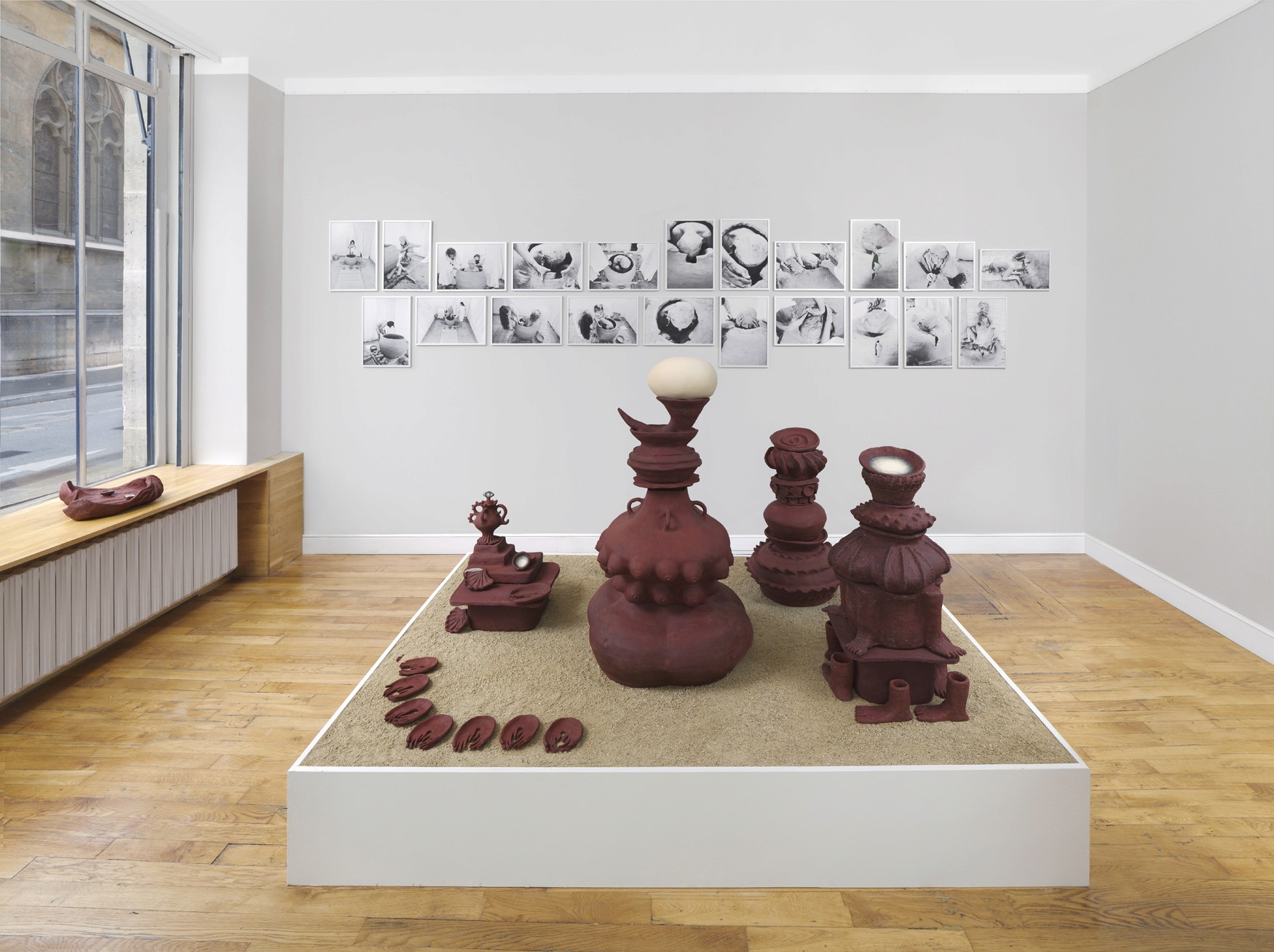
Installation view, 'Anthologies of a Receptacle', Hatch Gallery, Paris, 2025. © Aurélien Mole. Courtesy of the Artists, Hatch Gallery and Galeria Superfície.
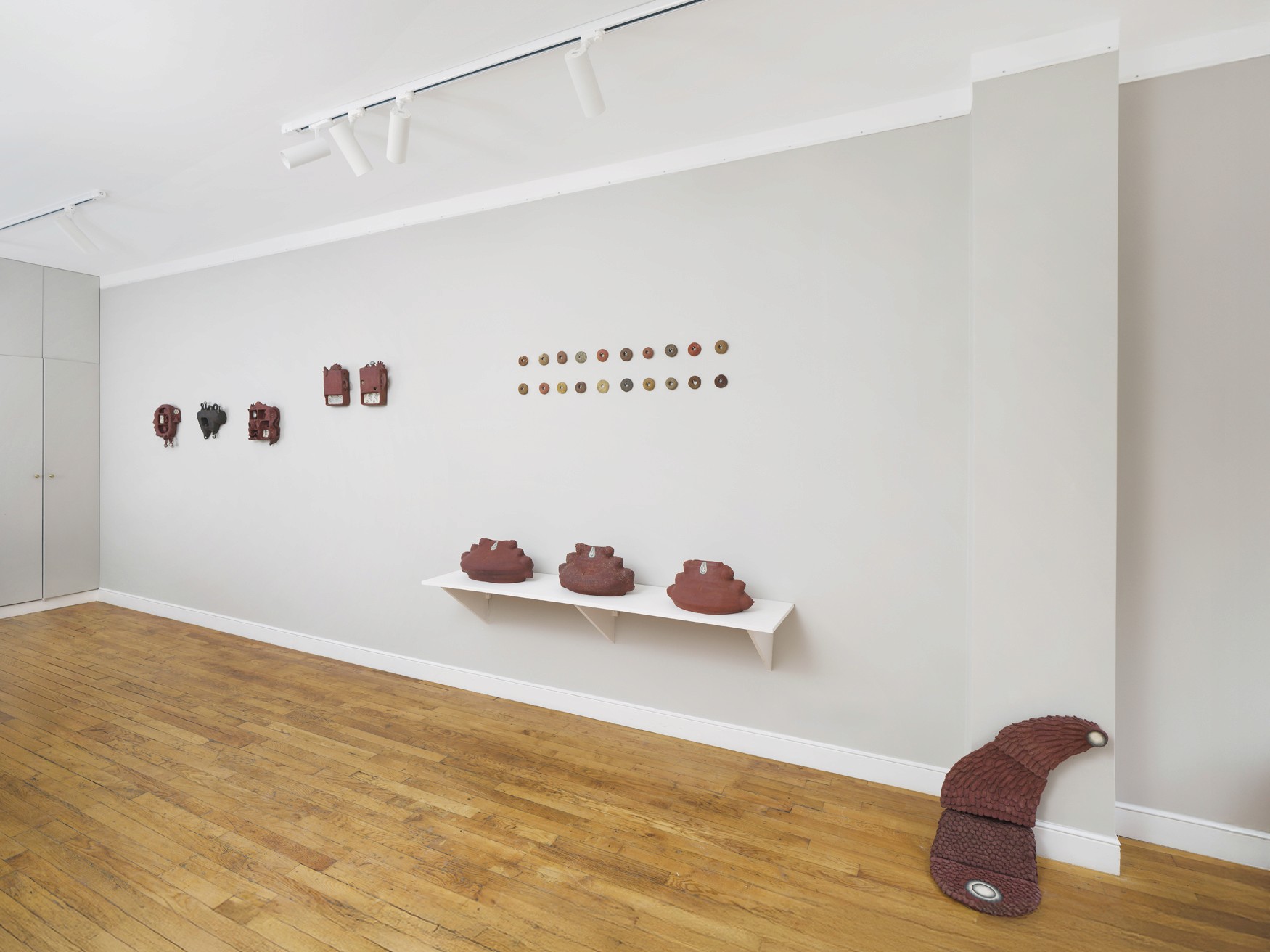
Installation view, 'Anthologies of a Receptacle', Hatch Gallery, Paris, 2025. © Aurélien Mole. Courtesy of the Artists, Hatch Gallery and Galeria Superfície.
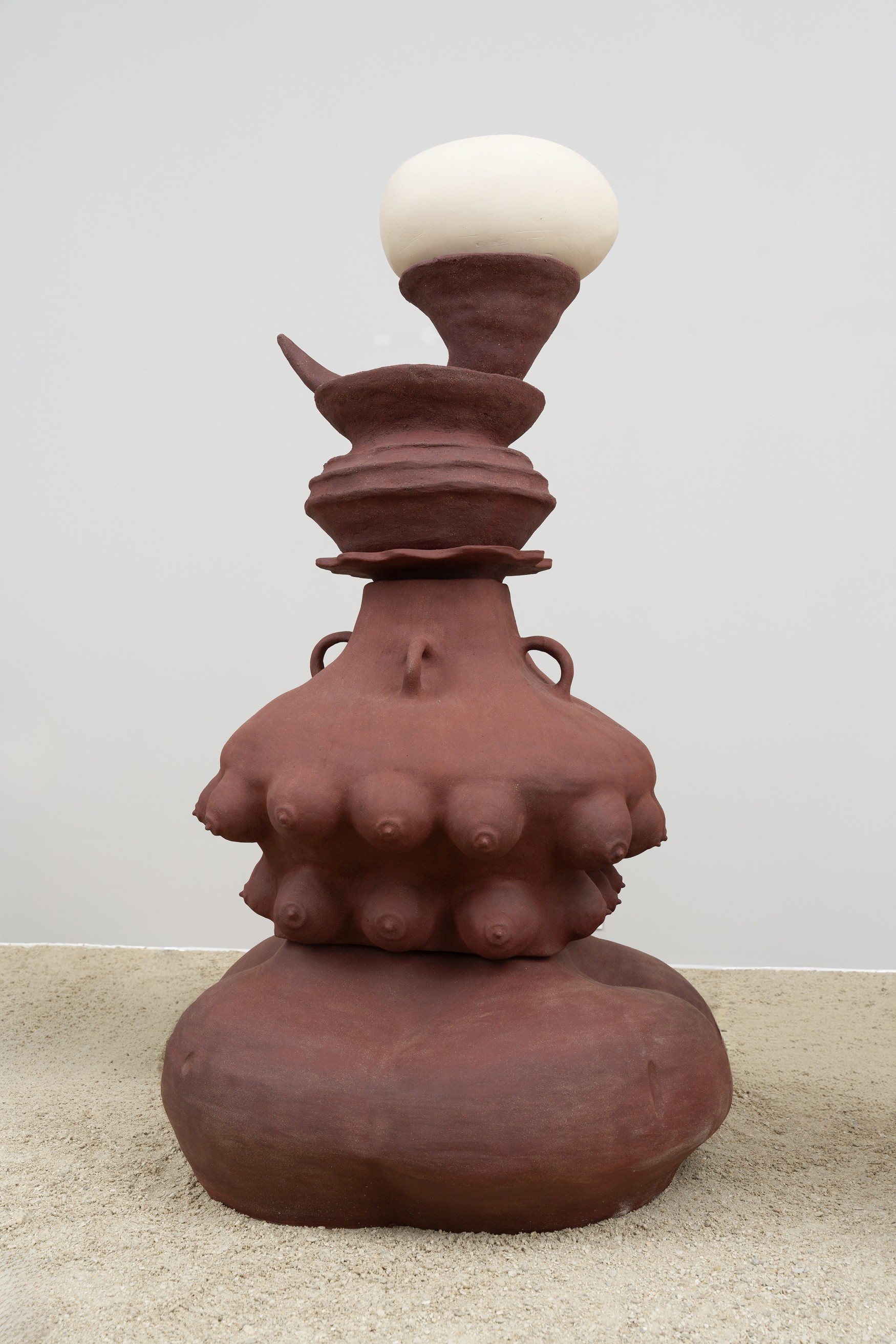
Ayla Tavares
Assemblage 1
2025
From the series ‘Anthologies of a Receptacle’
Ceramic
100 x 54 cm
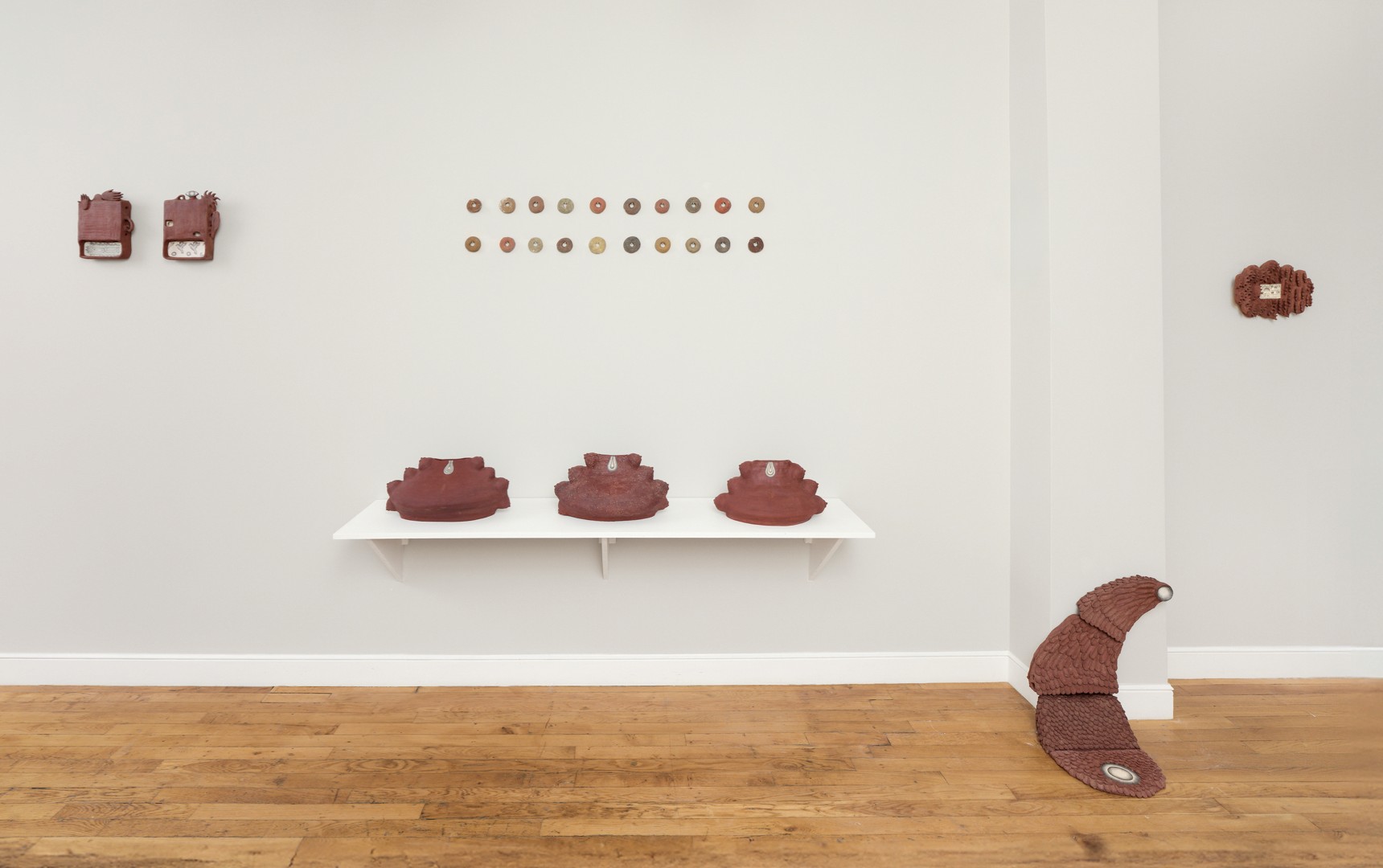
Installation view, 'Anthologies of a Receptacle', Hatch Gallery, Paris, 2025. © Aurélien Mole. Courtesy of the Artists, Hatch Gallery and Galeria Superfície.
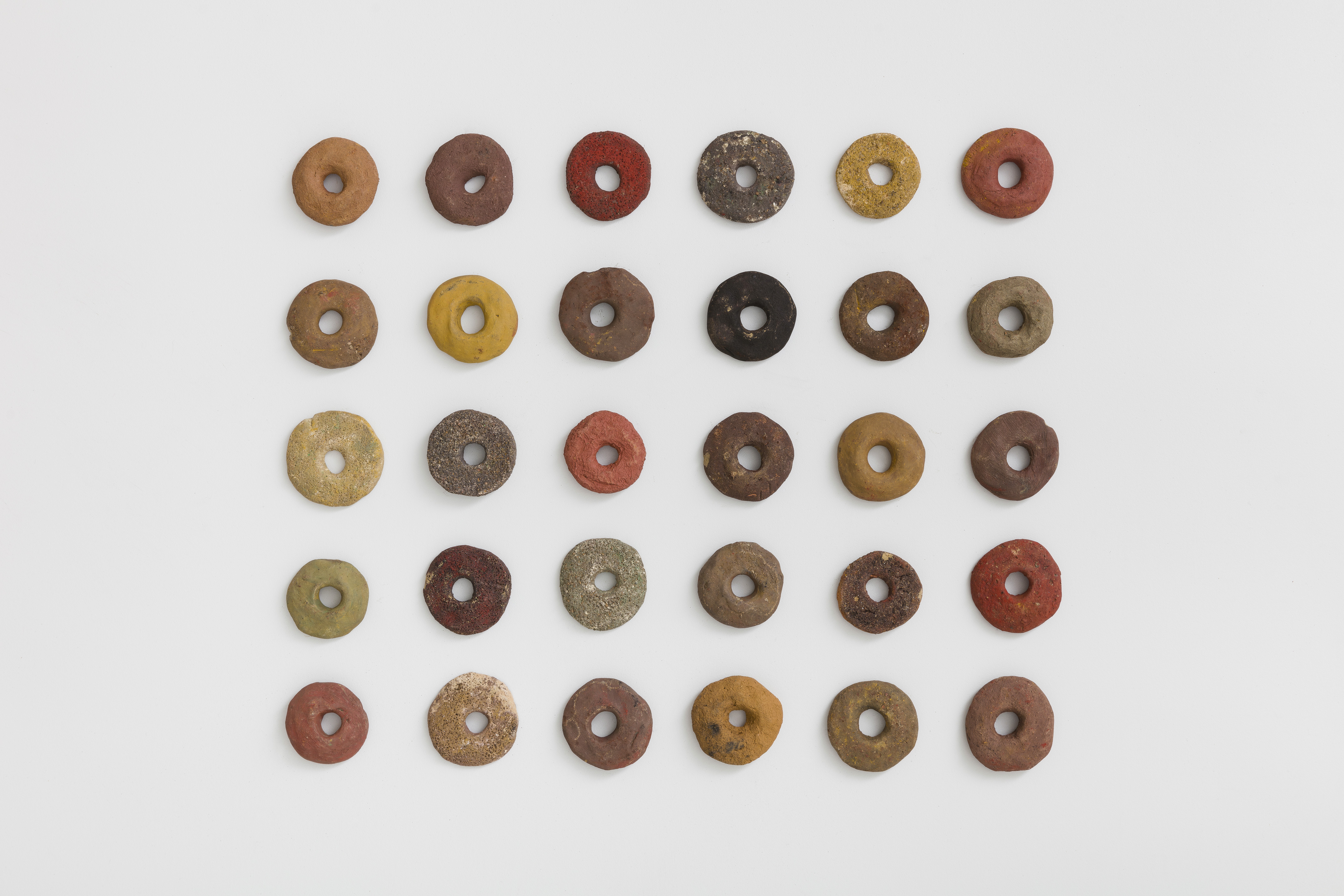
Celeida Tostes
Wheels (Rodas)
1983
Soil-cement (20 discs)
Ø 5 cm [each]
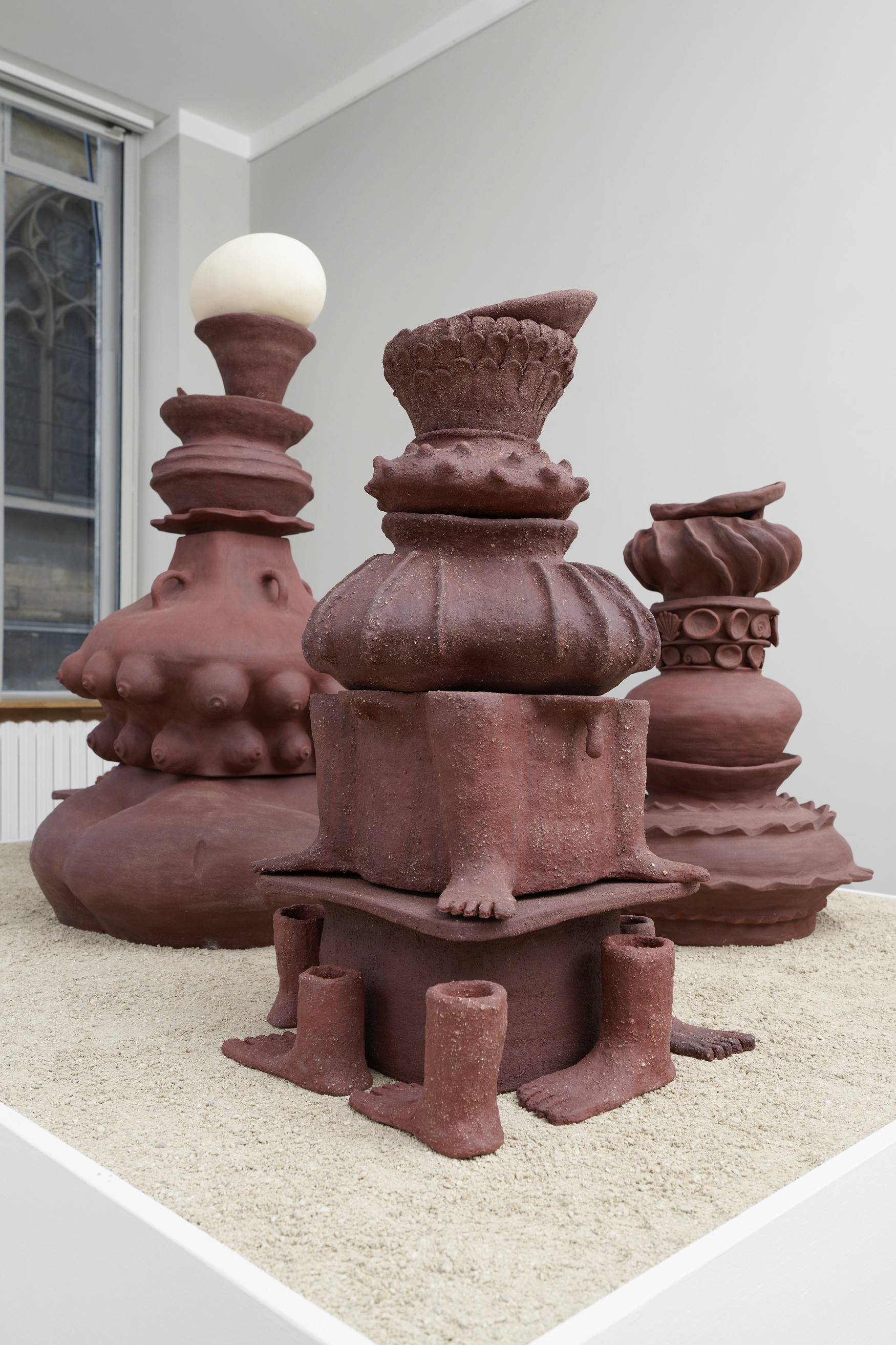
Installation view, 'Anthologies of a Receptacle', 2025 (details).
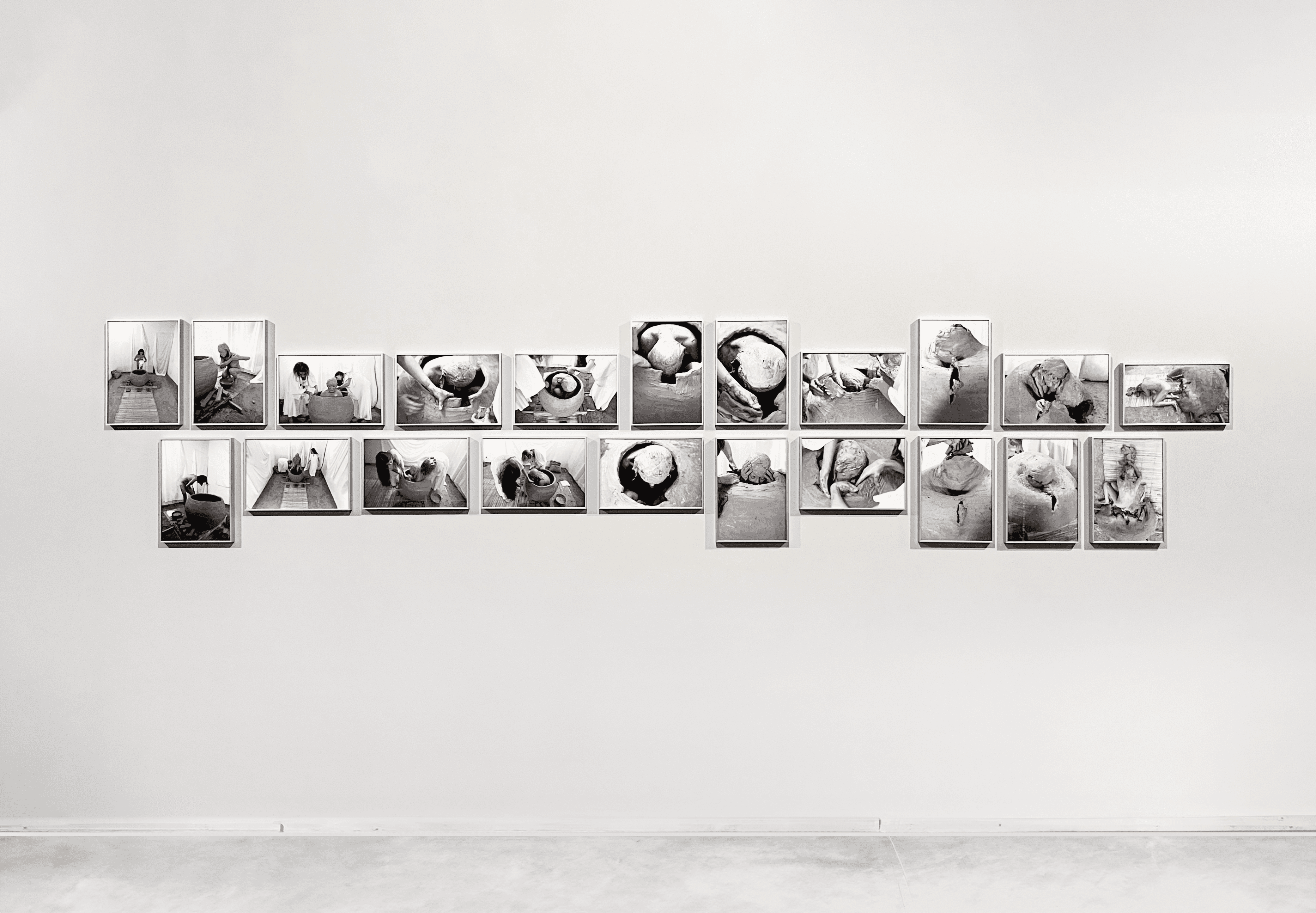
Celeida Tostes
Passagem
1979
Photographic print on paper, set of 23 images
© Henri Stahl © Celeida Tostes
Courtesy of Projecto Celeida Tostes and Galeria Superfície
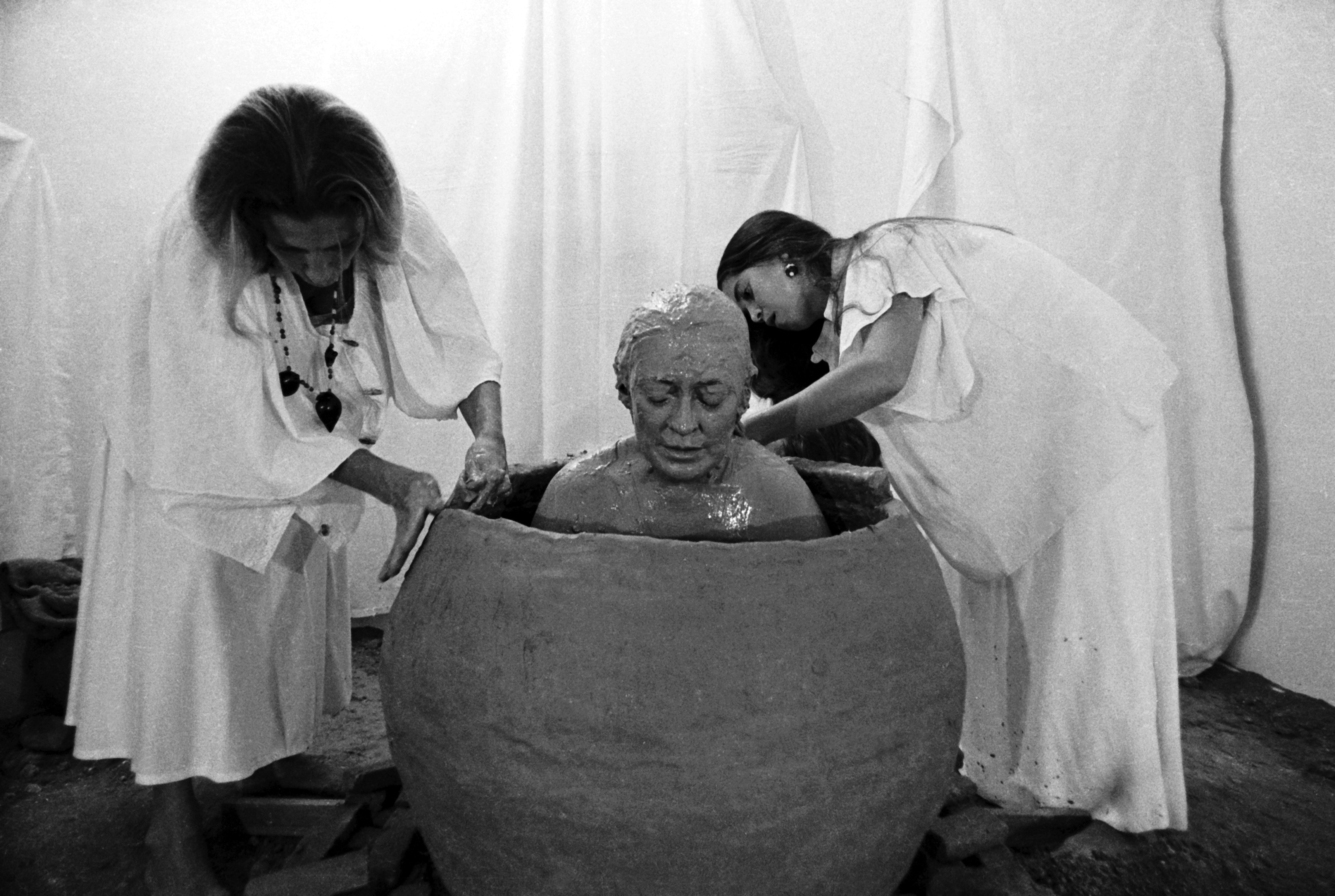
Celeida Tostes
Passagem
1979
Details
Installation view, 'Anthologies of a Receptacle', 2025 (details).
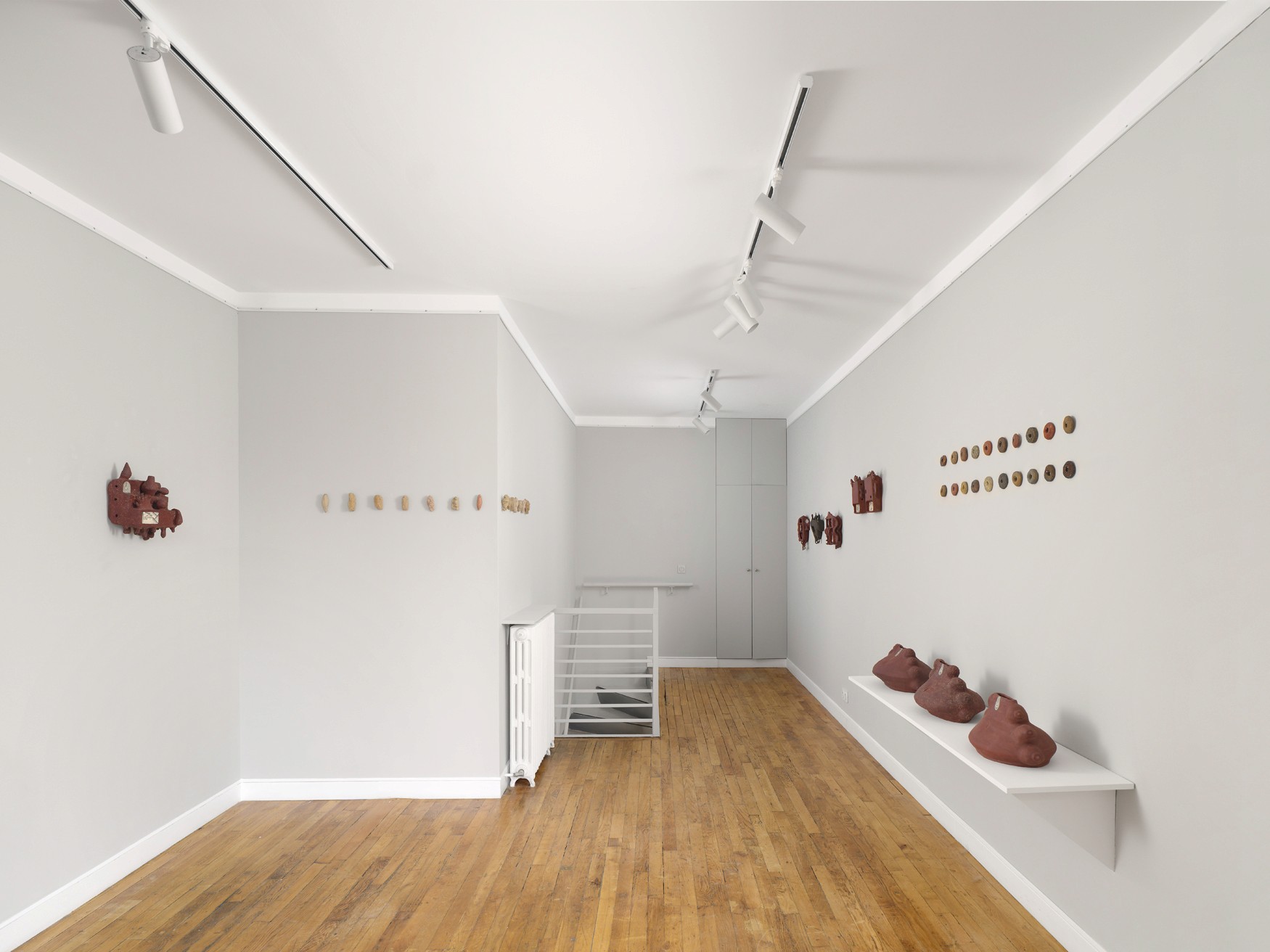
Installation view, 'Anthologies of a Receptacle', Hatch Gallery, Paris, 2025. © Aurélien Mole. Courtesy of the Artists, Hatch Gallery and Galeria Superfície
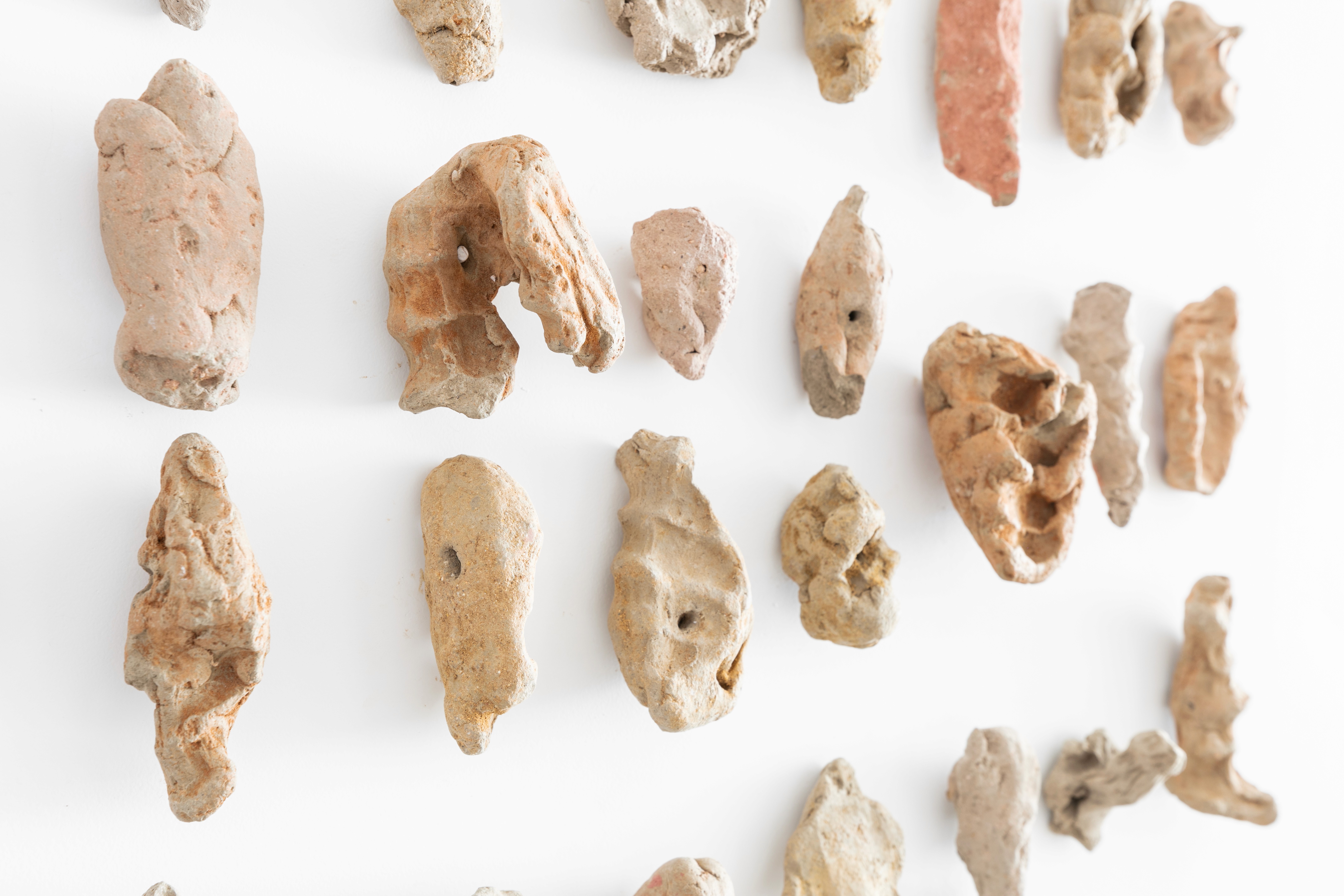
Celeida Tostes, Amassadinhos, 1994 (details).
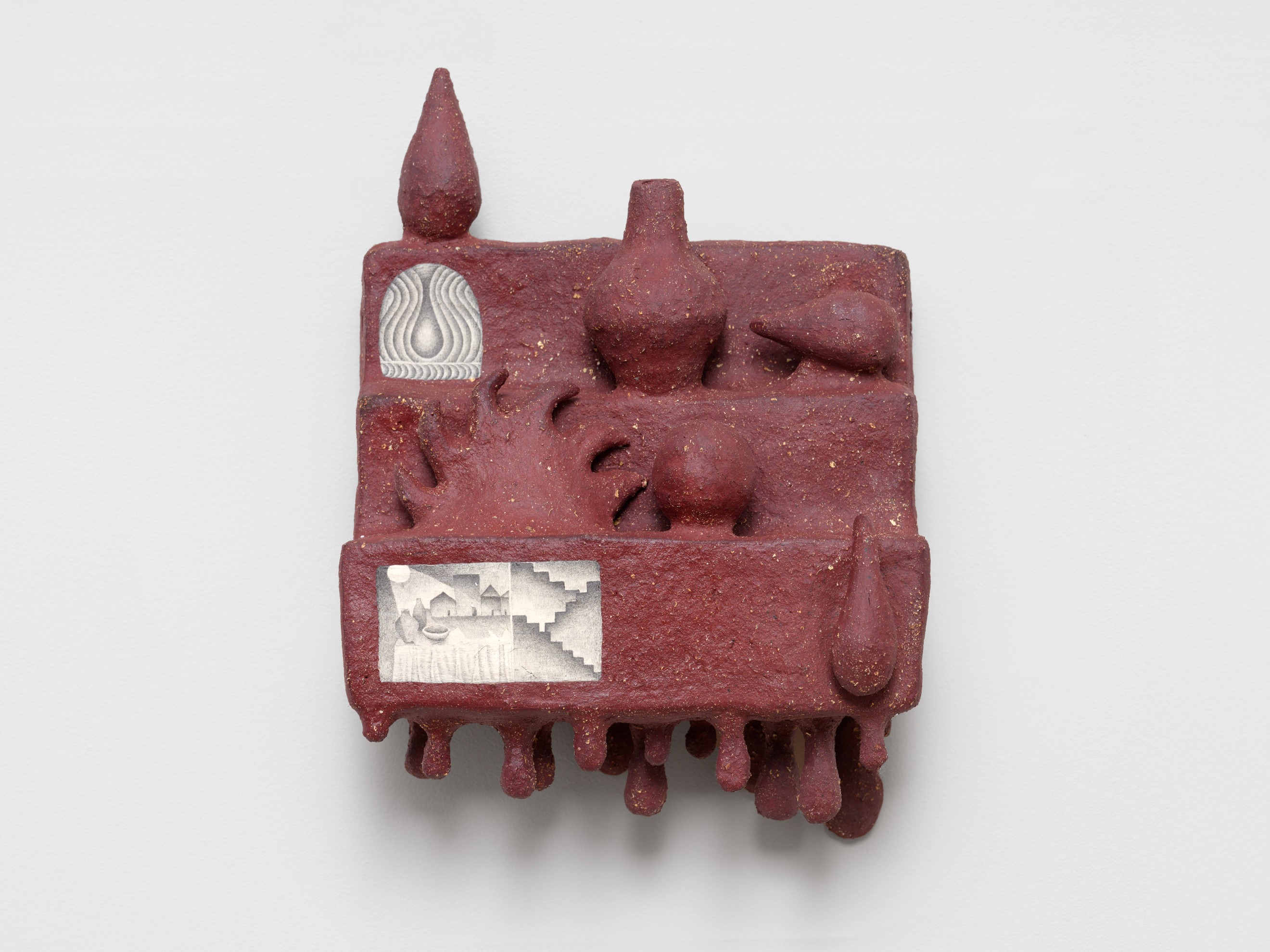
Ayla Tavares
Day of Storm | Dia de tempestade
2025
From the series 'Interludes'
Graphite on ceramic
38 x 27 x 16 cm
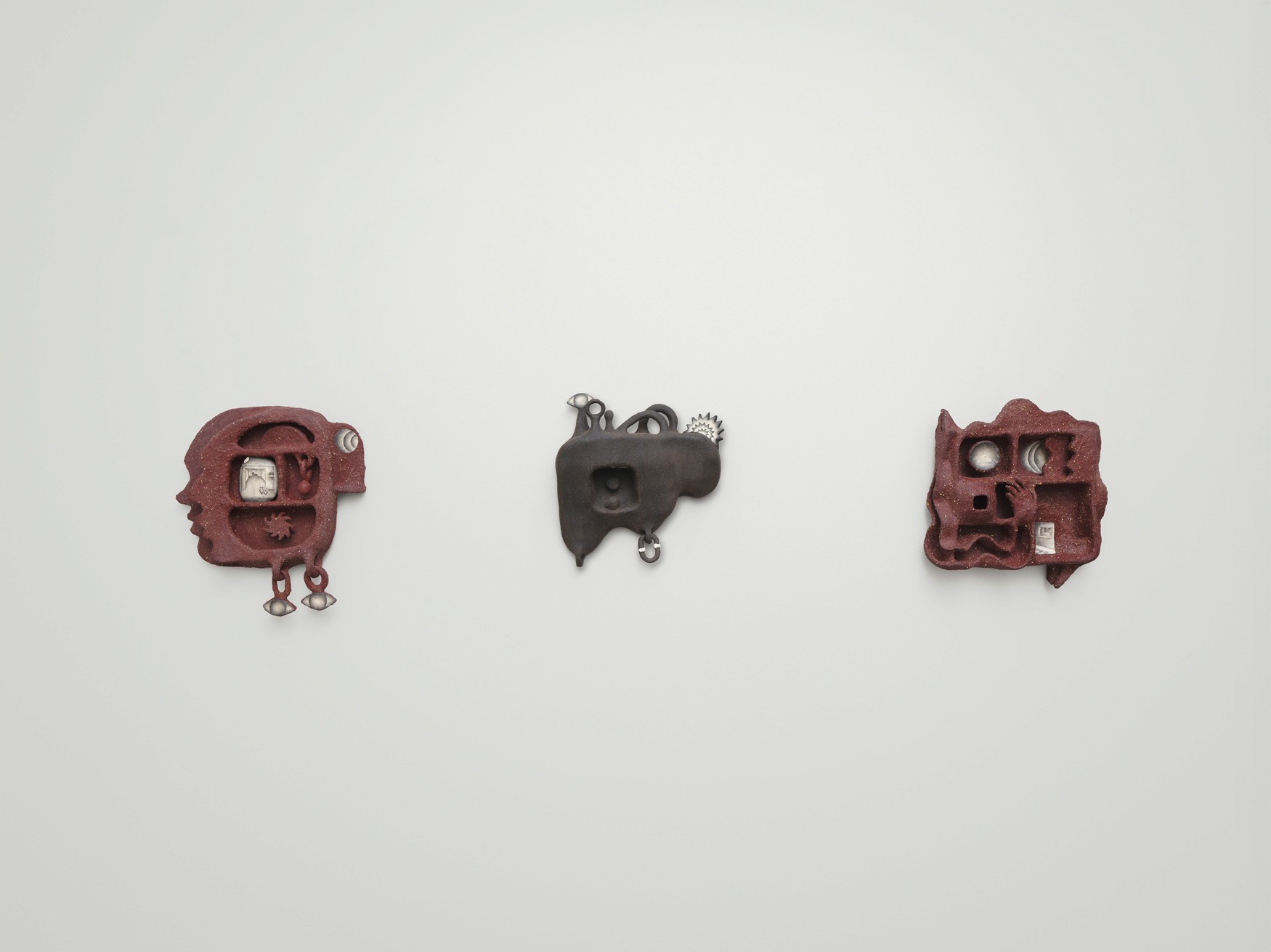
Installation view, 'Anthologies of a Receptacle', 2025 (details).
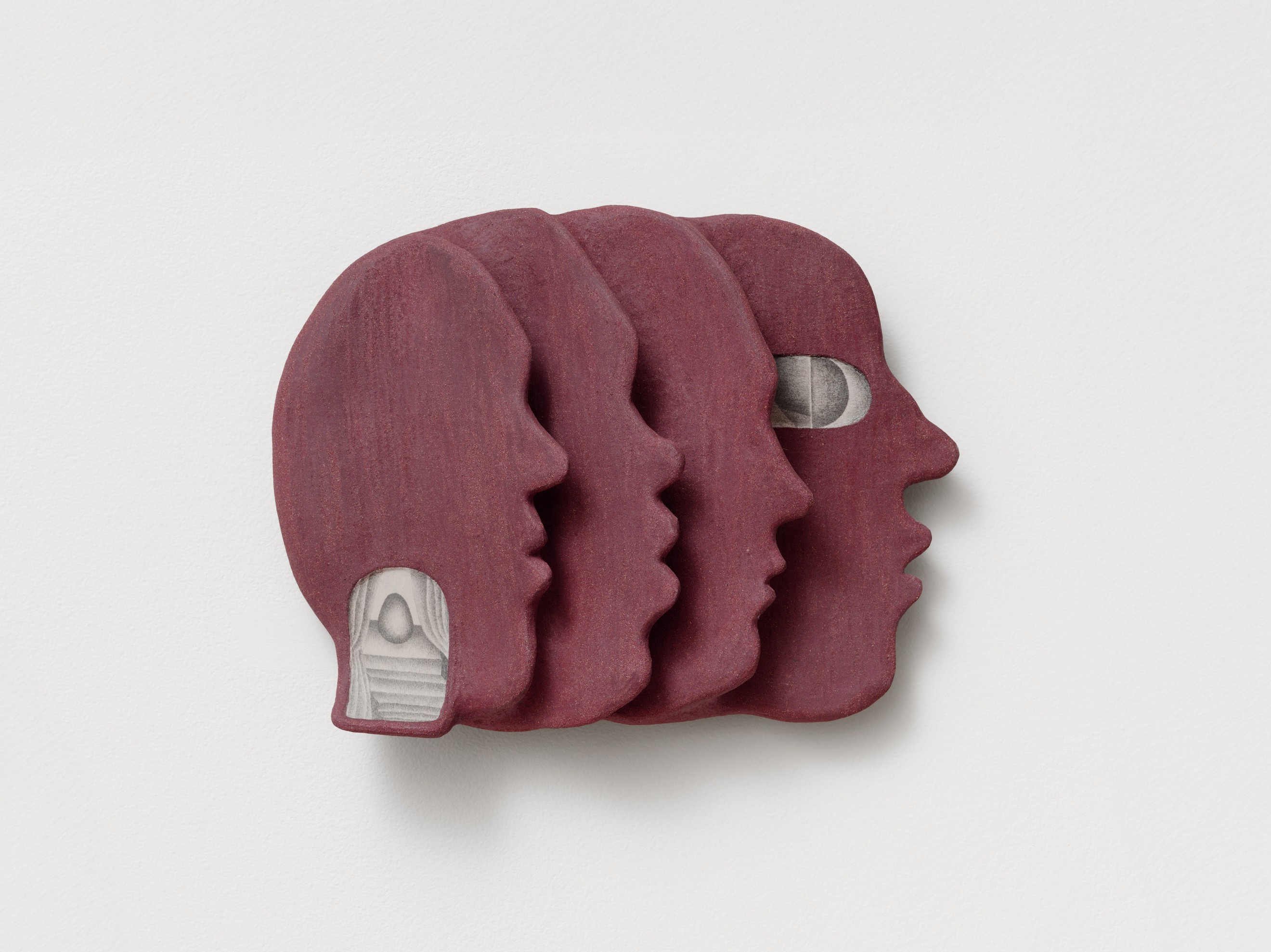
Ayla Tavares
Jaleo
2025
From the series 'Interludes'
Graphite on ceramic
24 x 28,5 x 7 cm