Participating Artist
Kara Chin & Romain Sarrot
Informations
April 11 → May 30, 2026
40 rue Mazarine, 75006
Paris, France
Press Release
From the depth of the gooncave: on the grotesque and the cute in Kara Chin and Romain Sarrot’s work:
Today your gaze has melted into your brain, into your face, into the screens surrounding you. You’ve been at it for so long that your eyes have rolled into your back, your hands have merged with your genitals, and you’ve dissolved into the porn you’re watching. Your limbs are one with your organs are one with your eyes are one with the naked bodies that move on-screen. The images have swallowed you whole. Little beads of sweat slowly run across your face, drip into your eyes, leak into your nose, and fall into your open mouth. Your mind is in a haze, your body is amorphous, but you’re not fully stagnant. You can still crawl a tiny bit further into the slope of this internet wormhole. It will swallow you whole and you will reach a soft spot. Someone helps you dive deeper. He sends you a dank PMV, perfectly tailored to your most shameful fetishes. There you are, in a pure state of masturbatory bliss. Now, your face — just like your sense of self — is completely flattened. As flat as the screens in your gooncave that mirror a petty image of your pitiful self.
Pity Petty is the evocative title of Hatch Gallery’s exhibition, a duo show featuring works by Kara Chin and Romain Sarrot that draw on the dark and twisted subculture of gooning. In a viral article published in the November 2025 issue of Harper’s Magazine, writer Daniel Kolitz aptly summarizes this strange contemporary phenomenon: a “new kind of masturbation at the heart of an internet-based, pornography-obsessed, Gen Z–dominated subculture.” ¹ Leaning into participant observation, the author himself dabbled in gooning (but only for research purposes). It allowed him to analyze this corner of the internet’s underbelly and address its strangely communal aspect. “Feeding” is one example of the collective rituals central to gooning: a gooner (generally a cis heterosexual man, but the community actually encompasses gay and bisexual men, and queer people more broadly) carefully selects a set of porn videos, memes, or GIFs that speak to another gooner’s fetishes and kinks. This homosocial, if not homoerotic, dynamic entails that gooner 1 frenetically shares clips with gooner 2, until the latter attains the much sought-after “goonstate”—a quasi-meditative trans, a feeling of ego-death or self-annihilation.
One could say that gooners who masturbate together stay together. Virtually, Discord streams are gooning’s communal place par excellence. But gooning can also be practiced in a physical, and often solitary, space: dark bedrooms, bathed in the bluish glare of screens blasting rapid porn music videos (PMVs), with bottles of lube and sex toys at a reach. These visually striking “gooncaves” are what first brought public attention to the subculture. Gooncaves are also the starting point of Pity Petty, an exhibition that might seem to recreate the caves’ atmosphere. Hatch Gallery is immersed in a blue light that flows into the glow of a small multimonitor on the wall, illuminating several ceramic sculptures and wall-pieces by Kara Chin, and a set of ceramic bas-reliefs by Romain Sarrot. In reality, gooning is here deployed as a broader metaphor for the internet’s capacity to capture our attention: a system that traps us in an endless loop of submission.
Indeed, Chin and Sarrot do not replicate the décor of the gooncave. In fact, they never reference the sex toys nor the X-rated content that fuels gooning. Instead, they engage with the gooncave as a liminal space: a space that lies in between the digital and the corporeal, the lonely and the communal, and in which time, like social norms, is suspended. In this way, they offer a fragmentary yet revealing view of the symbols and processes that structure the gooncave, and gooning at large. Thinking of how to approach this disturbing contemporary cave, I turn to the more culturally valued and spiritually elevated grotto of the Domus Aurea, built around 64 AD. by the Roman emperor Nero. Both the gooncave and the grotto are places of decadence, marked by weirdness or what Mark Fisher described as “that which lies beyond standard perception, cognition and experience.”² Indeed, it was the weird and extensive ornamentation merging human, animal, and vegetal forms on the walls of Nero’s grotto that led to the term “grotesque”. It is fitting, then, that Chin and Sarrot resort to the aesthetic category of the grotesque—a particular form of the weird—to critically think through the disturbingly strange world of gooning.
From the grotto to the gooncave: the grotesque as a means of critical distance
An apt framework to reflect on gooning, the grotesque expresses itself both in the form and in the content of the works on view. Kara Chin’s new body of ceramic sculptures continues her formal experimentations and material investigations into the alienating effects of being extremely online. Here, Chin materializes the affective and physical toll of gooning, and spending hours online more broadly, with a free-standing ceramic sculpture, The Goone State, that depicts a fleshy flushed face. Marked by what could be beads of sweat, or burning blisters, the face rolls its eyes, its mouth wide open. It conveys all at once exhilaration, exertion, or exhaustion—the affects of someone who’s been trying to reach the goonstate and who’s had to grapple with the ugly feelings of loneliness, shame, and self-loathing. The face collapses into a glazed skin of multiple folds. Ears, hands, and feet are buried between the flesh’s many creases. The body, just like the self, has been flattened, symbolizing the idea that “the internet is no more a place for identity formation as it is for identity erosion.”³ The grotesque appears both in the work’s exaggerated form and material (the collapsing and bizarre body), and subject (the bodily and affective expressions of being extremely online). Veering on the monstrous, this amorphous mass ultimately looks more comical than frightening, pointing to the absurdity of constantly living through the digital. Nearby, So You've Eaten Peanut also depicts a pinkish face, its mouth agape. The face asks: “So, you’ve eaten a peanut”—a sentence whose meaning is as cryptic as gooning.
Language’s ambivalence is also at play in Chin’s The Nhilistic Penguin Water Font, a wall-mounted ceramic, cartoonishly depicting a cat attempting to decapitate another. Amidst the flowery ornamentation framing this funny image, one can read: “You take one more step and I kill you.” The work cites the visual and linguistic features of the lolcat, a subcategory of memes that first emerged on the controversial forum 4chan. Lending dangerous human powers to an adorable animal, Chin’s work (much like the lolcat genre itself) deploys cuteness to address a threatening reality. This subversive quality is also evident in Chin’s détournement of the multimonitor, a staple of the gooncave, that she uses to show a short animation clip of a dancing cat. This use of the cute as an aesthetic category points to the seemingly harmless and entertaining aspects of the internet. The work is then emblematic of “how cultural producers use cute as a tool to process some aspects of our complicated, overwhelming ‘now’ and the various futures encoded in it (…)” to quote feminist cultural theorist Sianne Ngai.
Romain Sarrot’s subtle yet prescient installation Dog, Doggie, Dodger similarly centers on animals, that conversely offer an alternative to the internet’s darkness. The installation consists of three bas-reliefs that depict a cropped snippet of an outdoor scene: brightly lit from within, a group of dogs seem to be barking threateningly as they run towards a grapevine. The vine may hint to the legend of Zeuxis and Parrhesias, the foundational Greek myth of art’s mimetic quality. Only fully visible if the visitor pushes a trigger, the bas-reliefs are part of an installation that replicates the mechanism of a church confessional, reinforcing both a ritualistic atmosphere and a sense of staged intimacy. Looking closely, the installation’s mechanisms could also be likened to that of a window. Possibly a nod to the ritualistic breadth of internet culture, the work reminds us that the internet at large, and not just the gooncave, is a liminal space —one in which we can be trapped for way too long. Ultimately, the installation acts as “an escape door”⁵ to quote Sarrot, reminding us that the only way out is…out.
If there is something that you and me share with gooners, it is that we’ve all been extremely online, and need to go and touch grass. Chin and Sarrot’s works do not merely illustrate, nor do they judge, the world of gooning: the grotesque and the cute are aesthetic tools that allow them to think through it as a socio-cultural issue, with a critical albeit humorous distance. In this sense, they show us that, us too, are implicated in such strange internet phenomena. Their take echoes the words of writer and TrueAnon podcast host Liz Franczak as she spoke to Daniel Kolitz about gooning: “The behavior of the users is maybe a bit confusing or difficult to make sense of (…), but at the same time, the kind of fetish for the feed, for the sort of media set-up, for the constant seeking to be dominated by total media oblivion, feels totally relevant and understandable because, we all kind of do live in that media environment.”⁴ Pity Petty, then, is not a pity party. Rather, it considers the murky waters of gooning as something we’re all potentially swimming in.
Courtesy Line Ajan
1 Kolitz, Daniel, “The Goon Squad”, Harper’s Magazine, November 2025, URL: https://harpers.org/archive/2025/11/the-goon-squad-daniel-kolitz-porn-masturbation-loneliness/
² Fisher, Mark, “Introduction. The Weird and the Eerie (Beyond the Unheimlich)”, in The Weird and the Eerie, Repeater Books, London, 2016, p. 8.
³ Yalcinkaya, Günseli, “The ABCs of NPCs”, in Non-Playable Characters, LAN Party, Paris, 2025, p. 26.
⁴ Ngai, Sianne (ed.), The Cute, Whitechapel Gallery Venture/MIT Press, London, 2022, p. x.
Read more
Kara Chin (b. 1994, Singapore) is a multidisciplinary artist working across ceramics, sculpture, animation, and installation. Her practice examines the permeation of technology into everyday life, interweaving imagined future scenarios with primitive and esoteric events to probe biohacking, wellness culture, transhumanism, perception, deception, and the increasingly virtualized world.
She holds a BA in Fine Art from The Slade School of Fine Art (2018) and was featured in Bloomberg New Contemporaries the same year. Her awards include the Woon Foundation Painting and Sculpture Prize (2018), Duveen Travel Scholarship, UCL (2018), Alfred W Rich Prize, Slade (2017), and Max Werner Drawing Prize, Slade (2015).
Chin’s work has been shown internationally at institutions and exhibitions including the Liverpool Biennial (United Kingdom), Goldsmiths Centre for Contemporary Art, London; Humber Street Gallery, Hull; The 8th Triennial of Art and Ecology, Maribor (Slovenia); BALTIC 39, Newcastle; and South London Gallery, London. She lives and works in Berlin, Germany, where she continues to develop projects at the intersection of technology, ecology, and imagination.
Romain Sarrot (b. 1986, Paris, France) is an artist whose practice investigates memory, transformation, and narration through a cyclical, immersive methodology. His work unfolds in successive “chapters,” where each installation functions as a staged environment in which sculpture, manufactured objects, and composite materials—such as silicone, plexiglass, and metal— interact and reprogram themselves. These scenographies operate as hybrid theaters, merging myth and modernity, and transforming cultural references into new symbolic icons.
His work has been presented internationally, including solo exhibitions Quarter of Life I / i miss you once at Lokal-int, Bienne, and Quarter of Departure I / 9:00 AM at VITRINE Gallery, London. Group exhibitions include We All Talk to Our Own Gods, Material Art Fair, Mexico City (2025); Après quoi les limbes, Art and History Museum, Geneva (2024); Las Cicadas, Balearic Islands, Spain (2024); and Infinite Looping in Harmony, Hatch, Paris (2023).
Read more
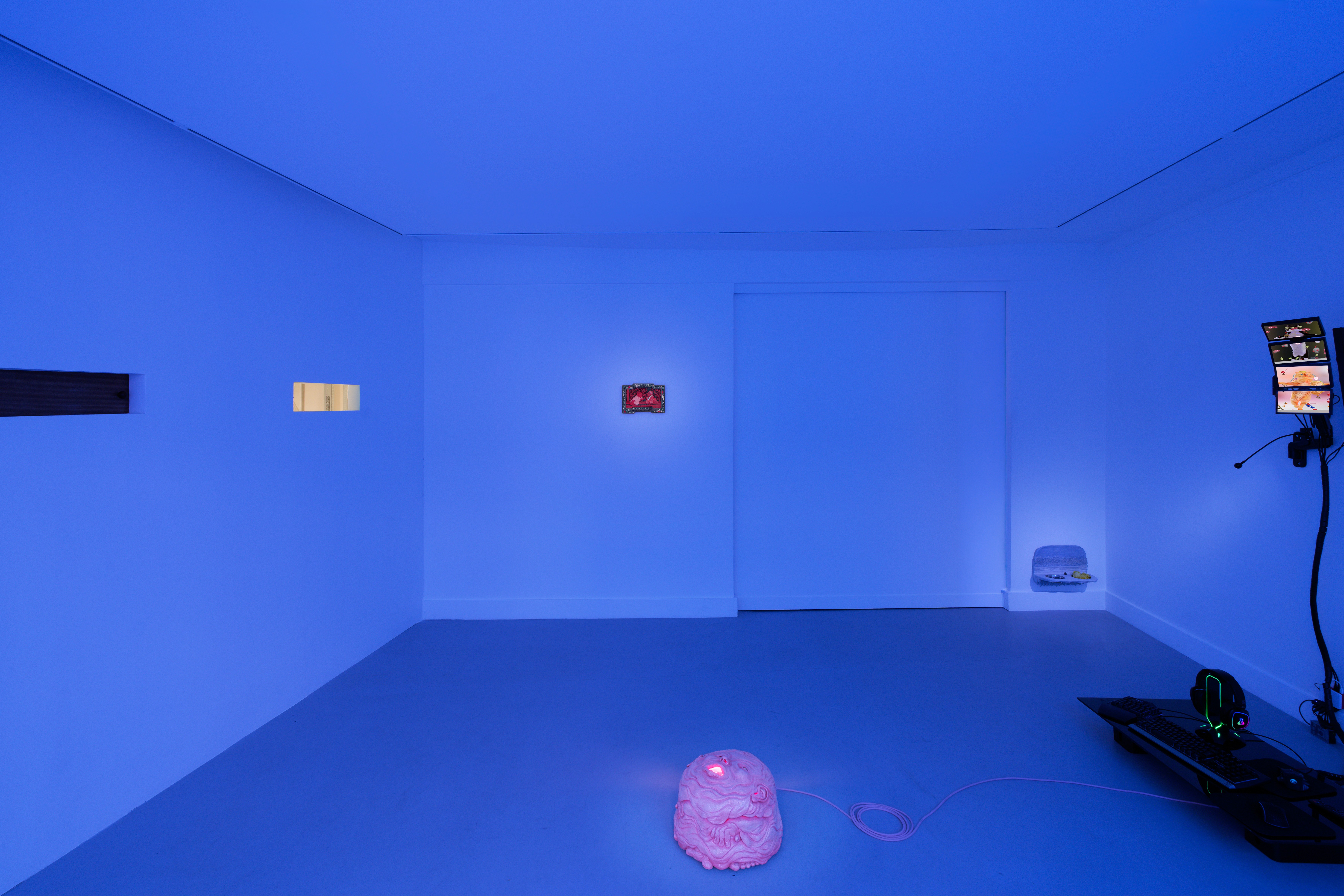
Installation views, ‘Pity Petty’ by Kara Chin and Romain Sarrot, Hatch Gallery, Paris, 2026. © Pauline Assathiany. Courtesy of the Artists and Hatch Gallery.
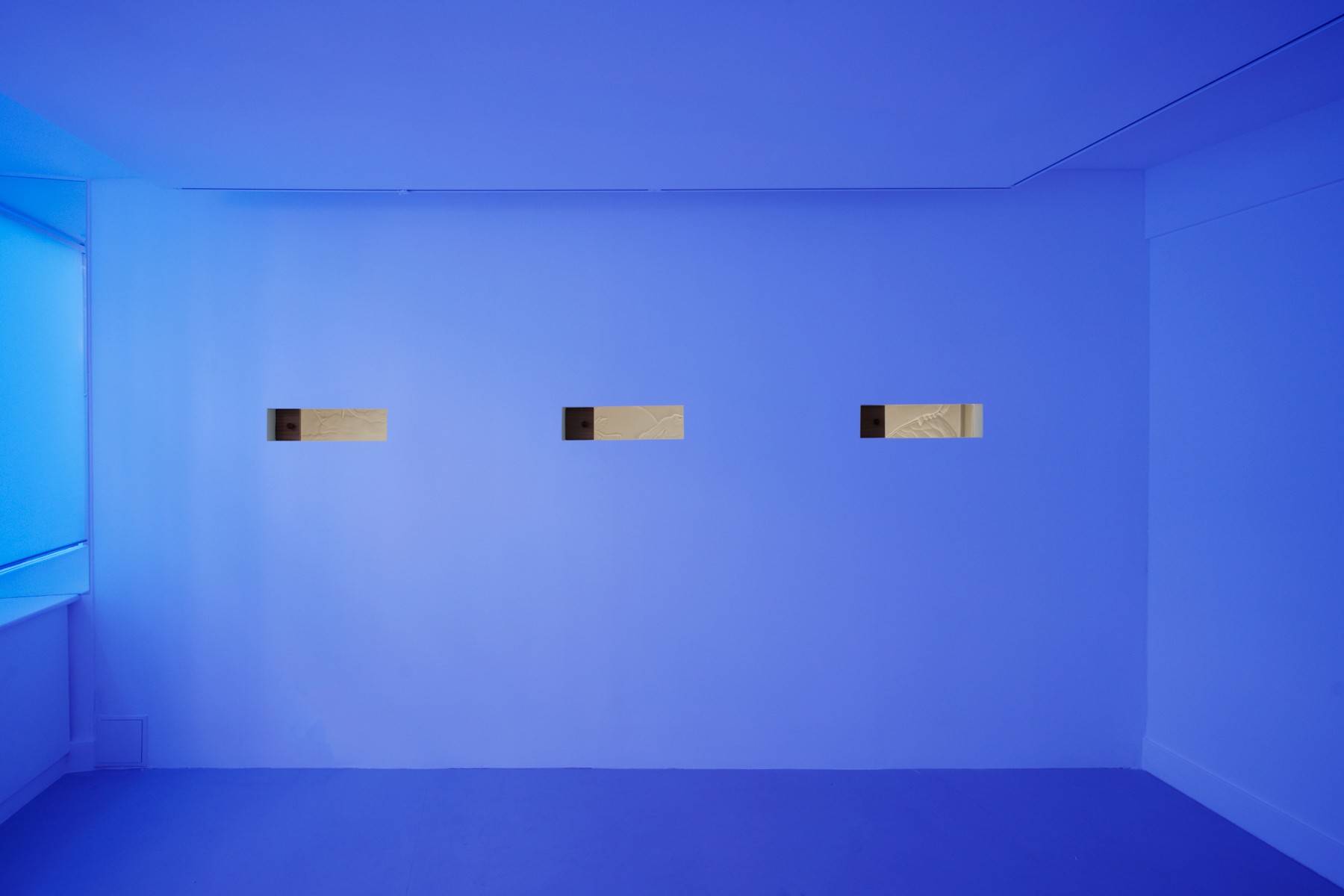
Installation views, ‘Pity Petty’ by Kara Chin and Romain Sarrot, Hatch Gallery, Paris, 2026. © Pauline Assathiany. Courtesy of the Artists and Hatch Gallery.
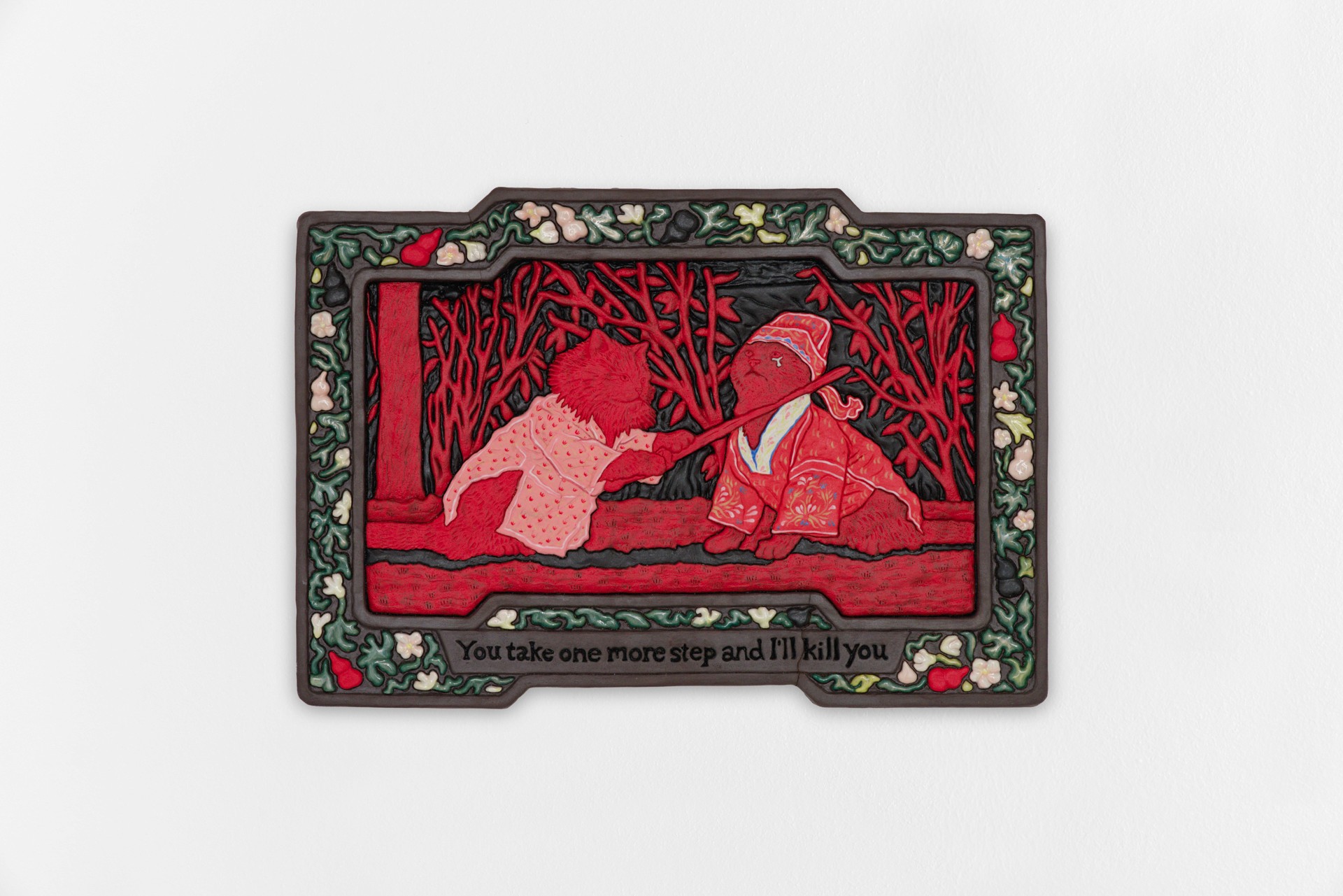
Kara Chin
You take one more step and I'll kill you
2026
Glazed stoneware ceramic
20 x 30.5 x 2 cm
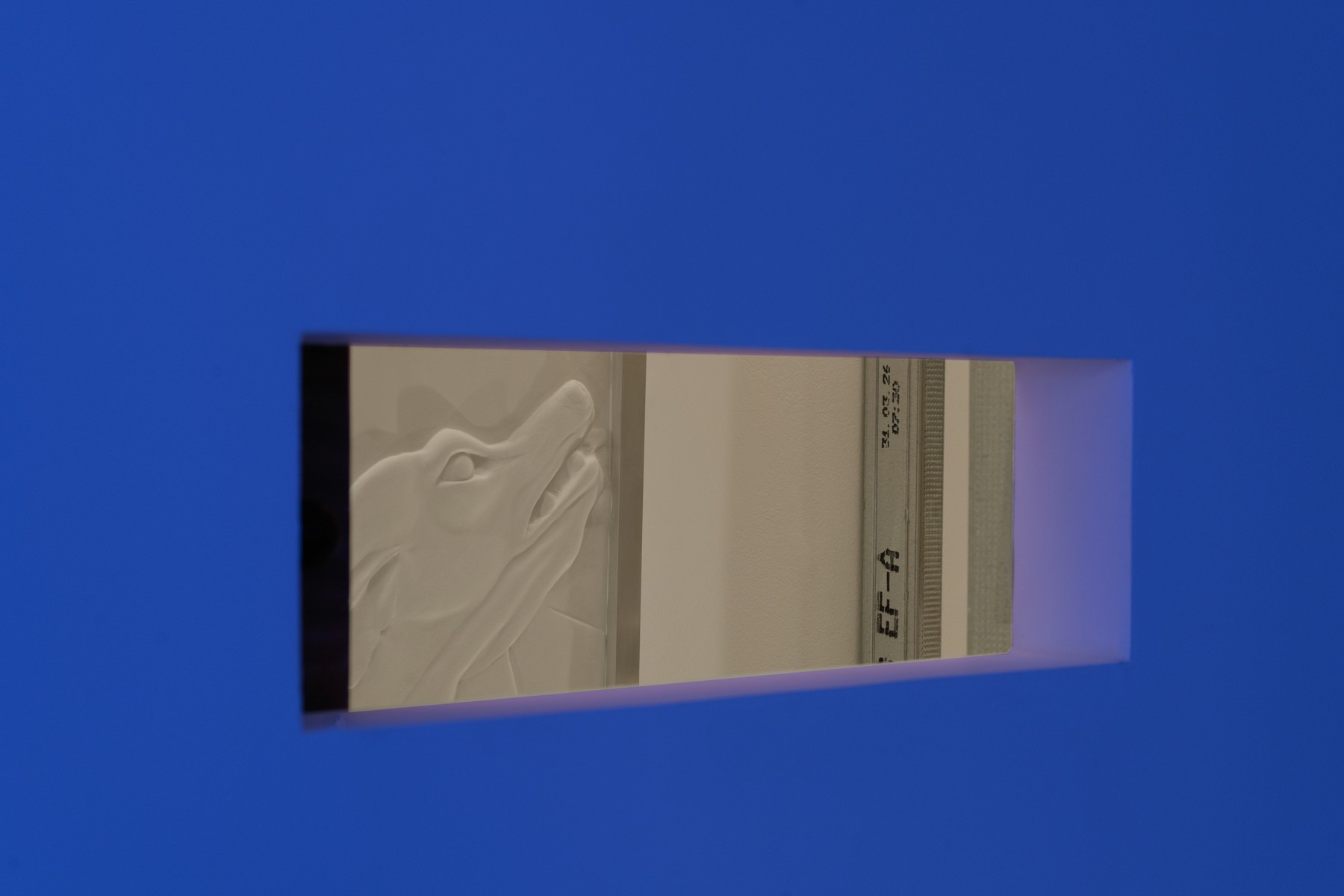
Installation views, ‘Pity Petty’, 2026 (details).
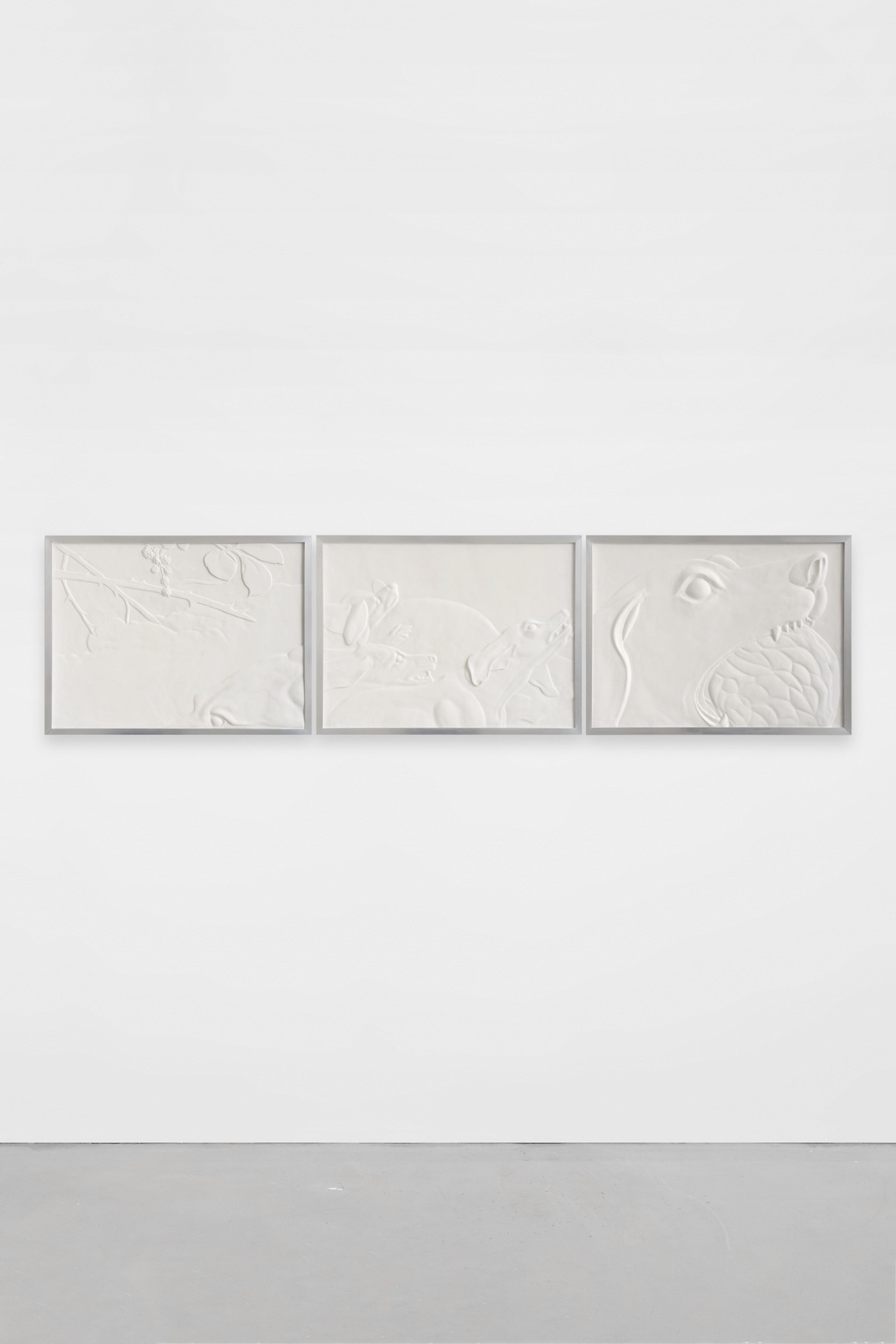
Romain Sarrot
Doggie
2026
Details
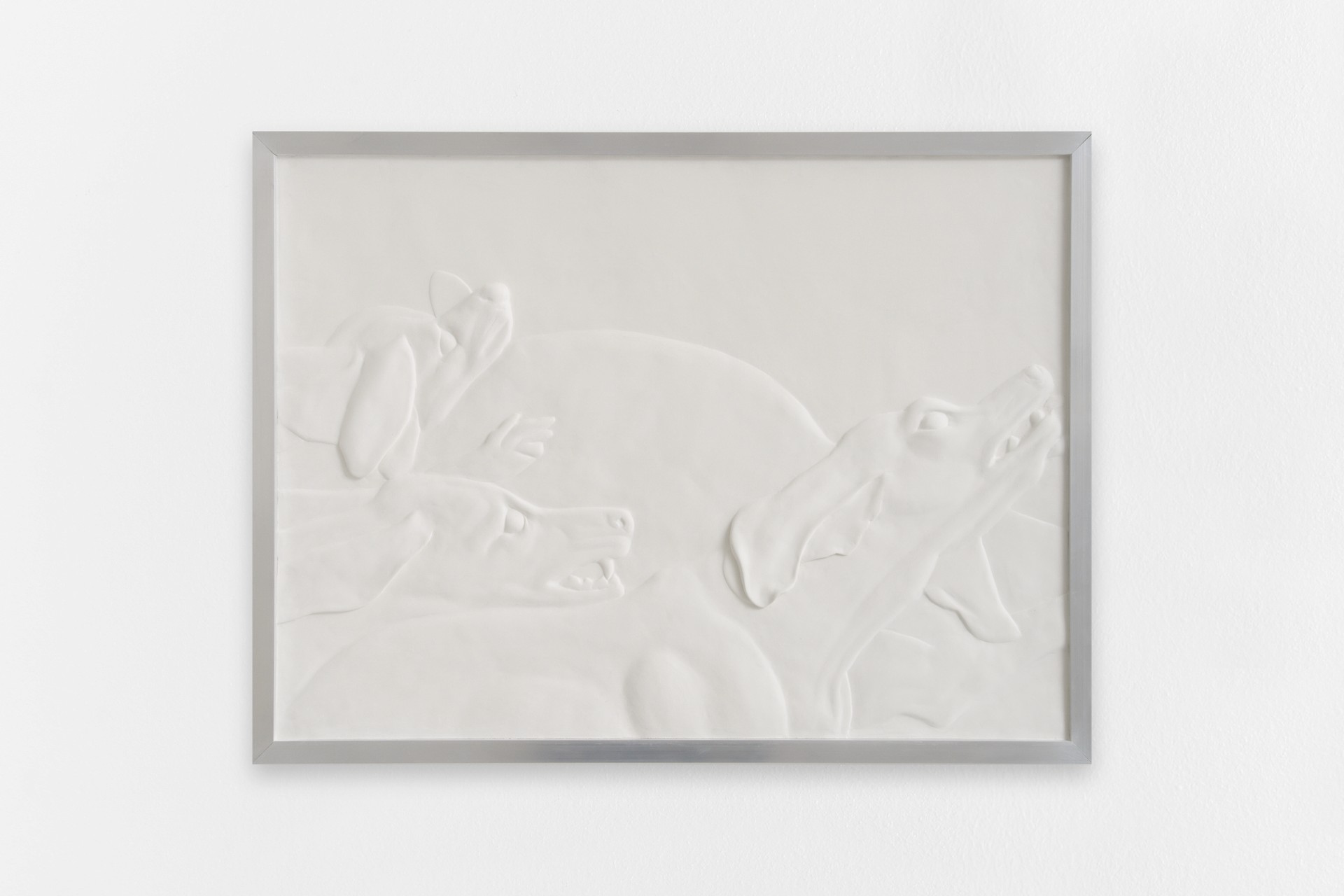
Romain Sarrot
Doggie
2026
Auto-drying putty, wood and aluminum
80 x 60 x 3 cm
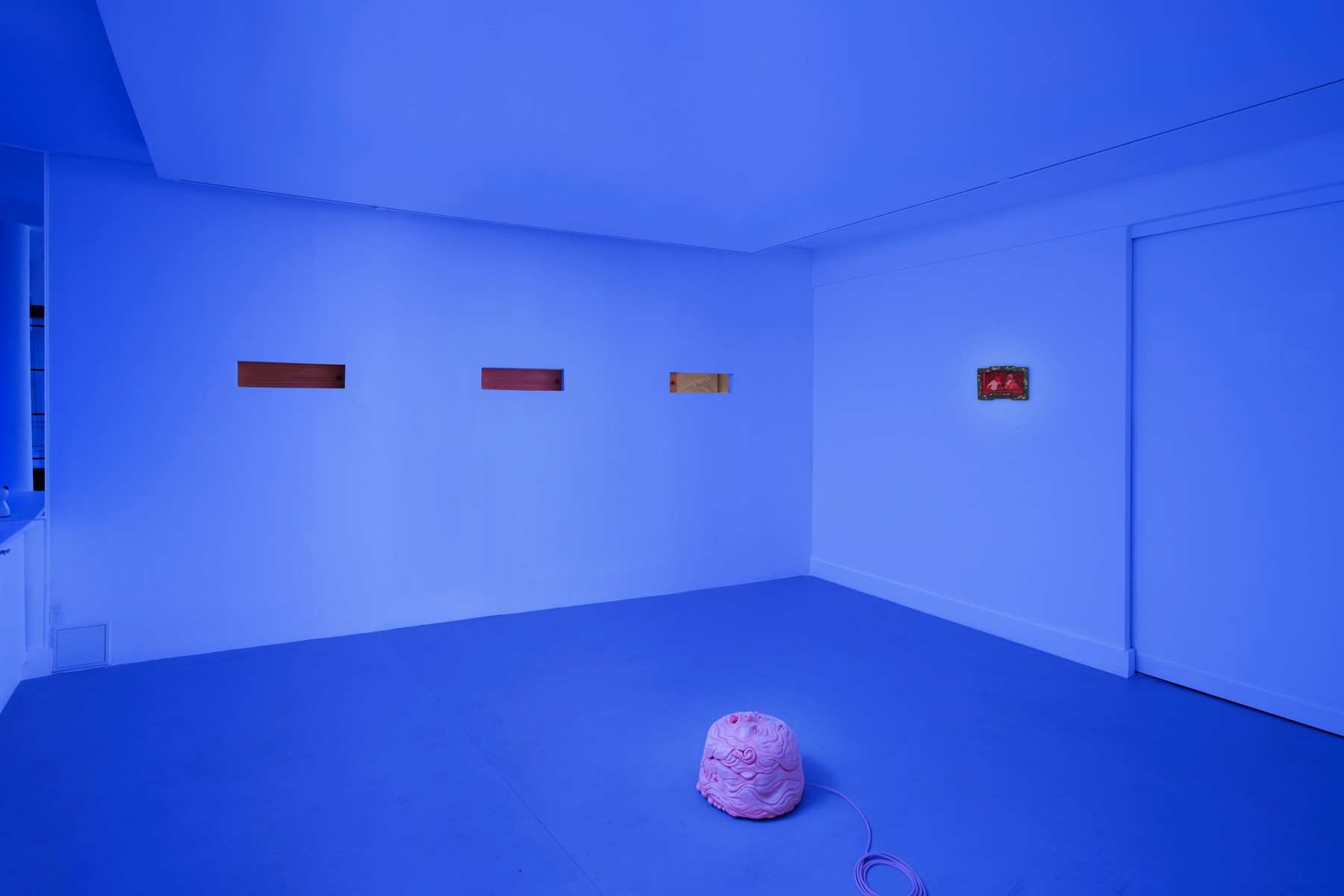
Installation views ‘Pity Petty’ by Kara Chin and Romain Sarrot, Hatch Gallery, Paris, 2026. © Pauline Assathiany. Courtesy of the Artists and Hatch Gallery.
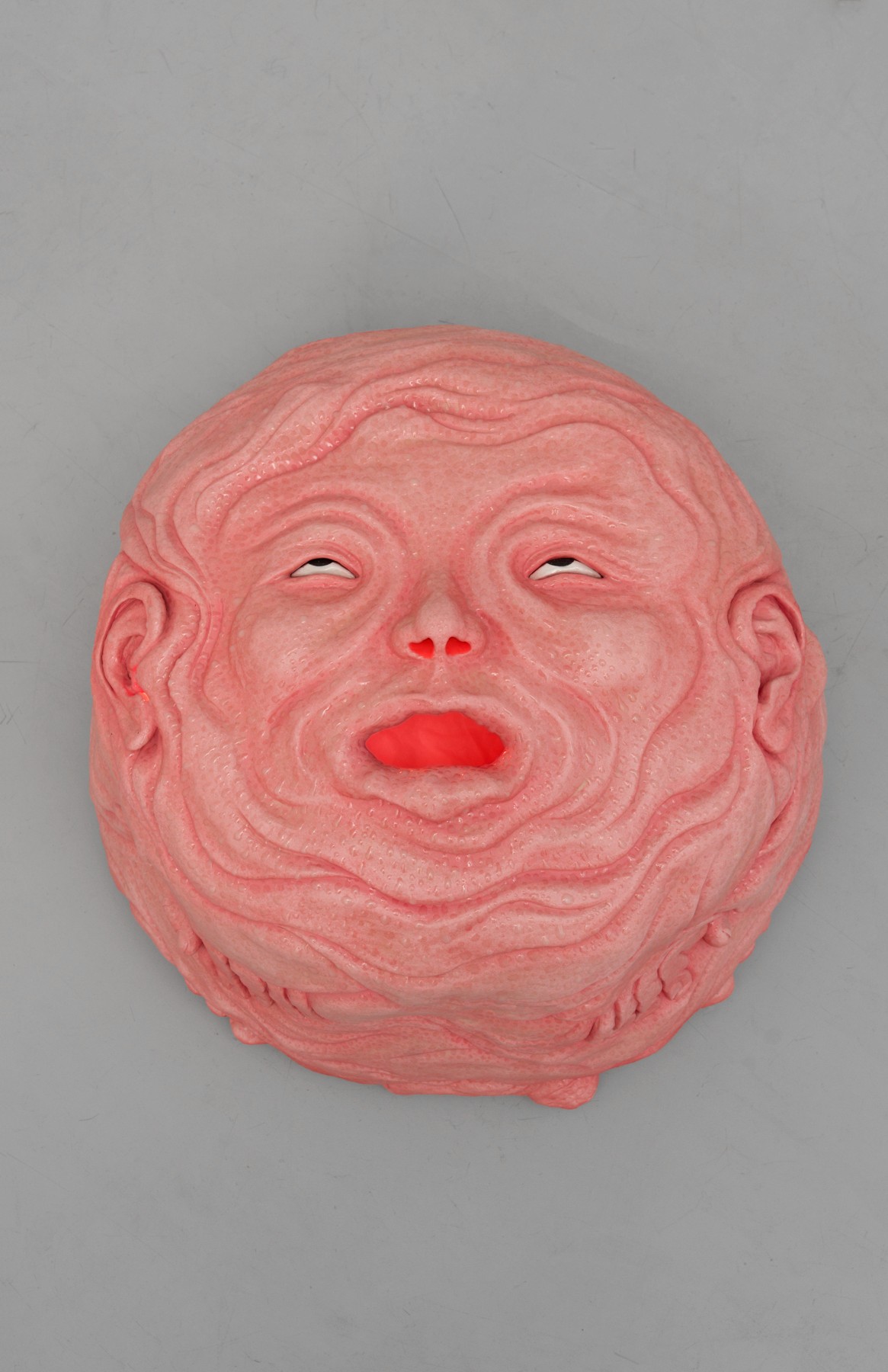
Kara Chin
The Goone State
2026
Glazed stoneware ceramic
Details
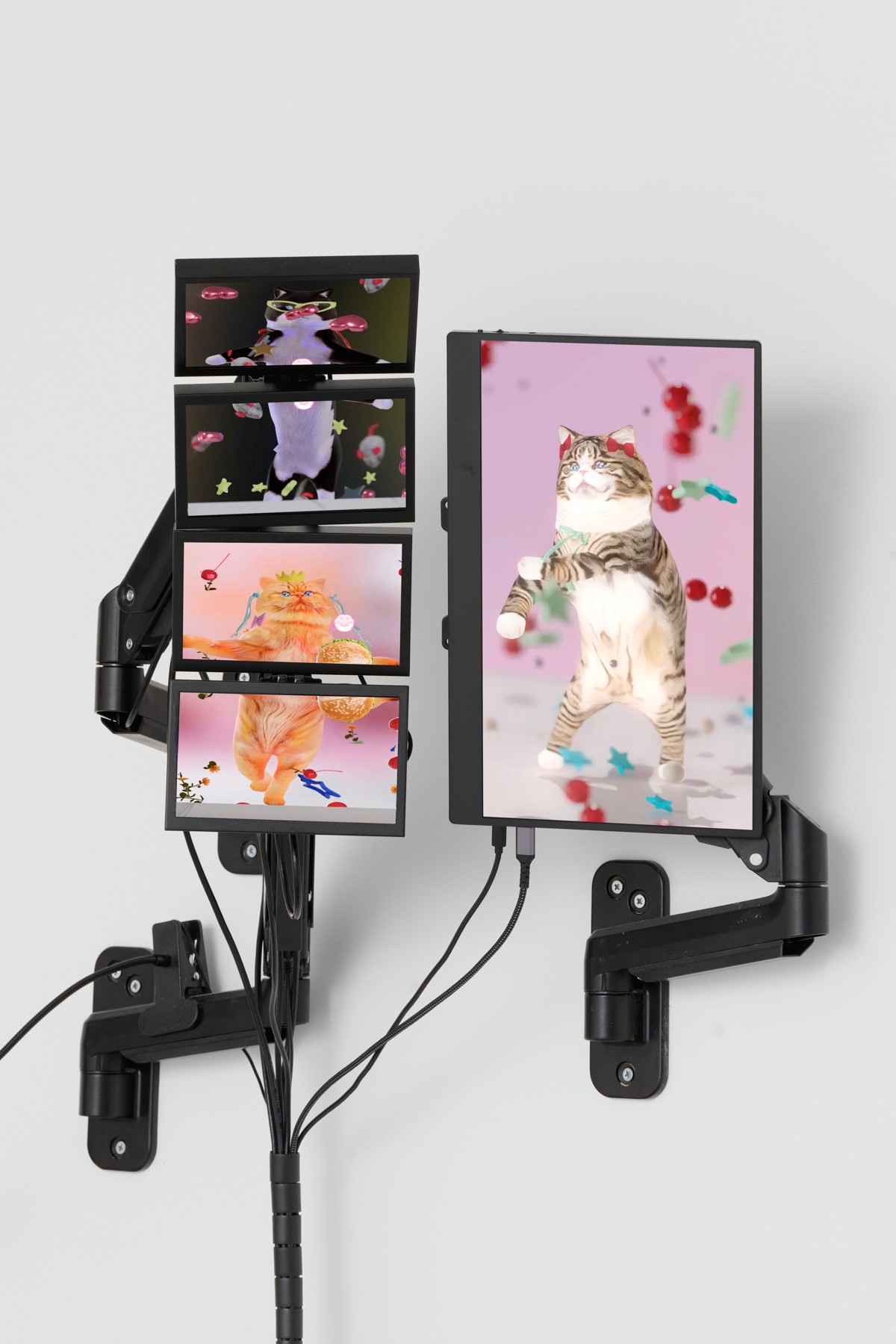
Kara Chin
AMV Cats
2026
Interactive animation
Three screens display
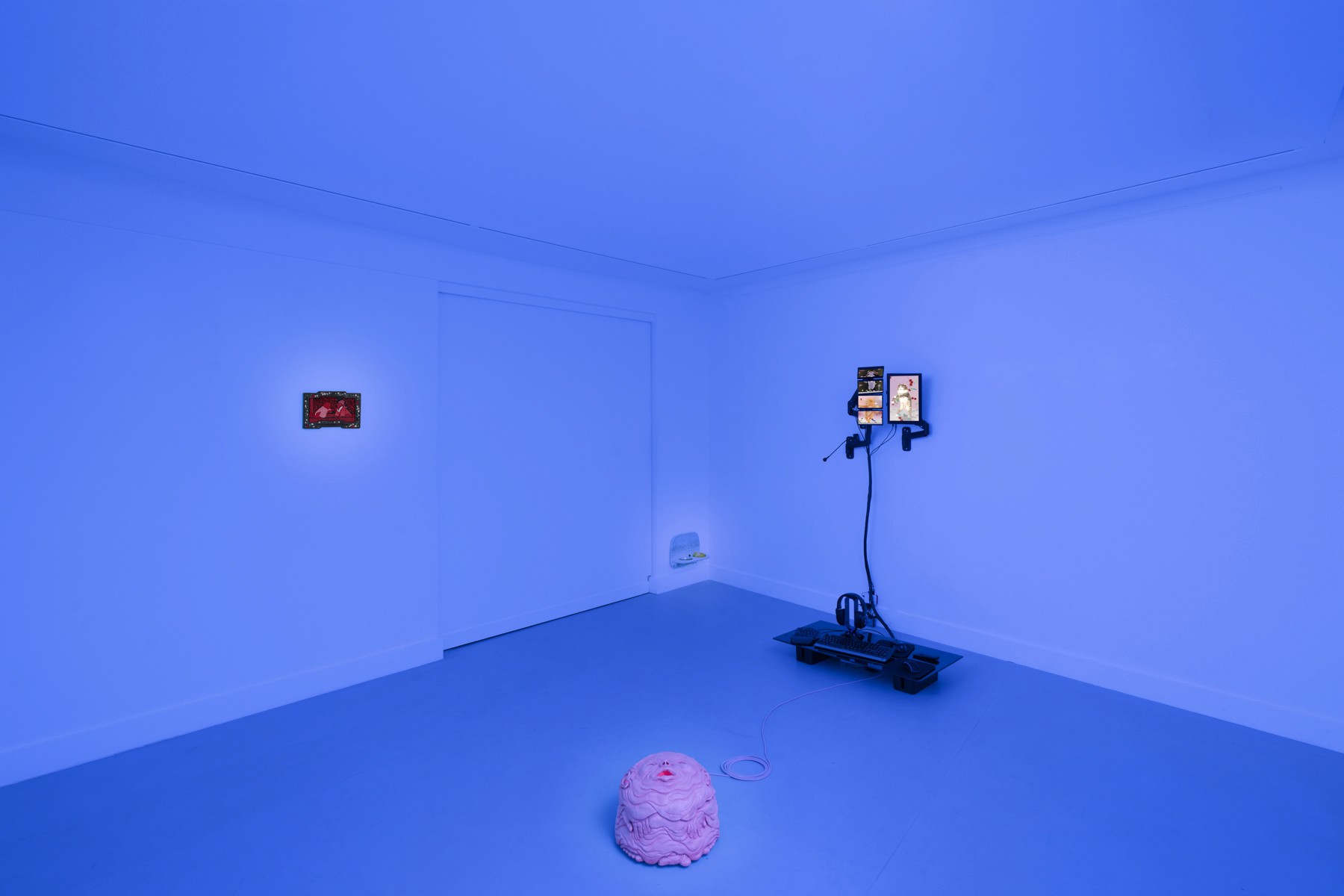
Installation views ‘Pity Petty’ by Kara Chin and Romain Sarrot, Hatch Gallery, Paris, 2026. © Pauline Assathiany. Courtesy of the Artists and Hatch Gallery.
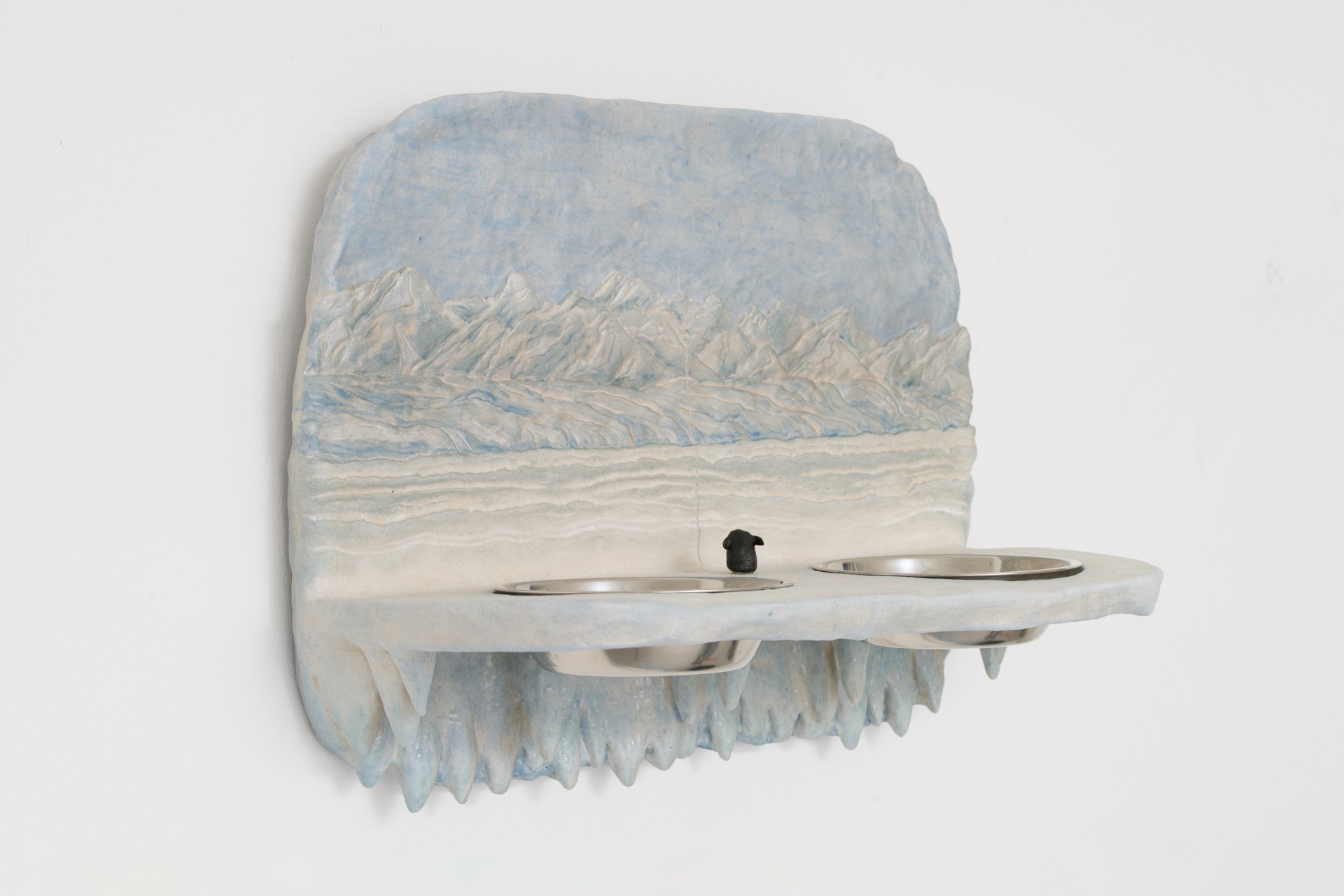
Kara Chin
The Nhilistic Penguin Water Font
2026
Glazed stoneware ceramic and pet balls
29 x 39,5 x 17 cm
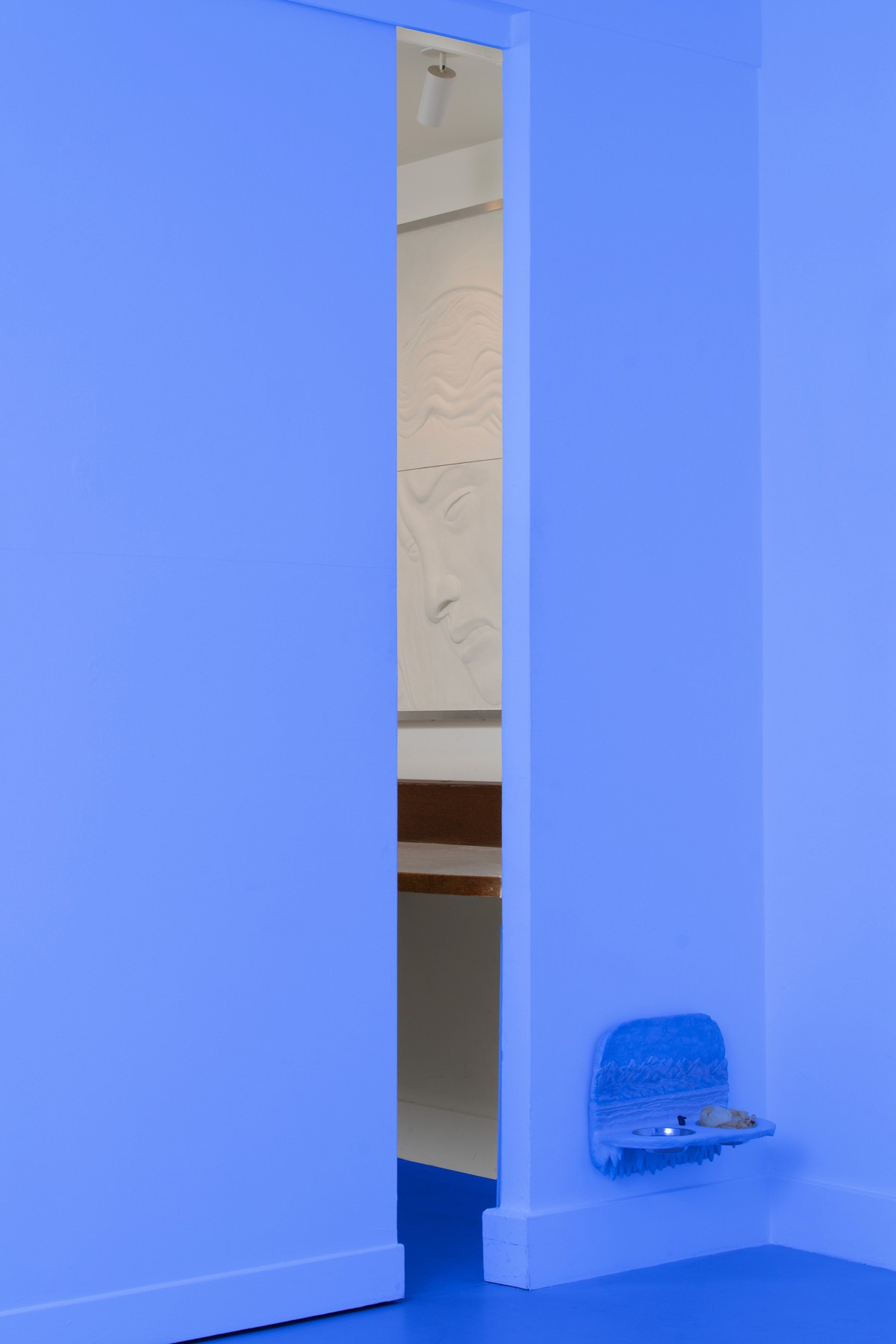
Installation views, ‘Pity Petty’, 2026 (details).
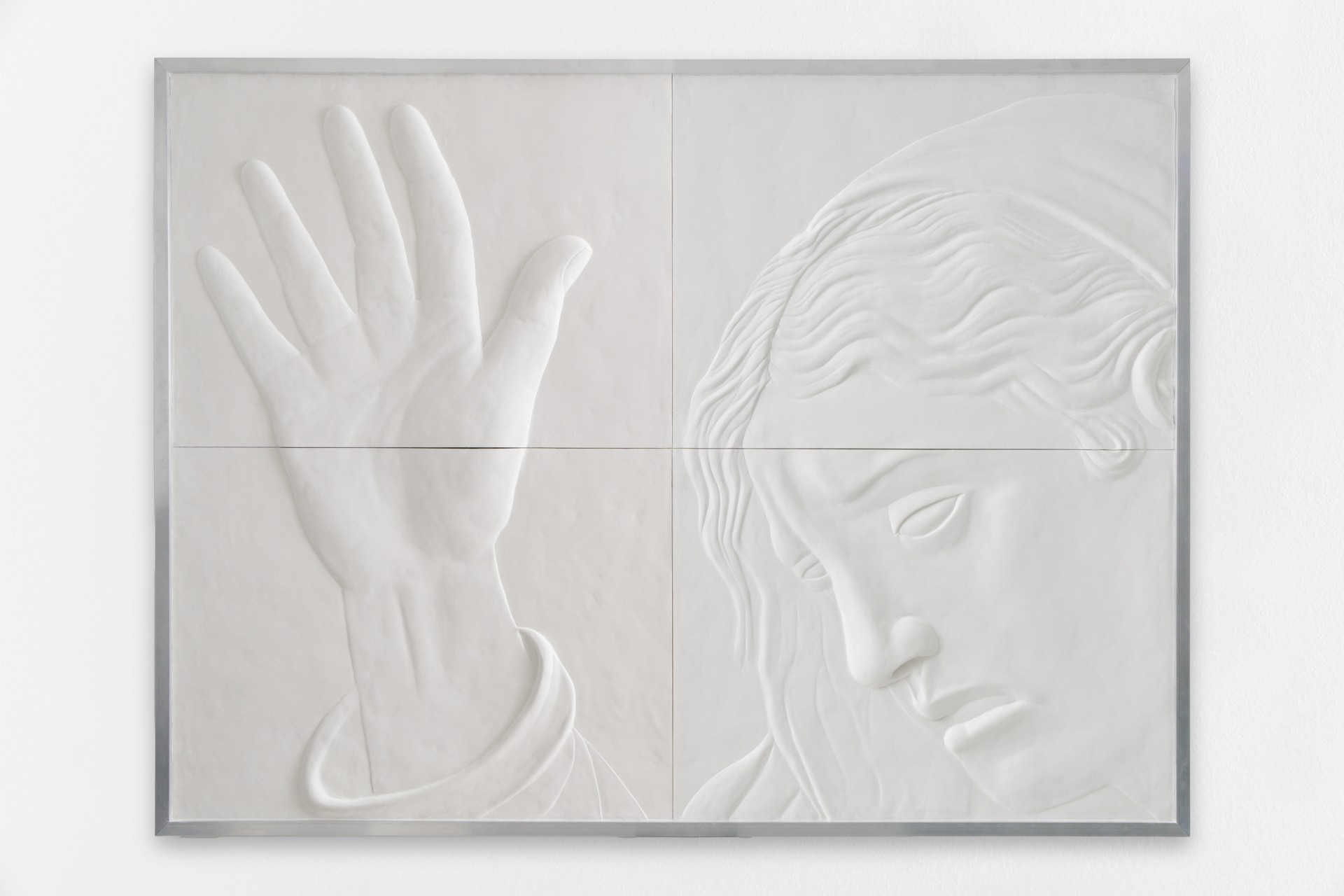
Romain Sarrot
Nothing really matters
2026
Auto Drying putty wood and aluminum
120.5 x 160.5 cm
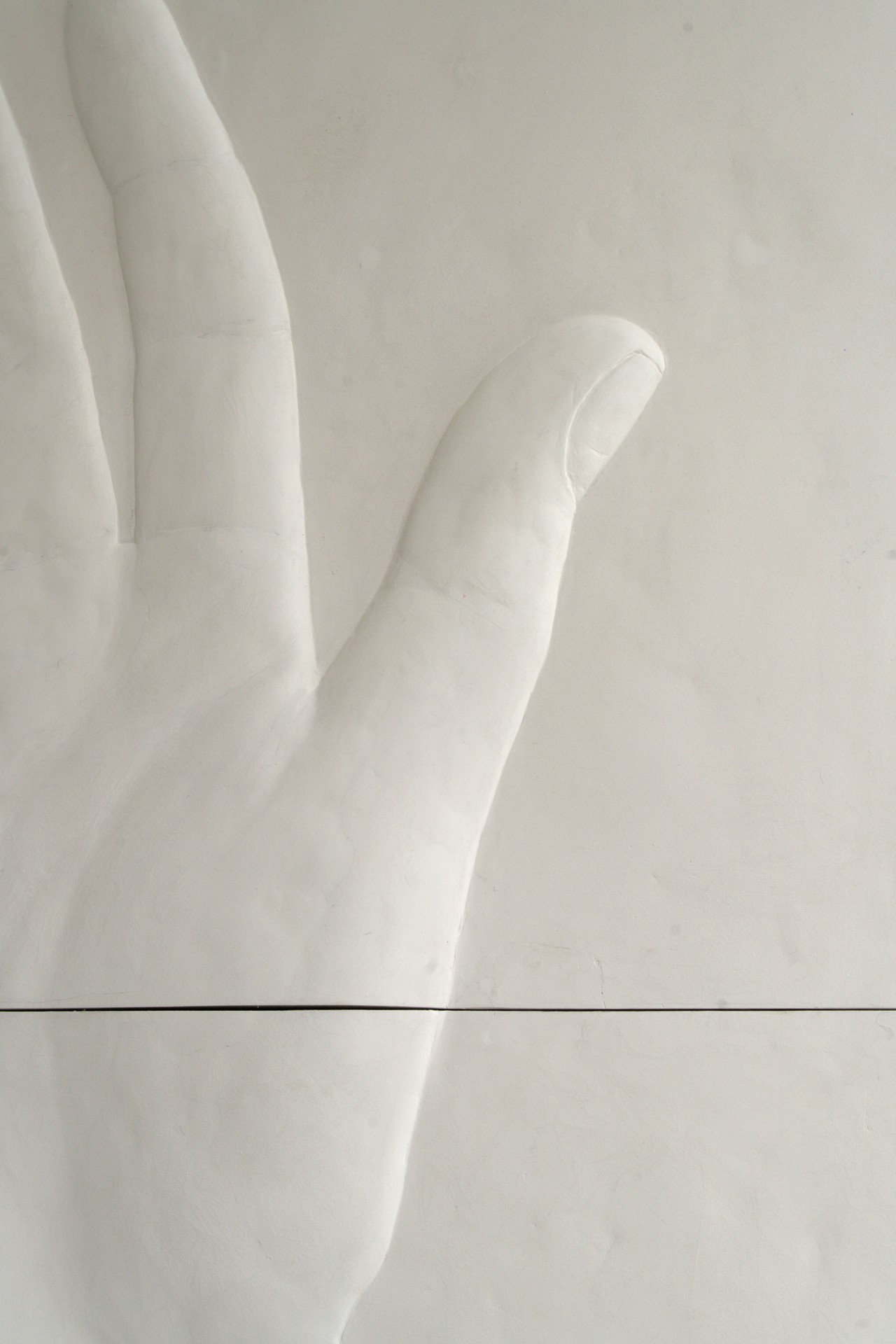
Romain Sarrot
Nothing really matters
2026
Details
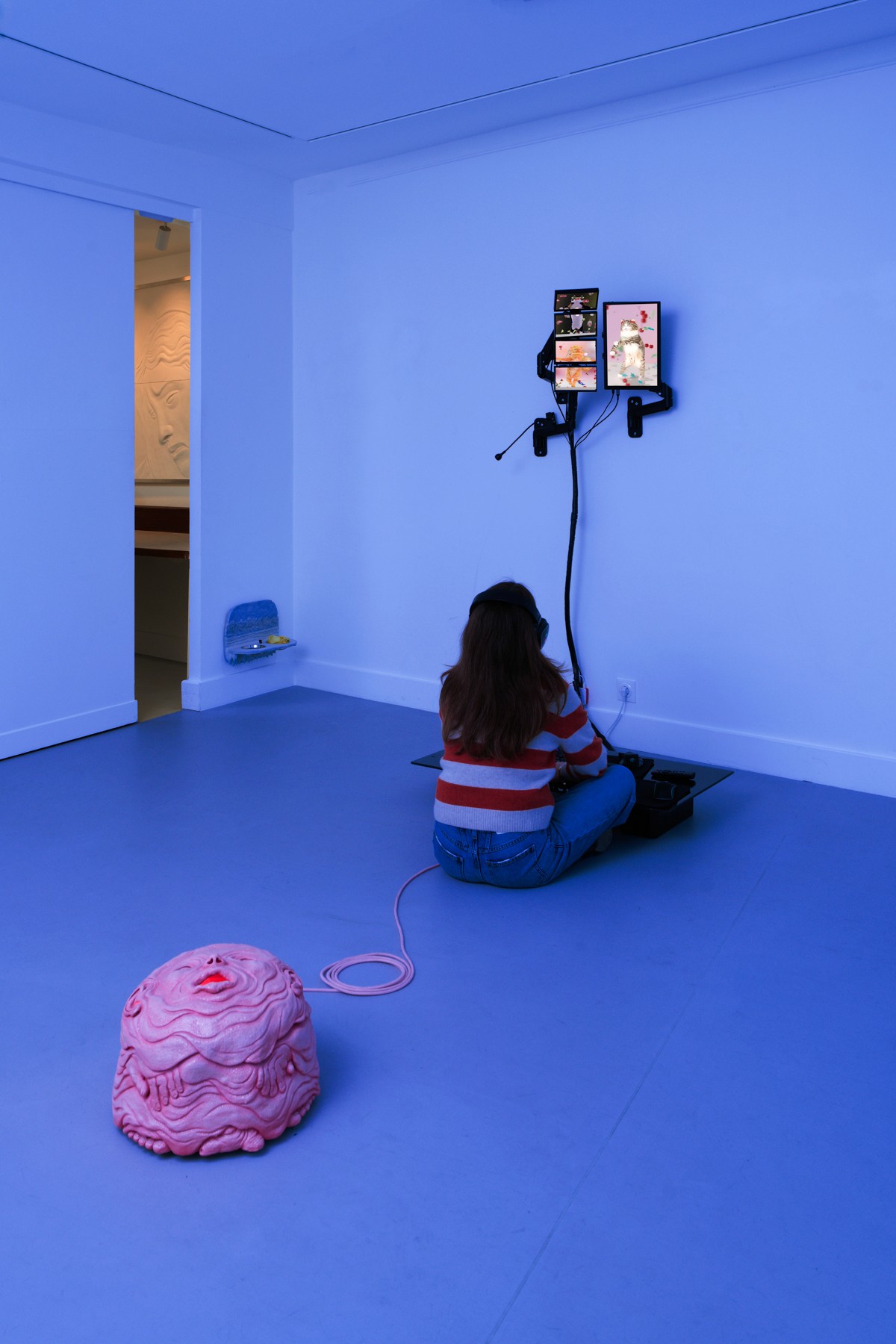
Installation views, ‘Pity Petty’, 2026 (details).
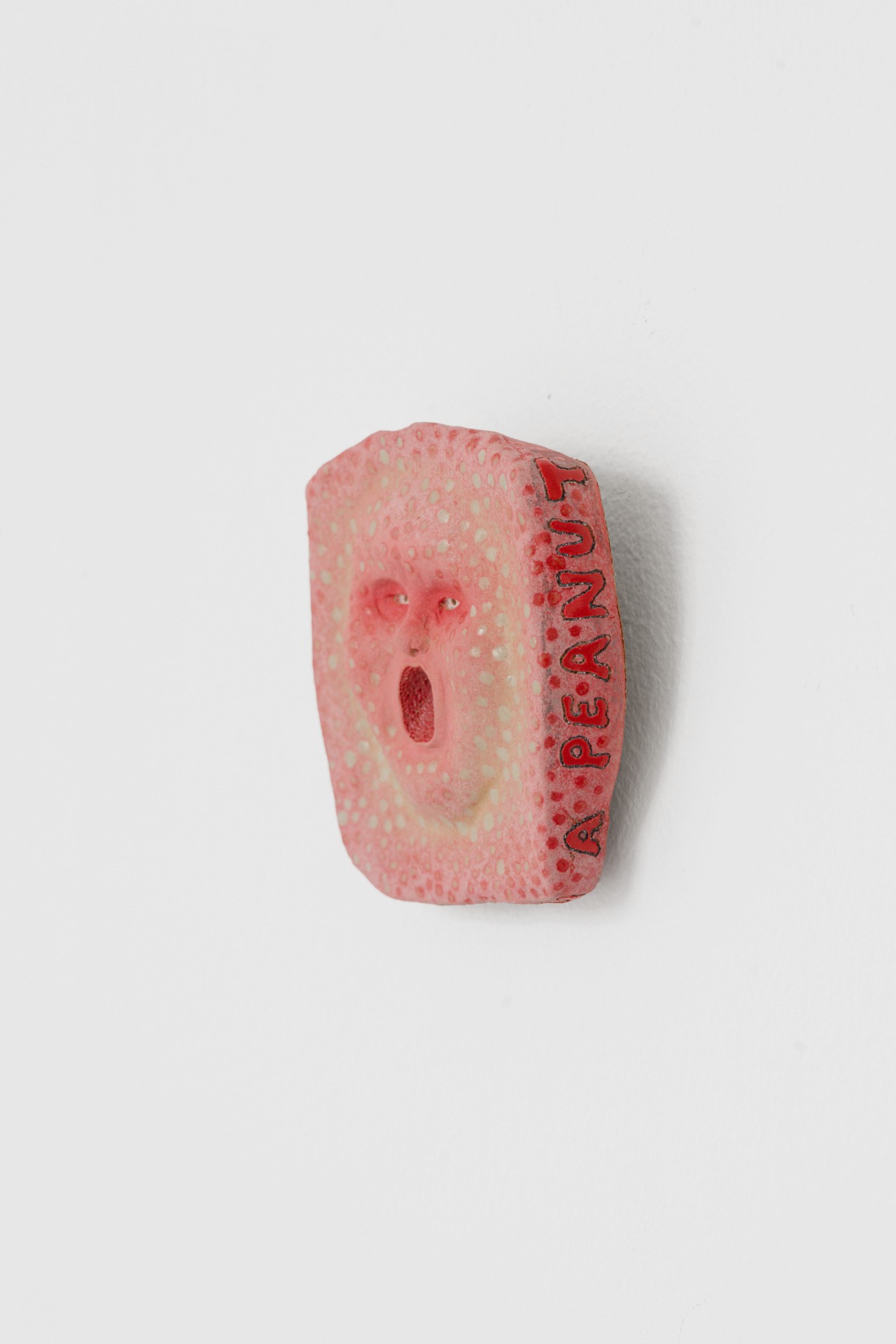
Kara Chin
So You’ve Eaten a Peanut
2026
Glazed stoneware ceramic
8 x 7.5 x 1 cm
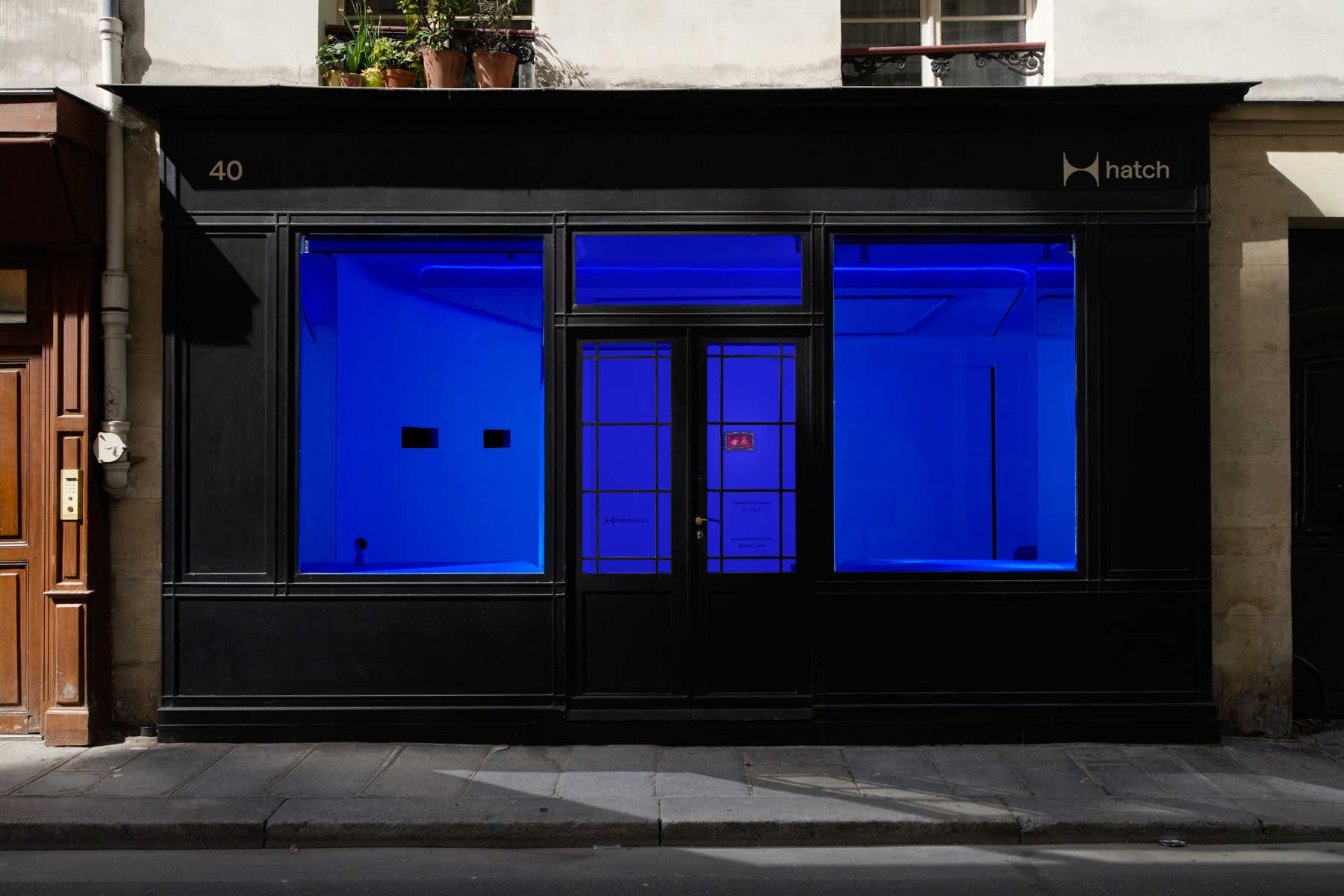
Installation views ‘Pity Petty’ by Kara Chin and Romain Sarrot, Hatch Gallery, Paris, 2026. © Pauline Assathiany. Courtesy of the Artists and Hatch Gallery.